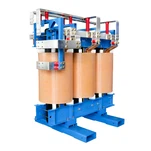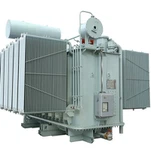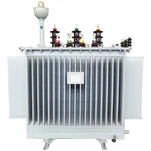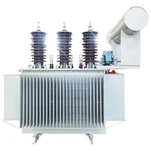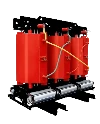


Transformer, I believe many friends are not strange. There is a parameter on the transformer nameplate, called "impedance voltage", which is usually a percentage between 5-10, and it is estimated that everyone has seen it. The following transformer is also called "short circuit impedance", and now the standard name is also short circuit impedance, but I still like to call impedance voltage.
■ What is the impedance voltage? Impedance voltage is a transformer parameter expressed as a percentage, which shorts the secondary winding of the transformer, so that the primary winding voltage slowly increases, when the secondary winding short-circuit current reaches the rated current, the voltage applied by the primary winding (short-circuit voltage) and the rated voltage ratio percentage. The formula is: Uk%= short-circuit voltage/rated voltage *100%.
According to the meaning of impedance voltage, short-circuit the secondary winding, that is, Z\\\\'L is equal to 0, and then slowly pressurize the primary winding until the current on the secondary side is equal to the rated current on the secondary side of the transformer, which is the short-circuit voltage value we need. Then according to the previous formula it is easy to know the impedance voltage value.
■ What is the use of impedance voltage?
Impedance voltage is an important parameter of the transformer, it is related to many factors of the transformer, such as: capacity, copper loss, iron loss, coil material and structure.
It is related to the stability of the power supply system, the power supply quality of the load, the safety and reliability of the transformer after parallel connection, and so on.
Realistic contradiction of impedance voltage
From the above content, it is not difficult to see that impedance voltage is a contradiction in practical application.
· transformers with the same capacity, low impedance voltage has low cost, high efficiency and cheap price. The voltage drop and voltage change rate during operation are also small, and the voltage quality is easy to be controlled and guaranteed. Therefore, from the perspective of the operation of the power grid, it is hoped that the impedance voltage is small.
· However, considering the condition that the transformer limits the short circuit current, it is hoped that the impedance voltage is larger, so as to avoid the electrical equipment (such as circuit breakers, isolating switches, cables, etc.) can not withstand the effect of short circuit current and damage during operation.
In order to properly deal with the contradictory requirements of normal operation and accident operation, the state gives different regulations on the impedance voltage of various types of transformers. In general, the higher the voltage level, the greater the impedance voltage value.
For example, the power transformer of 6 ~ 10 kV grade is 4 ~ 5.5%; 35 kV grade power transformer is 6.5 ~ 8%; The power transformer of 110 kV grade is 8 ~ 9%; 220 kV grade power transformers up to 12 to 14%. This allows the transformer impedance voltage to be standardized.
The standardization of impedance voltage can also adapt to the parallel operation of the transformer because the voltage fluctuation of the transformer with different impedance voltage is not the same when the load is loaded. When the transformers with the same capacity and different impedance voltages run in parallel, the transformer with smaller impedance voltage is overloaded, while the transformer with larger impedance voltage is not fully loaded. Such two transformers run in parallel, both safe and uneconomical.