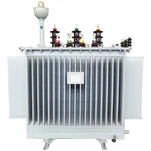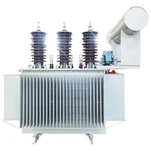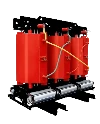


A three-phase transformer is an electrical device used to convert three-phase alternating current voltages. Its working principle mainly involves the following aspects:
- Faraday's Law of Electromagnetic Induction: The operation of a three-phase transformer is based on Faraday's law of electromagnetic induction. When an alternating current is passed through the primary winding (high-voltage side), a magnetic field is generated, inducing an electromotive force in the secondary winding (low-voltage side), leading to voltage transformation.
- Magnetic Coupling: The primary and secondary windings of a three-phase transformer are coupled through a magnetic field. This magnetic coupling allows the current in the primary winding to induce voltage changes in the secondary winding, thus achieving voltage transformation.
- Phase Relationship: There are specific phase relationships between the three phases (Phase A, Phase B, Phase C) in a three-phase transformer. By ensuring that these phase relationships are correctly matched, effective three-phase voltage conversion can be achieved.
- Transformer Principles: According to the principles of transformer energy conversion, a three-phase transformer achieves voltage transformation by changing the ratio of turns between the primary and secondary windings. Typically, the winding with more turns on the high-voltage side corresponds to the input side, while the winding with more turns on the low-voltage side corresponds to the output side.
In summary, a three-phase transformer utilizes magnetic coupling and electromagnetic induction principles to convert three-phase alternating current voltages from one voltage level to another.