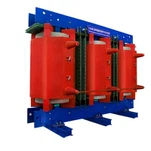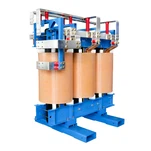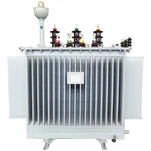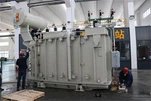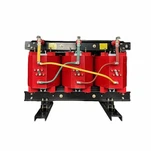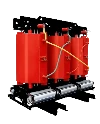


Cooling of dry-type transformer windings is a critical aspect to ensure safe and reliable operation. Since dry-type transformers do not use oil as a cooling medium, their winding cooling relies primarily on air and specific design enhancements. Below are the common types of cooling methods for dry-type transformer windings:
1. Natural Air Cooling (AN or NA)
Principle:
Natural air cooling relies on the natural airflow in the environment to dissipate the heat generated by the windings.
Features:
Suitable for small-capacity transformers or under low load conditions.
No additional cooling equipment is required, simple structure, and easy maintenance.
Cooling efficiency is greatly affected by ambient temperature and ventilation conditions.
2. Forced Air Cooling (AF or FA)
Principle:
Fans or blowers are installed around the windings to force air circulation and accelerate heat dissipation.
Features:
Improves cooling efficiency, ideal for high-capacity or heavily loaded transformers.
Fans can be turned on or off depending on the load, providing flexible temperature control.
Requires additional electrical equipment (fans) and monitoring systems, increasing operational costs and maintenance workload.
3. Natural Air Convection + Radiation Cooling
Principle:
Heat is transferred from the windings to the transformer enclosure via conduction and then dissipated into the surrounding air through convection and radiation.
Features:
Commonly used in small dry-type transformers.
Relies on the design of the enclosure (e.g., with fins or perforated structures).
Requires adequate ventilation and cooling space in the installation environment.
4. Forced Air Cooling + Heat-Conductive Material
Principle:
High thermal conductivity materials (e.g., aluminum or copper heat-conductive plates or epoxy resin) are used between the windings and the enclosure to transfer heat rapidly to the outer surface, which is then dissipated through forced air cooling.
Features:
Enhances heat transfer efficiency, suitable for high power-density transformers.
Commonly used in cast-resin dry-type transformers or specially designed units.
5. Water-Cooled Auxiliary Cooling
Principle:
Some dry-type transformers are equipped with a water-cooling system, where cooling water carries away the heat, combined with air cooling for heat dissipation.
Features:
Excellent cooling performance, suitable for high-load or high-temperature environments.
Complex design and higher cost, mainly used in specialized applications (e.g., offshore platforms or hot environments).
Requires additional water-cooling equipment and piping systems, with more complex maintenance.
6. Internal Airflow Design (Ventilation Channel Design)
Principle:
Ventilation ducts are designed within the windings, allowing air to flow directly through the gaps between windings to carry away heat.
Features:
Effectively reduces hotspot temperatures inside the windings.
Requires precise design of the ventilation channels to ensure smooth airflow.
Usually combined with forced air cooling for better results.
7. Enhanced Radiation Cooling
Principle:
Heat dissipation is enhanced by optimizing the surface of the windings or transformer enclosure (e.g., adding cooling fins or applying heat-conductive coatings) to radiate heat more effectively.
Features:
Improves cooling efficiency, especially suitable for environments with poor air circulation.
Radiated heat depends on surface area and surface temperature, so increasing the dissipation area is key.
Summary
| Cooling Method | Applicable Scenarios | Advantages | Disadvantages |
|---|---|---|---|
| Natural Air Cooling | Small capacity, low load | Simple structure, easy maintenance | Low efficiency, heavily affected by environment |
| Forced Air Cooling | High capacity, heavy load | Good cooling effect, flexible control | Requires additional equipment, higher cost |
| Natural Convection + Radiation | Small transformers | No extra equipment, widely applicable | Requires good ventilation conditions |
| Forced Air + Heat-Conductive Material | High power density, cast-resin transformers | High heat transfer efficiency | High cost, complex design |
| Water-Cooled Auxiliary | High-temperature environments, special scenarios | Excellent cooling, suitable for extreme conditions | Complex system, high maintenance |
| Internal Airflow Design | High load, strict temperature requirements | Reduces hotspots, uniform cooling | Requires precise design, works with air cooling |
| Enhanced Radiation | Poorly ventilated locations | Improves efficiency, adapts to temperature variations | Needs optimized enclosure design, limited effect |
Conclusion
Choosing a cooling method depends on factors such as transformer capacity, operating environment, load characteristics, and installation location. If you need detailed solutions or design support, feel free to reach out!