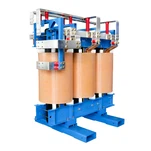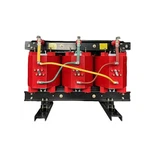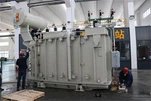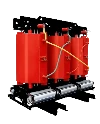


When selecting an oil-immersed transformer, the vector group determines performance, load compatibility, and system stability. Two common configurations in distribution and power transformers are Yzn11 and Dyn11.
Dyn11 is one of the most widely used vector groups for oil-immersed transformers. It features a Delta-connected (D) primary winding and a Wye-connected (Y) secondary winding with a 30-degree phase shift (denoted by "11"). Dyn11 transformers are known for their excellent load balancing, harmonic isolation, and reliability in low-voltage distribution networks. They are ideal for typical commercial and industrial power systems.
On the other hand, Yzn11 is less commonly used but increasingly popular in specific applications such as solar farms, inverter systems, or where grounding on the high-voltage side is required. In this configuration, the primary is Wye-connected, while the secondary is zig-zag (z) connected, with the same 30-degree phase shift. The Yzn11 vector group offers better harmonic suppression, especially zero-sequence currents, and is suitable for systems with non-linear loads or high harmonic content.
When choosing between Dyn11 and Yzn11 for your oil-immersed transformer, it's essential to evaluate your application's grounding requirements, harmonic environment, and system configuration.
Jiangsu Ryan Electric, a joint venture with Eaton USA, provides both Yzn11 and Dyn11 oil-immersed transformers up to 110kV, tailored to your technical and site-specific needs.
Need expert advice on transformer selection? Contact us today at ryancustomerinquiry@redq.cc for a custom solution