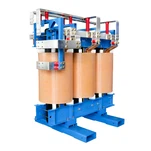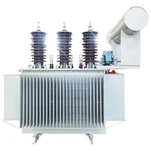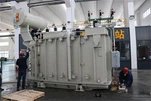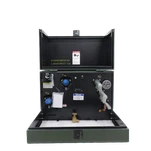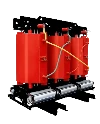


In today's power distribution systems, harmonic distortion is a growing concern, especially in facilities with non-linear loads such as data centers, hospitals, and industrial automation systems. To address this challenge, K-rated dry-type transformers are designed to handle the additional heat generated by harmonic currents.
What is the K-Factor?
The K-Factor is a numerical value assigned to a transformer that indicates its ability to withstand harmonic heating without degrading its insulation or efficiency. The higher the K-factor, the greater the transformer's capacity to handle harmonic-rich loads.
Common K-factor ratings include K4, K13, and K20, depending on the level of harmonic current present. For example, K13-rated transformers are often used in data centers, where sensitive electronic equipment and high-frequency switching loads are common.
Why is Harmonic Compatibility Important?
Harmonics increase eddy current and stray losses in transformer windings and cores. If not properly accounted for, this results in overheating, insulation failure, reduced lifespan, and operational inefficiencies.
K-rated transformers are specifically engineered with larger conductors, lower flux densities, and improved insulation systems to handle this added stress safely.
Choosing the Right K-Factor Transformer
When specifying a transformer for harmonic-prone environments, selecting the correct K-factor is critical. Over-specifying can unnecessarily increase cost, while under-specifying may lead to transformer failure. Work closely with your transformer manufacturer to assess your load profile and determine the ideal K-rating.
Conclusion
Investing in a K-rated dry-type transformer ensures reliable operation, prolonged equipment life, and energy efficiency under harmonic-heavy conditions. It's a smart choice for any modern electrical infrastructure facing the challenges of non-linear loads.