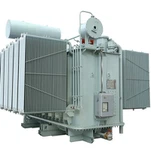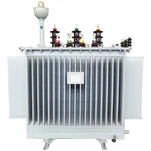


A transformer is used for step-up and step-down by exploiting the principle of electromagnetic induction. It consists of two coils, known as the primary and secondary windings, which are wound around a common magnetic core. When an alternating current (AC) flows through the primary winding, it creates a changing magnetic field in the core. This changing magnetic field induces a voltage in the secondary winding.
The key to step-up and step-down functionality lies in the ratio of the number of turns in the primary winding (N₁) to the number of turns in the secondary winding (N₂):
- Step-Up Transformer: If the secondary winding has more turns than the primary winding (N₂ > N₁), the induced voltage in the secondary winding will be higher than the input voltage applied to the primary winding. This configuration is used to increase voltage levels.
- Step-Down Transformer: If the secondary winding has fewer turns than the primary winding (N₂ < N₁), the induced voltage in the secondary winding will be lower than the input voltage applied to the primary winding. This configuration is used to decrease voltage levels.
Thus, by adjusting the turns ratio, a transformer can efficiently step up or step down AC voltages, making it a crucial component in power distribution systems.