

What UL Listing Really Means for Transformers (And Why It Matters in the US)
Most US projects never hit a snag at inspection when the transformer carries a real UL mark. Last spring, a Texas contractor installed a batch of pad-mounted units from our Jiangsu factory, and the AHJ signed off on the first visit - the inspector verified the file number on UL Product iQ and moved on. That is the quiet power of choosing a UL listed transformer supplier: compliance stops being a variable in your schedule.
In this guide, we break down what UL listing actually covers, which standards apply to transformers, and how to confirm a factory's claim before you sign a PO.
What UL Listing Actually Means (And What It Doesn't)
Underwriters Laboratories issues three kinds of marks, and buyers routinely mix them up:
• UL Listed - the complete product, as installed, is evaluated against the applicable standard. This is the mark US inspectors and insurers want to see.
• UL Recognized - applies to components only (a coil, a bushing, an insulating material). A recognized component inside an unlisted assembly does not make the assembly listed.
• UL Classified - covers specific properties, such as fire resistance or hazardous-location suitability, evaluated against a limited scope.
|
Mark Type |
Scope |
What It Covers |
What It Does NOT Cover |
|
UL Listed |
Complete product |
Full assembly safety per standard |
Component-level ratings |
|
UL Recognized |
Component only |
Single part (coil, bushing) |
Whole-unit compliance |
|
UL Classified |
Specific property |
Fire resistance, one attribute |
General product listing |
"UL Compliant" or "tested per UL 1561" printed on a datasheet means nothing unless a file number sits behind it. The mark without a file number is just ink.
The UL Standards That Apply to Transformers
Two standards cover nearly every power transformer shipped into the US:
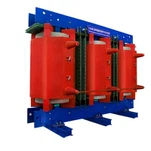
• UL 1561 - dry-type transformers, including cast resin and VPI units
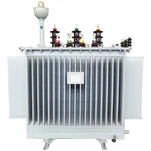
• UL 1562 - liquid-filled transformers, including oil-immersed and pad-mounted designs
Both standards are cited by NEC Section 450, which governs transformer installation in buildings. Under UL 1561, our dry-type units are verified with temperature-rise tests at full rated load - for Class H insulation, that means proving the hottest spot stays below 150°C while the unit runs at 100% nameplate kVA. That number is what separates a genuine UL certification for transformers from a marketing line.
Why UL Listing Matters in the US Market
Four parties will ask about the UL mark before your transformer ever energizes:
1. The AHJ - the local inspector checks the nameplate against UL Product iQ during the rough-in and final inspections.
2. The insurer - underwriters routinely require listed equipment on commercial property; an unlisted unit can void coverage or raise premiums.
3. The utility - interconnection agreements for distributed generation often list UL compliance as a precondition for the meter.
4. Customs and logistics - a UL file number on the commercial invoice speeds clearance, and it protects you if a claim ever arises.
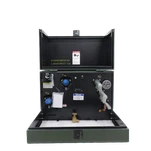
Here is a detail most buyers never see: when we ship a pad mounted transformer UL listed for a US customer, our QC team photographs the nameplate, the UL file number, and the enclosure rating before the unit is crated. That photo set has saved at least two clients from weeks of back-and-forth at the port.
How a Transformer Earns UL Listing
UL listing is not a one-time lab visit. The process has four stages, and the last one never ends:
• Structure review - UL engineers examine the design, materials, and ratings against the standard.
• Sample testing - representative units go through dielectric, temperature-rise, short-circuit, and enclosure-integrity tests.
• Factory audit - UL auditors inspect the production line, quality system, and test equipment on site.
• Follow-up service (FUS) - unannounced factory visits, typically quarterly, verify production keeps matching the certified design.
Because FUS continues for the life of the listing, a UL listed transformer supplier is under continuous surveillance. This is the part that filters out traders: a factory can fake a certificate for one shipment, but it cannot fake an auditor standing on its floor four times a year.
How to Verify a Supplier's UL Claim
Before you commit, run this three-step UL verification yourself:
1. Open UL Product iQ on the UL Solutions website and search the company name or file number the supplier gives you.
2. Confirm the product category code (CCN) matches the equipment you are buying - a dry-type file does not cover a pad-mounted unit.
3. Ask the supplier to share the UL certificate with the file number, and compare the nameplate layout against UL's published mark requirements.
If the supplier hesitates on the file number, that is your answer. Legitimate factories publish this information because it is their strongest sales document.
What to Expect from a UL Listed Transformer Supplier
A serious UL listed transformer supplier behaves differently from the start. You get the UL file number before the quotation, test reports that reference the standard by name, and a QC protocol that documents every unit against the certified design.
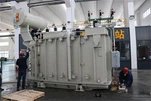
At Ryan Electric, that protocol is built into our routine. Every transformer leaving our 120,000 m² facility - dry-type under UL 1561, liquid-filled under UL 1562 - passes routine tests that mirror the listing requirements, and our work as an Eaton joint venture partner since 2023 gives our engineering team direct access to component-level supply chains that carry their own UL recognition. When a buyer asks us for UL certification for transformers documentation, the answer arrives with the quotation, not after the deposit.
Have a project in the US? Get a free technical quote → Contact Ryan Electric's Engineering Team
Built for US Projects, End to End
UL listing is not the whole story - but it is the door. It gets your transformer through inspection, insurance, and interconnection without drama, which is exactly how a project stays on schedule.
Whether you need a 500 kVA pad-mounted unit for a Texas distribution feeder or a 2500 kVA dry-type transformer for a Virginia data center, our team will walk the UL requirements with you, unit by unit. Ready to power your next project? Get a free technical quote → Contact Ryan Electric's Engineering Team