

CSA Certification for Transformers: A Complete Guide for Canadian Projects
Canada's grid is in the middle of its biggest build-out in decades - new distribution feeders in Ontario, data-center campuses around Toronto and Calgary, and utility-scale solar in Alberta are all calling for more transformers than the domestic supply chain can produce alone. For buyers managing those timelines, a CSA certified transformer arrives with something rare in this market: certainty. The mark is recognized by every provincial electrical authority, which means the unit moves from the port to the pad, and from the pad to energization, without the compliance debates that stall so many imports.
In this guide, we break down what CSA certification actually covers, how it compares with UL, and the practical steps our factory takes to keep Canadian projects on schedule.
What CSA Certification Actually Covers
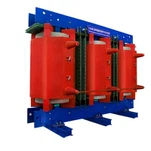
CSA Group wears two hats: it writes many of the standards referenced by the Canadian Electrical Code (CSA C22.1), and as a certification body it verifies that products meet them. For transformers, the two standards you will meet most often are CSA C22.2 No. 47 for dry-type units and CSA C227.4 for three-phase pad-mounted distribution transformers with separable insulated high-voltage connectors.
Certification is not a paperwork exercise. A factory applying for a CSA mark opens its design, materials, and test records for review; representative samples go through dielectric, temperature-rise, and short-circuit testing; and CSA inspectors audit the production line on site. After the listing, follow-up factory visits keep the certified design honest. What you receive is a product built, tested, and audited against a published Canadian standard - not a unit described as "tested per" something vague on a datasheet.
Here is a number that tells the story: for dry-type units under CSA C22.2 No. 47, our standard test sequence includes a temperature-rise run at 100% nameplate kVA, and for Class H insulation the measured hottest-spot temperature must stay below 150°C for the full test duration. That is the level of proof behind a mark that fits on a nameplate.
CSA vs UL: Do You Need Both?
Canadian buyers often ask whether a UL mark covers them, or whether they need a CSA mark as well. Short answer: in Canada, the provincial electrical authority looks for CSA or a cULus listing; in the US, the authority having jurisdiction looks for UL. If your product line serves both markets, one mark can cover both.
|
Mark |
Home Jurisdiction |
Typical Standard |
Where It Is Accepted |
|
CSA |
Canada |
CSA C22.2 No. 47 / C227.4 |
All Canadian provinces |
|
UL |
United States |
UL 1561 / UL 1562 |
US AHJs, insurers, utilities |
|
cULus |
Both |
CSA + UL standards |
Canada and the US |
The cULus listing is the practical answer for cross-border projects: it is a single evaluation against both Canadian and US standards, backed by the mutual recognition between CSA and UL. We hold both CSA and UL files, so we can ship one production line with a cULus listing and let your team stop matching marks to jurisdictions.
CSA Requirements for Pad Mounted Transformers
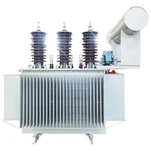
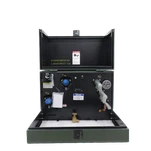
For pad mounted transformer Canada projects, the details live in CSA C227.4 and in the enclosure expectations that Canadian utilities bring to every pad. Dead-front design - no exposed live parts - is standard, with separable insulated connectors in the high-voltage cable compartment. Enclosure integrity follows the same philosophy as IEEE C57.12.28: heavy-gauge steel, tamper-resistant three-point latching, and doors that cannot be opened with common hand tools.
Two Canada-specific points deserve attention. First, nameplates and warning labels must be bilingual - English and French - and the CSA file number must appear on the nameplate exactly as registered. Second, for sites in the northern Prairies or in Quebec winters, we specify low-temperature insulating oil and cold-rated gaskets so the unit keeps performing at -40°C without seal failures. These are the details a distributor without Canadian experience simply does not know to ask about.
A Pre-Shipment Checklist for Canadian Buyers
Before you sign a PO, run this five-step verification - it takes an afternoon and prevents months of delay. The CSA certification requirements are public, so every step can be checked from your desk:
1. Look up the supplier's CSA file number in the CSA Group online certificate directory and confirm the product category matches what you are buying.
2. Match the standard to the product: CSA C22.2 No. 47 for dry-type units, C227.4 for three-phase pad-mounted units.
3. Request routine test reports for your actual batch - turns ratio, polarity, no-load loss, load loss, dielectric, and temperature rise.
4. Confirm the document package: test reports, a bilingual manual, and the commercial invoice referencing the CSA file number.
5. Inspect the nameplate on arrival - file number, kVA, voltage, and impedance must match the order.
Routine test data is where you separate a factory from a trader. A real manufacturer publishes no-load loss and load loss figures measured on your units, not catalogue averages. Need the CSA certification requirements mapped to a specific kVA range? Our engineers answer within one business day - get a free technical quote → Contact Ryan Electric's Engineering Team
How Ryan Electric Handles CSA Compliance
Compliance at our factory is a fixed route, not an option. When a CSA certified transformer order comes in - a 750 kVA pad-mounted unit for an Ontario subdivision, or a 2000 kVA dry-type transformer for an Alberta data center - the project file opens with the certification documents, not after them.
Every unit runs the same test-floor sequence before crating: turns ratio, polarity, no-load and load loss, applied and induced voltage, and a temperature-rise test on the sample unit from the batch. Our QC team photographs the nameplate with the CSA file number and the enclosure rating before the crate is sealed - the same photo set we hand the buyer's receiving team, so arrival inspection takes minutes instead of days.
As an Eaton joint venture partner since 2023, our engineering team works directly with component supply chains that carry their own certifications, which shortens the certification loop for custom designs. And because our certification portfolio covers both CSA and UL, one production line serves Canadian and US projects with the same build quality.
Built for Canadian Projects, End to End
The CSA mark does one job: it removes compliance from your critical path. A CSA certified transformer arrives with the documentation, the test data, and the nameplate details your provincial authority expects, which is exactly how a project stays on schedule from Shanghai port to Canadian pad.
Whether you need a 750 kVA pad-mounted unit for a residential subdivision or a 3000 kVA dry-type transformer for an industrial campus, our team will walk the certification requirements with you, unit by unit. Have a project in Canada? Get a free technical quote → Contact Ryan Electric's Engineering Team