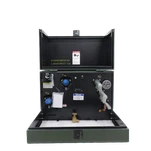


Smart Grid Technology and the Next Generation of Distribution Transformers
A utility engineer in the Midwest once told me the grid stopped behaving like a textbook the day rooftop solar hit 15% penetration on his feeder. By noon, power flows backward through the pad-mounted unit he installed five years ago. By 7 p.m., a cluster of EV chargers pulls current the other way. The smart grid transformer he orders today has to handle both directions without complaining - and that changes how we design, test, and buy distribution equipment.
Over the past decade, smart grid technology went from a pilot-project slogan to the operating baseline for utilities in North America, Europe, and parts of the Middle East and Southeast Asia. The devices connected to the network are changing faster than the network itself. Transformers - the most numerous asset on any distribution system - are now expected to act as sensors, communicators, and load managers, not just voltage converters.
Why Distribution Engineers Can No Longer Predict Load the Old Way
The old planning method was simple: take last year's peak demand, add 2–3% growth, order a transformer with margin. That method breaks the moment a feeder hosts rooftop PV, battery storage, and EV charging at the same time. Load profiles now swing daily - sometimes hourly. A unit sized for a 250 kVA afternoon peak can see 400 kVA of reverse flow at noon on a sunny day.
That's where grid modernization stops being an abstract policy word and becomes a hardware problem. Utilities in the United States are replacing thousands of legacy units under infrastructure programs, and the spec sheets they send us now ask questions that didn't exist five years ago. Can the transformer communicate? Can it tolerate bidirectional power flow? What remote-monitoring interface does it offer?
What Makes a Transformer "Smart" in 2026
Here's the part most buyers miss: a smart grid transformer earns that label through three concrete additions - sensing, communication, and data handling. Sensing means embedded monitoring of winding temperature, oil level and pressure on liquid-filled units, and partial discharge activity. Communication means a standard interface - commonly IEC 61850 or DNP3 - so the unit reports into the utility's SCADA or ADMS system.
The engineering detail matters. Partial discharge measurement is performed during factory testing per IEEE C57.12.00 and IEC 60270 procedures, and a well-built unit typically shows levels well below 10 pC at rated voltage. When the same sensor package stays installed in service, the unit becomes an early-warning device: you see the insulation degradation curve months before a failure, instead of getting a phone call at 3 a.m.
In our test bay, we now run acceptance tests with the monitoring package already fitted, because commissioning teams in Texas and Ontario want sensor data on day one, not six months later. It costs a little more on the factory floor; it saves a truck roll and a night of downtime later.
What to Specify When You Buy a Smart Grid Transformer
The spec sheet for a grid-ready unit reads differently from a legacy one. Here's the comparison we walk buyers through:
|
Parameter |
Conventional Unit |
Smart-Grid-Ready Unit |
|
Sensing |
Nameplate only |
Winding temperature, partial discharge, oil indicators (liquid-filled) |
|
Communication |
None / optional |
IEC 61850 or DNP3 port |
|
Efficiency |
Meets current DOE minimum |
DOE 2024/2029-ready, lower no-load loss |
|
Loading |
Sized for one-way peak |
Bidirectional flow capability |
|
Factory testing |
Routine per IEEE C57.12.00 |
Routine + communication protocol test |
Two parameters deserve extra attention. First, temperature rise class: F-class (155 °C) insulation with a 65 °C average winding rise is the mainstream choice for pad-mounted and dry-type distribution transformers in North America - spell it out in the spec to avoid surprises. Second, no-load loss: it runs 24/7 regardless of loading, so a small efficiency gain compounds into real dollar savings over a 30-year asset life. That is precisely why the DOE keeps tightening minimum efficiency levels.
What Real-Time Data Means for Grid Modernization Programs
Once a smart grid transformer reports into the network, maintenance changes character. Condition-based maintenance replaces fixed-interval inspection: you schedule the oil sample or the fan replacement when the temperature trend says so, not because the calendar says so. Utilities running pilot fleets report meaningful reductions in avoidable outages and service-truck dispatches from this data.
There's a second, less obvious benefit. The load data collected through smart grid technology helps planners size the next feeder correctly instead of overbuilding on the safe side. Over a 20-year asset life, that data is worth as much as the hardware.
Building Smart-Grid-Ready Units: How Ryan Electric Approaches It
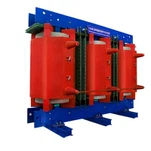
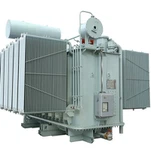
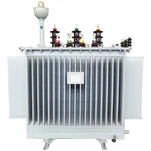
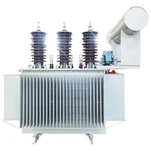
Ryan Electric has manufactured transformers since 2007, and our engineering team has spent the past several years adapting the standard distribution transformer product lines - pad-mounted, dry-type, and oil-immersed - to smart-grid specifications. That means UL and CSA listed options for North American projects, IEEE C57.12.00-compliant factory testing, and the ability to fit monitoring and communication packages without stretching the delivery schedule.
Our cooperation with Eaton as a joint-venture partner gives us direct access to mature component and testing standards, so "smart" features are engineered in at the drawing stage rather than bolted on after delivery. When a customer asks for a non-standard voltage ratio or a custom monitoring interface, we handle it in-house - that custom work is where most projects actually get stuck.
What to Confirm Before You Order
1. Certification scope - UL, CSA, or both, for your exact kVA and voltage combination.
2. Communication protocol - IEC 61850 or DNP3, and compatibility with your SCADA/ADMS.
3. Bidirectional flow rating - if distributed generation is planned on the feeder.
4. Monitoring scope - which parameters are measured and in what format the data is delivered.
5. Factory test report - confirm routine and special tests, including the communication protocol test.
None of these are exotic requirements anymore. Any serious manufacturer can quote them. The difference shows up in how the factory handles them during production - and in whether the unit performs as specified in year five.
Whether you are replacing legacy units under a grid modernization program or building a new distribution feeder, the smart grid transformer you specify today will probably still be in service in 2050. That's a long time to live with a decision made in one afternoon. If you have a project and want a technical review of the specification - communication interface, efficiency class, certification scope - our engineering team responds within one business day. Get a free technical quote