

UL Listed Transformer & CSA Certification - What North American Buyers Actually Need to Know
A contractor in Houston called our office last Tuesday. He had a project in Alberta - a 2.5 MVA pad mounted transformer for a data center expansion. "Your datasheet says UL listed," he said. "But my client's engineer in Calgary wants CSA. Is this a dealbreaker?"
It's not. But the confusion is real. And it costs projects weeks of delay when buyers don't understand how transformer certification North America actually works.
A Certification Question That Comes Up Every Week
Here's the scenario we see constantly: a project crosses the US-Canada border, and suddenly the compliance team starts asking for documents that the supplier already has - just under a different name.
The core misunderstanding? UL (Underwriters Laboratories) and CSA (Canadian Standards Association) are not competitors. They are both Nationally Recognized Testing Laboratories (NRTLs) recognized by OSHA in the US, and both are accredited by the Standards Council of Canada. Since bilateral recognition agreements exist between US and Canadian regulatory bodies, a UL listed transformer built to harmonized standards typically meets the technical requirements for Canada - and a CSA certified transformer built to CSA standards generally satisfies US requirements.
Here's the part most buyers miss:
It's not about UL versus CSA. It's about whether the specific standard the transformer was tested against is recognized in your jurisdiction. And for pad-mounted equipment heading to Canada, the local utility often demands a CSA sticker specifically - not because UL isn't technically equivalent, but because their field inspectors are trained to look for it.
We learned this on a 2024 shipment to Saskatchewan. The utility engineer opened the crate, looked at the nameplate, and said "Where's the CSA mark?" He didn't care that UL 1562 and CSA C22.2 No. 66 are harmonized under IEEE C57.12.28. He wanted the logo he was trained to see. We got it resolved with a field evaluation, but it added three days nobody planned for.
|
Certification Body |
Dry Type Standard |
Liquid-Filled / Pad Mounted |
Primary Recognition |
|
UL |
UL 1561 |
UL 1562 |
United States |
|
CSA |
CSA C22.2 No. 47 |
CSA C22.2 No. 66 |
Canada |
|
Test Methods |
IEEE C57.12.01 / C57.12.91 |
IEEE C57.12.28 (enclosure) |
Harmonized |
DOE 2016 Efficiency Rules: The Hidden Compliance Layer
A certification mark gets your transformer across the border. Staying in service? That's a different requirement - and it's the one that catches buyers off guard.
The US Department of Energy's 10 CFR Part 431 sets minimum efficiency levels for distribution transformers. Since January 2016, any transformer sold into the US market must meet these levels. Canada's NRCan Amendment 15 mirrors DOE 2016 with near-identical requirements.
What happens if your unit doesn't comply?
Customs can flag the shipment. More importantly - and this is what keeps project managers up at night - a commissioning engineer can reject the transformer at the jobsite if the nameplate efficiency doesn't match the submitted compliance documentation. We've had inspectors pull test reports by serial number during commissioning.
The numbers you need to know (DOE 2016 minimums for liquid-filled, three-phase):
|
kVA Rating |
Minimum Efficiency at 50% Load |
|
500 kVA |
99.14% |
|
1000 kVA |
99.23% |
|
2000 kVA |
99.33% |
|
2500 kVA |
99.36% |
For dry-type units, the numbers are lower - roughly 98.5–99.0% depending on kVA and voltage class. But the enforcement is just as strict. If your UL listed transformer can't produce a test report matching the nameplate data, the project stalls.
The 3 Stages of Getting a Transformer UL/CSA Certified
When a customer asks "how long does certification take?", the honest answer is: it depends on whether you're certifying an existing design or starting from scratch. Here's what the process actually looks like.
Stage 1: Design Review & Material Qualification
Before a single winding is wound, the certifying body reviews your insulation system. For dry-type transformers, that means UL 1446 - the standard for insulation system classification. Every material - the Nomex, the magnet wire enamel, the varnish - must be pre-qualified within a recognized insulation system. We maintain a Class H (180°C) insulation system, pre-approved by UL under their Recognized Component program. Without this foundation, a design review simply won't start.
Stage 2: Factory Testing & Witness Testing
This is where it gets real. A representative from the certification body visits the factory and witnesses a battery of tests:
Temperature rise test (continuous run, typically 8–12 hours)
Dielectric tests (impulse and power-frequency)
Short-circuit withstand (for larger units)
Partial discharge measurement (for cast-resin dry-type)
We run these tests in our CNAS-accredited laboratory - accredited by DEKRA under ISO/IEC 17025. Having a CNAS lab means we can do full pre-testing internally before the witness visit. Fewer surprises when the inspector arrives.
Stage 3: Follow-Up Service
This is the part nobody talks about but matters most for long-term buyers. Once certified, the factory receives unannounced quarterly inspections. The UL Follow-Up inspector walks our production floor every three months, checks nameplate compliance against live production, reviews test records, and can pull any unit for re-testing. We've been through this cycle for years. The inspector knows where our calibration records are kept by now - and that's exactly how it should be.
Ryan's Certification Reality: Not Just a Logo on a Nameplate
Since 2023, when Eaton became our joint venture partner, our certification infrastructure has been rebuilt from the ground up. The Eaton partnership didn't just bring capital - it brought process rigor that our North American customers recognize.
Our UL listed transformer portfolio now covers:
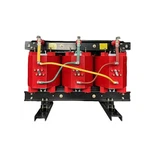
Dry-type units up to 15 kV class, certified to UL 1561
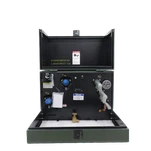
Pad-mounted transformers up to 5 MVA, certified to UL 1562
CSA certified transformer units built to CSA C22.2 No. 47 and No. 66 for Canadian projects
The factory spans 120,000 square meters with over 180 sets of production and testing equipment. But the number that matters most for certification is 37 - our patent count. Each patent represents a design that had to survive witness testing and quarterly inspection at some point.
We've shipped certified transformers into data centers serving Microsoft and AWS, mining operations in Africa, and utility grids across Southeast Asia. Every unit carries a nameplate that tells the full compliance story - certification mark, standard number, efficiency at 50% load, and impedance. Nothing hidden.
One Thing Most Buyers Overlook
Here's a mistake that has cost real money on real projects.
A buyer sees "Ryan Electric - UL Certified" on a website and assumes every transformer we build carries UL listing.
That's not how certification works.
UL and CSA certify specific transformer models - not companies. A manufacturer can have 5 models listed with UL and build 50 other models that were never submitted for certification. You need to verify the specific model you're buying in the UL Product iQ database at productiq.ul.com.
We've seen a competitor quote "UL equivalent" construction and never register the design. The transformer was well-built - but the customer couldn't get approval from the local Authority Having Jurisdiction (AHJ). That's a six-figure problem nobody needs.
Ask your supplier one question: "Send me the UL file number for this exact model." If the answer is vague, walk away.
Ready to Spec a Certified Transformer?
Transformer certification North America isn't a checkbox you tick during procurement. It's a compliance system that starts at design review, runs through factory witness testing, and continues with quarterly inspections for the life of the product.
If you're planning a project in the US or Canada - whether it's a single 500 kVA dry-type for a commercial building or a bank of 2.5 MVA pad-mounted units for a solar farm - start the certification conversation early. Bring your spec sheet. We'll map it to the right standard and confirm the listing status before you commit.
Have a project in North America? Get a free technical quote with full certification documentation - contact our engineering team.