

Dry Type vs Oil Immersed Transformer - How to Choose the Right One for Your Project
A project engineer at a Dallas data center campus called us last month. He had a 12 MW load, an indoor electrical room with sprinkler coverage, and a procurement manager asking why the dry type vs oil immersed transformer conversation was still unresolved at Week 14. The real issue wasn't budget. It was a gap between the spec sheet and the site reality - something every engineer who's ever stood in a half-built substation understands.
Here's the core difference in one sentence: dry type transformers cool their windings with air; oil immersed transformers submerge them in dielectric fluid. That single mechanical choice cascades into fire safety rules, installation footprints, maintenance schedules, and a 30-year cost profile that most upfront quotes don't capture.
What Is a Dry Type Transformer?
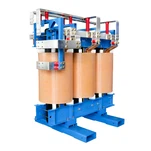
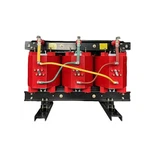
A dry type transformer uses ambient air or forced air as its cooling medium, with no liquid dielectric involved. The windings are encapsulated in solid insulation - either epoxy resin (cast resin) or vacuum-pressure impregnated (VPI) varnish - that provides both electrical isolation and thermal conduction to the surrounding air.
The cast resin variant dominates the North American data center market for a reason. Epoxy encapsulation creates a sealed, non-hygroscopic insulation layer that handles 155°C (Class F) or 180°C (Class H) temperature rise without degradation. In our factory, we test every cast resin unit for partial discharge below 10 pC before it leaves - a number most spec sheets skip but site commissioning engineers ask about constantly.
VPI dry type units, by contrast, use a varnish-impregnated winding that's baked under vacuum. They're lighter, more compact, and typically 15–20% less expensive upfront than equivalent cast resin units. The trade-off is moisture sensitivity: a VPI winding exposed to 95% humidity for extended periods can lose insulation resistance faster than epoxy. That's why we recommend cast resin for tropical climates and VPI for controlled indoor environments.
Typical applications: indoor substations, data centers, commercial high-rises, metro systems, hospitals, and any installation where fire codes prohibit flammable liquids on site.
What Is an Oil Immersed Transformer?
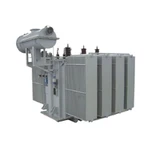
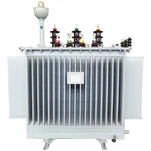
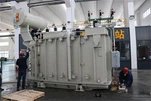
An oil immersed transformer - sometimes called a liquid-filled or mineral oil transformer - surrounds its core and windings with insulating oil that serves double duty as a dielectric barrier and a convective cooling medium. The oil circulates naturally (ONAN) or via pumps (OFAF), carrying heat from the windings to external radiators.
Two configurations dominate the market. Sealed-tank designs - common in distribution-class units up to 5 MVA - eliminate the conservator tank and use a nitrogen blanket to accommodate oil expansion. For larger units (10 MVA and above), the traditional conservator with a silica gel breather remains the standard because it handles thermal expansion across a wider temperature range without stressing the tank welds.
Here's the part most buyers miss: the oil isn't just coolant. Mineral oil's dielectric strength runs 40–60 kV per 2.5 mm gap (ASTM D877), roughly 10× better than air at the same distance. That compact insulation geometry lets oil-filled units achieve higher kVA ratings in a given footprint. When you're pushing past 20 MVA at 69 kV primary, oil immersion stops being a choice and becomes a physics requirement.
Typical applications: outdoor utility substations, solar farm step-up stations, mining operations with high overload cycles, and industrial plants with large motor-starting demands.
Head-to-Head: 6 Dimensions That Decide the Winner
When a dry type vs oil immersed transformer comparison stays on PowerPoint slides, everyone argues theory. When it hits the site, these six dimensions settle the argument. Here's the decision framework we use with clients:
|
Dimension |
Dry Type (Cast Resin / VPI) |
Oil Immersed |
|
|
Fire Safety |
Inherently flame-retardant; meets NFPA 70 indoor without fire vaults. |
Requires fire walls, oil containment pits, sprinklers per NFPA 850. |
Dry type wins for indoor fire safety. |
|
Installation Location |
Indoor-standard. Outdoor needs IP54 enclosure (+18% cost). |
Outdoor by default. Indoor needs vault + FM Global approval. |
Location dictates choice. |
|
Maintenance Frequency |
Annual visual check. No oil testing. Fans are only moving parts. |
Annual DGA; oil testing every 2-3 yrs; breather desiccant changes. |
Dry type: near-zero maintenance. |
|
Overload Capacity |
Limited thermal mass. 30% overload hits 140°C in ~40 min. |
High oil thermal inertia. 30% overload takes 3+ hrs to reach critical temp. |
Oil wins for heavy cyclic loads. |
|
Energy Efficiency |
Full-load comparable. Lower auxiliary losses (no pumps). |
Better part-load. Amorphous core cuts no-load losses 70%. |
Depends on load profile. |
|
30-Year Lifecycle Cost |
Higher upfront (cast resin). Maintenance savings offset by Year 12-15. |
Lower purchase cost. Oil handling adds $3-7k/yr for medium units. |
Dry type wins long-term indoors. |
One thing that table doesn't show: the cost of getting it wrong. We shipped a 5 MVA oil-filled unit to a Canadian mining client in 2024 who originally specified dry type - until their electrical consultant flagged that the ambient temperature range (-40°C to +35°C) would stress cast resin's thermal cycling limits over a 25-year design life. They switched to oil, added a thermostatically controlled tank heater, and saved roughly $180,000 in avoided de-rating losses over the asset lifetime. A proper transformer selection guide question at Week 3 would have flagged this; they caught it at Week 28 instead.
When Dry Type Wins - and When Oil Immersed Makes More Sense
If you're building a hyperscale data center in Northern Virginia or Johor, Malaysia, the choice has already been made: dry type, specifically cast resin transformer units in indoor galleries. Fire suppression systems hate mineral oil. The local fire marshal's office knows exactly what NFPA 70 says about indoor oil-filled equipment, and the answer is usually "not without a concrete vault that costs more than the transformer."
If you're installing a 50 MVA unit at a solar farm interconnection point in Texas or Dubai, you're buying oil immersed. There's no indoor constraint, the overload headroom matters during midday peak clipping, and the kVA-per-dollar economics at that scale are unarguable. The BIL (basic impulse level) requirements at 69 kV and above also favor oil's naturally higher dielectric strength.
The gray zone lives between 3–10 MVA, indoors, with moderate fire separation available. That's where a transformer selection guide framework delivers real value:
Data center with on-site diesel backup: dry type, cast resin - the gensets already occupy the fire-risk budget
Underground metro substation: dry type, cast resin - ventilation-limited, zero tolerance for oil leaks
Remote mining operation with 150% overload cycles: oil immersed - thermal inertia handles the surge; maintenance crews are on-site anyway
Hospital campus with rooftop restricted: oil immersed, outdoor pad - cast resin's weight on a roof structure adds structural steel costs that erase the dry-type advantage
How Ryan Electric Builds Both - to the Same Standard
Most factories pick one technology and push it. We build both - and to the same certification standard. That matters more than it sounds.
The same UL 1561 and CSA C22.2 No. 47 certification audits that govern our dry type transformer production apply to the oil immersed line running 200 meters across the factory floor. The same Eaton joint venture quality system (ISO 9001:2015, with Eaton's own layered process audit protocol) governs both product families. When a project engineer asks us for an unbiased recommendation between dry type vs oil immersed transformer, we're not steering toward whatever inventory we need to move - we're comparing specs against site conditions using the same engineering checklist.
Our 120,000 m² manufacturing campus in China runs 180+ sets of production and testing equipment, including impulse voltage generators rated to 1,200 kV for BIL testing and a dedicated short-circuit test bay capable of handling 40 MVA units. Every transformer - dry or oil - leaves the factory with a partial discharge certificate, a winding resistance trace, and a full FAT (factory acceptance test) report. No exceptions.
Still Not Sure? Let's Run Your Numbers
A two-paragraph blog post won't replace a proper site-load study and a thermal analysis. But here's what we do for clients who are stuck in the dry type vs oil immersed transformer decision: send us your project brief - kVA rating, primary/secondary voltage, installation location (indoor/outdoor), ambient temperature range, and any fire code constraints. Our application engineering team runs a preliminary spec comparison and delivers a recommendation with a budget quote within three business days.
No pressure. Just numbers.
Have a project that needs a transformer decision? Get a free technical recommendation at ryan@ryan-transformers.com or visit our product pages for detailed spec sheets.
About the Author
The author is a senior application engineer at Ryan Electric (Ryan Transformers), with 10+ years of experience in medium-voltage transformer design and factory acceptance testing. Ryan Electric has been a UL/CSA-certified transformer manufacturer since 2007, operates a 120,000 m² production facility, and entered a joint venture partnership with Eaton in 2023. The company has supplied transformers for projects at Microsoft, Amazon, and CATL facilities globally.