

U.S. Delegation Eyes Southern Africa Grid Modernization - What It Means for Transformer Suppliers
For a transformer supplier, Africa has long been a marginal market - the kind of region you service after the North American and European orders are booked. That view is getting harder to defend. On August 24, 2026, a U.S. delegation hosted Southern African power officials to explore grid modernization partnerships, showcase advanced distribution grid control, and open commercial opportunities across the region.
Here's why that meeting matters beyond diplomacy: grid modernization in Africa is shifting from an aid topic to a procurement market. Utilities are buying equipment, EPCs are quoting projects, and the transformers that hold those grids together are being specified right now. This article breaks down what is changing, what African buyers actually check, and how suppliers should respond.
What the U.S.–Southern Africa Delegation Actually Signals
The official trip was about partnerships - grid control solutions, workforce training, and regional network planning. Read between the lines and the message is simpler: international capital and technology are being lined up for one of the world's largest untapped electricity markets.
For equipment suppliers, the signal is timing. Delegations and financing packages are usually the first visible step of a 12-to-24-month procurement pipeline. Utilities that participate in these exchanges typically follow with tenders for substations, distribution lines, and the transformers that connect them. The window to get onto approved vendor lists is opening now.
The Demand Behind the Talks: Utilities, Mining, and Data Centers
Southern Africa's transformer demand is not speculative. It comes from three concrete sources:
Utility expansion. Hundreds of millions of people across sub-Saharan Africa still lack reliable grid access, and national utilities are rolling out distribution networks funded by multilateral lenders. Every new feeder needs a distribution transformer.
Mining electrification. Copper operations in Zambia's Copperbelt and platinum and chrome mines in South Africa are replacing diesel with grid power and expanding load capacity. Mine sites buy oil-immersed units in quantity - and they buy them repeatedly as operations grow.
Data center buildout. Kenya, Nigeria, and South Africa are seeing data center campuses sized for regional cloud demand, each requiring dedicated substation transformers and indoor dry-type units.
Add it up and grid modernization Africa projects now consume a measurable share of global transformer export capacity - a share that barely existed five years ago.
Five Things African Buyers Check Before They Order
We have quoted distribution and power transformers into African projects for over a decade. The questions buyers ask are specific, and they separate serious suppliers from traders fast:
1. Certification traceability. IEC 60076 compliance is the baseline, but buyers want the factory test certificate for the exact serial number - not a generic type test from another model. Transformer certification paperwork must travel with the unit.
2. Tropical derating. Standard ratings assume 40°C ambient. Much of the region runs hotter and dustier; we derate oil-immersed units for 45°C ambient and fit IP54 enclosures as standard for substation duty.
3. Voltage regulation. Grid voltage swings in the region are wider than in developed networks. On-load tap changers (OLTC) with ±10% range are increasingly specified on distribution units - a feature that was rare in this class a few years ago.
4. Lightning withstand. High isokeraunic levels mean basic impulse level (BIL) ratings matter. A 33 kV system unit specified at 170 kV BIL needs the winding design verified, not assumed.
5. Spare parts and service. Buyers ask who answers the phone when the unit is five years old. A supplier with a service network - or at least a fast spare-parts dispatch - wins the repeat orders.
These five checks are exactly the ones that trip up importers who buy on price alone. The cheapest unit on the board usually fails on at least three of them.
The Supplier Gap: Why Local Capacity Can't Keep Up
Regional transformer manufacturing exists, but it is concentrated and capacity-limited. Most Southern African utilities still import a large share of distribution and all of their higher-rated power transformers. That import dependency is the opening for a transformer supplier Africa buyers can actually reach - one with factory capacity, certification depth, and shipping experience to the region.
The practical math: power transformer manufacturer lead times globally are still stretched by data center and grid demand. Buyers who plan 18 months ahead get delivery windows; those who wait for a local quote to fall through end up waiting another year. Our 2026 lead time guide covers the planning math in detail - the same logic applies from Lusaka to Houston.
How Ryan Electric Serves African Projects
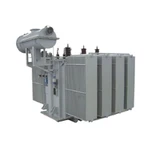
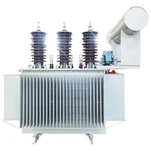
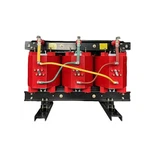
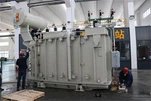
As a transformer supplier with a dedicated export desk for African tenders, we design for the conditions buyers actually face - not the conditions of a temperate factory spec. Our oil-immersed distribution line is available with 45°C ambient derating, IP54 enclosures, OLTC options, and BIL levels verified per IEC 60076 for 11 kV, 22 kV, and 33 kV systems.
A utility procurement manager in East Africa told us last quarter that his biggest fear was not price - it was receiving units that did not match the tender's certified test data. That is why every unit we ship carries routine factory test results from our CNAS-accredited lab, aligned with the practices of our Eaton joint venture partnership since 2023. The certificate matches the serial number, and the serial number matches the container.
If you are tendering a substation or distribution project in the region, send us your tender spec and we will respond with a compliance-checked quote - including the certification matrix and tropical derating calculations, before you compare prices anywhere else.
The Bottom Line
For every transformer supplier watching Africa, the takeaway is the same: the delegation talks are a leading indicator, the demand from utilities, mining, and data centers is already here, and the buyers who win tenders are the ones who start the certification and delivery conversation early.
Tendering a project in Southern Africa? Get a free compliance check on your spec → Contact our export team with your transformer schedule, and we will reply within one business day.