

2,500 GW Stuck in Grid Queues: A Grid Connection Transformer Strategy for 2026
The solar inverters cleared customs on time. The panels are stacked in the warehouse. And the project is still waiting - not for permits, not for financing, but for a spot in the grid connection queue. That scene is repeating across North America, Southeast Asia, and the Middle East in 2026, and it has quietly changed how serious developers buy transformers.
The International Energy Agency (IEA) put a number on it this summer: over 2,500 GW of renewable, large-load, and storage projects are currently stalled in grid connection queues worldwide. For anyone specifying a grid connection transformer, the message is blunt - the grid, not the equipment, is now the critical path. This article breaks down what the IEA data means for your project and how to keep the transformer from becoming the second queue you wait in.
The Grid Just Became the Slowest Part of the Energy Transition
The IEA's Electricity 2026 report describes an "Age of Electricity": global power demand climbing on AI workloads, data centers, EVs, and electrified industry. Demand was never the hard part. Delivery is. Grid infrastructure takes 5 to 15 years to plan, permit, and build, while a solar farm takes 1 to 5 years, a data center 1 to 3 years, and an EV charging site 1 to 2 years.
That mismatch shows up in the investment numbers. To meet demand through 2030, annual grid investment needs to rise by roughly 50% from today's USD 400 billion level, according to the IEA's grids analysis. At the same time, prices for key grid components have nearly doubled in five years.
More projects, a slower grid, pricier components - that combination is why transformer, switchgear, and breaker lead times stopped being a footnote in project planning and became a schedule item.
The comparison below is worth putting in front of your steering committee, because it frames the whole problem in one table:
|
Asset Type |
Build / Connect Time |
Constraint |
|
Grid infrastructure |
5–15 years |
Planning, permitting, construction |
|
Solar PV / wind farms |
1–5 years |
Financing and grid slot |
|
Data centers |
1–3 years |
Power availability |
|
EV charging sites |
1–2 years |
Grid capacity at the node |
Source: IEA, Electricity 2026 (Grids chapter).
What You Can Control While the Queue Moves
You cannot shorten the interconnection study. You can, however, make sure the transformer side of the project is not a second queue you join in 2027. In our experience, three moves separate prepared buyers from reactive ones this year:
Lock production capacity early. Reserve a production slot before the interconnection approval lands, not after. Manufacturers allocate capacity in quarterly windows, and a slot held in Q3 is a slot that exists in Q1. This is the single most effective piece of a transformer procurement strategy 2026.
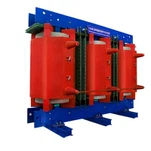
Specify standard designs first. A standard UL-listed pad-mounted or dry-type unit moves through the factory in weeks. A custom build carries engineering, materials, and test time measured in months. Unless the site truly requires a special impedance or voltage, standard beats bespoke every time in a queue year.
Pre-verify certification at RFQ stage. UL, CSA, or IEC compliance checked when you send the inquiry - not after the award - saves the single biggest schedule risk: re-engineering a certified design or waiting on a first-time certification.
None of this is exotic. It is sequencing, the same discipline utilities apply to their own fleet planning. The developers who treat transformer procurement as part of the interconnection timeline - not an afterthought - are the ones hitting energization dates while neighbors wait.
One more factor makes 2026 different from 2024: the U.S. DOE efficiency rules that took effect this year are pushing utilities to replace older, lower-efficiency units in volume. Replacement demand stacks on top of new-build demand, which means the capacity that was tight last year is tighter now. Plan accordingly.
Have a project sitting in a queue right now? Send us your single-line diagram and target energization date - we will tell you honestly what the transformer path looks like. Get a free technical quote.
Dynamic Transformer Rating: More Capacity from the Same Nameplate
Here is the part most buyers miss: not every grid capacity problem needs new wires. The IEA lists dynamic transformer rating (DTR) among the grid-enhancing technologies that could unlock 450–700 GW of stuck capacity globally - and it is one of the cheapest levers on the table, deployable in 1–2 years on existing assets.
DTR replaces the static nameplate assumption with live loading data. Instead of assuming worst-case ambient temperature all year, the system reads winding hot-spot temperature, oil temperature, and cooling conditions in real time, then calculates how much load the unit can actually carry at that moment. Under the loading guidance of IEC 60076-7 and IEEE C57.91, a unit that looks "too small" on paper may be perfectly fine for 80% of the year - and DTR proves it with data instead of guesswork. The IEA estimates the usable capacity gain at 5–15% per unit.
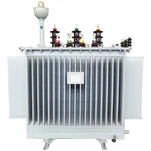
For a utility or a large commercial owner, that changes the calculus on asset purchases: buy the right transformer, then let monitoring unlock the headroom. This is exactly why we offer embedded winding temperature sensors and communication ports on our distribution transformers - the hardware for DTR is a small premium at build time, but retrofitting it later is a different story. Ask your supplier three questions: does the design include sensor provisions, does the control package export load data, and can the unit carry a defined overload profile without derating its service life?
How We Engineer for Grid-Queue Reality
The queue problem changed how we quote at our factory. When a customer in Texas asks about a dry type transformer for data center application, the first question is no longer just kVA and voltage - it is the energization date, the interconnection status, and the certification required at the point of delivery. Those three answers decide the design we propose.
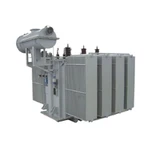
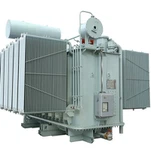
We have been the manufacturing partner behind Eaton's joint-venture line since 2023, and our production floor runs UL, CSA, and IEC-certified build processes. That matters more in a queue year than in a calm one: a certified design with file coverage and test reports in hand moves from approval to shipment without rework, while a first-time certification can add months. When we quote a grid connection transformer, the certification status is written into the offer, not discovered later.
And when customers are waiting on the grid anyway, we use the window productively: factory acceptance tests recorded on video, test reports reviewed line by line with the customer's engineer, spare parts kitted into the same container. When the interconnection approval finally lands, the transformer is simply not the gating item.
What the Field Is Telling Us in 2026
The pattern repeats across regions. A Southeast Asian data center developer ordered two 30 MVA units six months before grid approval - the transformers were shipped, tested, and stored on-site when the queue cleared. A Middle East solar EPC consolidated its 33 kV units into one order instead of three staggered ones, cutting exposure to price escalation. A Canadian utility that pre-verified CSA documentation at inquiry stage shaved weeks off commissioning. Nothing dramatic - just procurement that treated the grid queue as the real schedule.
The IEA's Mid-Year Update 2026, published in July, confirms the direction: electricity demand growth is strong, and grids - not generation - are the binding constraint. Before your next project review, read the grids chapter of Electricity 2026 in full; it is the most current public picture of what your interconnection request is actually competing against.
One practical note on supplier verification: ask for the factory's current order book position, not just a lead time. A supplier that quotes 14 weeks with a full book is telling you something different from a supplier that quotes 14 weeks with open capacity. Both answers are useful - just know which one you are hearing.
Grid Connection Transformer Procurement: Where to Start
If your project is in a queue today - or likely to be next year - the cheapest insurance is a conversation with a manufacturer who has been through it. Send us your load profile, voltage class, and target energization date, and we will respond with certified options, realistic production slots, and test documentation you can attach to your interconnection filing.
About the Author: Written by the engineering team at Ryan Electric, a transformer manufacturer serving utility, renewable, and data center customers across North America, Southeast Asia, and the Middle East. We have shipped certified dry-type, pad-mounted, and oil-immersed units to projects already deep in the grid queue - and we write about what we actually see on the shop floor, not what a brochure says.
Have a project waiting on a grid connection? Get a free technical quote - we reply within one business day.