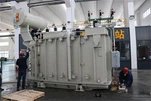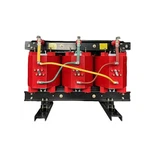


Buyers of transformers for cold climates rarely start with the cold. Last January, a contractor in northern Alberta called us about a pad-mounted unit that had finished its first winter on a new subdivision feeder. The transformer ran without a fault. But on every cold morning the low-voltage compartment door was frosted shut, and the breather iced over so the oil tank could not breathe properly. Nobody had stopped to ask the question that mattered most: what minimum ambient temperature was this unit actually designed for? That phone call is why this guide exists.
Most transformer specifications are written around a +40 °C design ambient, the conventional basis used across the IEEE C57 standard family. The cold side of the envelope rarely gets the same scrutiny - yet the sites where transformers for cold climates are installed, from Alberta to Scandinavia, treat -40 °C as a normal weekday. At those temperatures every material interface behaves differently: the oil, the gaskets, the breather, the relays, and even the paint on the tank.

Why -40 °C Is a Design Condition, Not an Afterthought
Transformer oil is not a fixed material; its behavior is a function of temperature. Viscosity climbs steeply as the mercury falls, and below a certain point the oil stops flowing altogether. That point - the pour point, measured per ASTM D97 - is the first number a cold-climate spec should pin down. A typical naphthenic insulating oil carries a pour point in the region of -45 °C, which is why naphthenic grades dominate cold-region service. Paraffinic oils, by contrast, often pour at -15 °C to -25 °C and need pour-point depressants to go lower. Specifications for transformers for cold climates must be written against the coldest week of the year, not the yearly average.
Cold also changes how moisture behaves. Frost and condensation find every unsealed path into a tank or a compartment, and once water is inside a cold transformer it is far harder to drive back out. The gaskets that seal those paths lose elasticity as they cool: most nitrile compounds stiffen badly below roughly -30 °C, EPDM holds its seat to about -40 °C, and silicone formulations remain pliable well beyond that. If the gasket spec was chosen for a warm warehouse instead of the actual site, the leak does not appear in the factory - it appears in February, at 6 a.m., on the coldest day of the year. Design and test guidance for these units comes from the standards published by the IEEE Standards Association.
Low Temperature Transformer Oil: The First Decision
Here is the part most buyers miss: a transformer does not have to be running to be cold. A new unit waiting on its foundation, or a spare sitting in a switchyard, spends its nights at ambient temperature. The oil inside must remain fluid at the coldest temperature the site can reach - which is why low temperature transformer oil selection is an engineering decision, not a line item.
As a working rule, we look for an oil whose pour point sits at least 10 °C below the lowest ambient temperature the unit will ever face, and we ask the refinery for the batch certificate, not the catalogue page. For projects that name -40 °C or colder, that usually means a low-viscosity naphthenic grade with a documented pour point near -50 °C or lower, and we record that value in the test documentation that ships with the unit.
Viscosity matters at the other end of the pump as well. Forced-oil cooling (ONAF/ODAF) depends on oil that can circulate, and a pump pushing cold, high-viscosity oil needs its motor and seal ratings checked against the start-up temperature. We flag this on every quote that involves pumps and a cold ambient, because it is exactly the detail that disappears between the transformer spec and the cooling-system sub-supplier.
Seals, Breathers, and the Accessories That Fail First
Most cold-climate failures we hear about are not winding failures. They are accessory failures: a breather blocked by frozen desiccant, a pressure-relief device that does not reseat cleanly, a relay contact that hesitates at -35 °C. The tank and windings, designed with margin, ride out the winter. The accessories were often specified at "standard," which in practice means "warm."
For free-breathing designs, the dehydrating breather is the weak point. Silica gel absorbs moisture efficiently when warm, but a frosted breather cannot breathe - the tank then sees pressure swings it was not designed for. The common fixes are heated breathers or a switch to a sealed-tank design with a nitrogen or diaphragm system, which removes routine breathing altogether. For a pad mounted transformer serving a Canadian subdivision or a Scandinavian industrial lot, we usually recommend the sealed option for winter service, and a heated breather where an existing specification demands a conservator.
The rest of the accessory list reads like a winter checklist: anti-condensation heaters in the low-voltage compartment (the same heater that prevents condensation in summer keeps door seals ice-free in January), cold-rated gaskets on every door and cover, low-temperature grease on hinges and three-point latching mechanisms, and control relays and temperature indicators whose datasheets state an operating range down to -40 °C. Each item is small. Each one can stop a unit from being energized on a cold morning.

What the Factory Checks Before a Cold-Climate Shipment
In our factory, every cold-climate order goes through the same desk review before steel is cut. The oil pour-point certificate must match the site minimum with margin. Every gasket material is checked against its low-temperature rating. Heaters, relays, and breathers are verified against their datasheet operating ranges. One 2,000 kVA order for a Nordic substation arrived at review with a standard breather on the bill of materials; it was swapped for a heated type in the same meeting. Catching that on paper costs an hour. Catching it on site costs a winter.
The nameplate and the documentation matter as much as the hardware. When a unit is designed for a -40 °C ambient, we state that on the nameplate and in the test report, so the receiving engineer can confirm the delivered unit matches the ordered one. Temperature-rise tests are run to the conventional +40 °C basis because the standards require it; the cold-side verification is a material and component exercise, and it happens at the specification stage, not after the crate is sealed.
How Ryan Electric Builds Transformers for Cold Climates
Ryan Electric has built distribution and power transformers at our 120,000 m² factory in Jiangsu since 2007, and we have shipped low-temperature designs to Canada, the Nordic region, and high-elevation projects where night-time temperatures punish every material choice. As an Eaton joint venture partner, our engineering team works inside a component supply chain that documents cold performance properly, which shortens the specification loop for custom builds. In Canada, utility specifications for liquid-filled distribution units reference standards published by CSA Group, and we map the accessory and oil decisions in this guide onto those documents before quoting.
When a buyer sends us a cold-climate RFQ for a pad mounted transformer or an oil-immersed unit, we come back with specific questions before we come back with a price: the minimum ambient temperature, whether the unit will be energized continuously or may sit idle through winter, the cooling mode (ONAN or forced), and whether the site is coastal - salt and frost together attack enclosures harder than either does alone. The answers change the oil grade, the gasket schedule, and the accessory list.
Spec Your Next Transformer for the Winter It Will Actually See
The pattern is consistent. Transformers for cold climates fail on details that were never specified, and they usually fail in the first winter, when the warranty conversation is at its most painful. Write the minimum ambient temperature into your RFQ. Ask for the oil pour-point certificate. Confirm gasket materials, breather arrangement, and heater schedule before you place the order, and verify the nameplate states the design ambient when the unit arrives.
If you are planning a project in a cold region and want the specification reviewed by engineers who have shipped into those winters, send us your rating and site conditions - we will come back with the oil grade, the accessory list, and a realistic schedule. Contact our engineering team through ryan-transformers.com.
About the Author: This article was written by the engineering team at Ryan Electric, an Eaton joint venture partner and UL/CSA-certified transformer manufacturer in Jiangsu, China, serving utility, data center, and industrial buyers across North America, Europe, the Middle East, and Southeast Asia.