

Last November, a contractor in Alberta called us about a 750 kVA pad-mounted unit that had left our factory in August. The transformer had arrived on site in good shape - no dents, no leaks, shrink wrap intact. But the shipping pressure gauge read zero. The nitrogen blanket that should have kept moisture out of the tank had bled off somewhere during five weeks at sea and another two on a rail car. The contractor wanted to energize it the same afternoon. We asked him to run a 10-minute insulation resistance test first. The numbers told a different story, and the unit spent three weeks in a drying process before it was safe to energize. None of that showed up in the purchase order, because nobody had written a line about transformer shipping and storage.
That gap costs buyers real money every year. The kVA, the voltage class, the impedance, the loss figures - those get negotiated hard. The journey between our factory gate and your pad, and the months a unit may sit before energization, almost never make it into the spec. This guide covers what we check on our side before a unit leaves, what you should check in the first hour after delivery, and how to store a transformer without turning it into an expensive liability.
The First Question Nobody Asks When They Spec a Transformer
When an RFQ lands in our inbox, it usually contains the ratings, the governing standard (IEEE C57.12.00 or IEC 60076), the certification the project needs, and a delivery date. What it rarely contains is a shipping mode: will the unit travel filled with oil or under a nitrogen blanket? Will it move by break-bulk, container, or flat rack? Who owns the risk between factory and site - the buyer's freight forwarder or ours? Who downloads the impact recorder when the truck arrives?
Here is the part most buyers miss: the shipping decision changes the site checklist. A unit that travels filled needs an oil-level check and a leak inspection on arrival. A unit that travels under nitrogen needs a pressure-gauge reading and, if the gauge reads zero, an insulation assessment before energization. Order the wrong mode for your route and you are gambling on the most expensive component in the substation.
Transformer Shipping and Storage: How an Oil-Filled Unit Travels by Sea
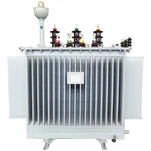
Liquid-immersed distribution and power transformers move in one of two basic conditions. Smaller distribution units - the pad-mounted transformers in the 300 kVA to 2,500 kVA range that dominate North American projects - often leave the factory filled with mineral oil, sealed, and ready to set on a pad after routine checks. Larger power transformers are frequently shipped with the tank under a dry nitrogen blanket instead of being filled to the top: the oil travels in drums, the unit rides lighter, and oil processing happens on site before energization.
Both modes protect the core and windings from one enemy: moisture. A warm transformer breathing humid coastal air pulls water into the insulation system, and cellulose insulation that gains moisture loses dielectric strength and ages faster under load. That is why the tank carries a pressure gauge or a breather, why nitrogen-blanketed units are held at a low positive pressure, and why a zero reading on arrival is a red flag, not a minor annoyance. We once had a customer's freight forwarder stack a second container on top of an unpacked unit - the corner frame held, but the pressure-relief device was the part that told the story when the tank was inspected.

The reference document for this phase is IEEE C57.93-2019, the IEEE guide for installation and maintenance of liquid-immersed power transformers rated 501 kVA and above. It covers receiving, storage, and pre-energization checks for exactly the units we are talking about. For smaller pad-mounted units below that rating, the factory's own installation manual - we include one with every shipment - is the governing document. Ask for both before the unit ships, not after it arrives.
What We Do Before the Truck Leaves the Factory Gate
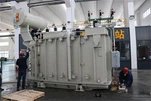
On our side, the process starts weeks before loading. Every export unit gets a documented pre-shipment check: drain and fill plugs torqued and photographed, the pressure gauge verified, the silica-gel breather inspected (blue is good; pink means it has absorbed moisture and gets changed), and the impact recorder armed and sealed. The unit is then packed to the route - steel-framed crates for open-deck sea freight, containerized bracing for FCL moves, with lifting points, center-of-gravity marks, and tilt indicators visible on the outside of the packing.
Two documents travel with every unit, and you should ask for them by name. The first is the packing list with the shipping marks. The second is the routine test report from the factory floor - no-load loss, load loss, impedance, and insulation resistance measured before the unit left. That report becomes your baseline. Without a baseline, a field test reading on arrival means very little, because insulation resistance numbers swing with temperature and humidity. We also send the buyer a set of loading supervision photos and the impact recorder data by email the day the truck leaves; if your supplier does not offer that, ask.
Quality discipline on the shipping side is part of why we have delivered to utilities, data center developers, and EPC contractors across North America, Southeast Asia, and the Middle East since 2007. As an Eaton joint-venture partner since 2023, our export packing and documentation procedures are audited against the same standard we apply to OEM deliveries - which is exactly why we push buyers to define the same requirements on their end.
Receiving on Site: The First Hour Decides the Next Ten Years
When the truck or the crane arrives, the first hour sets the tone for everything that follows. A transformer delivery checklist posted to the site team beforehand prevents the two most common mistakes we see: signing the bill of lading without noting visible damage, and energizing a unit that lost its protective atmosphere in transit. A transformer shipping and storage plan that ends at the receiving dock is only half a plan - the checks below take twenty minutes and they decide whether the unit is ready for what comes next.
A minimal transformer delivery checklist looks like this:
| Check | How | Why it matters |
| External condition | Walk around the tank and packing; photograph dents, oil stains, damaged crating | Damage claims die without photos taken at the moment of receipt |
| Impact recorder | Remove and read the strip chart or download the log | Records shock events above the set threshold during the whole voyage |
| Pressure gauge / oil level | Read the gauge; check the sight glass if the unit traveled filled | Zero pressure on a nitrogen-blanketed unit means air and moisture got in |
| Breather and plugs | Inspect silica gel color; confirm shipping plugs are still sealed | Pink desiccant and loose plugs point to moisture ingress |
| Nameplate and certification | Match serial number, kVA, voltage, and the UL/CSA label against the PO | Customs and inspectors check the certification mark before anything else |
| Attachments | Count bushings, spare parts, tap-changer handles, and ground lugs against the packing list | Missing small parts stall commissioning more often than damaged windings |

Sign nothing as "received in good order" until the impact recorder has been read and the photos are taken. That single habit has saved more than one of our customers from paying for freight damage that the carrier would otherwise have disputed.
Transformer Storage Requirements When Energization Is Months Away
Grid connection queues in North America are still stretching project timelines, and it is common for a unit to sit on site for months before the utility gives the go-ahead. Long-term transformer storage requirements are simple to state and easy to get wrong.
Indoor storage is best: a dry, ventilated building, off the ground, away from chemical fumes and vibration. If the unit must stay outdoors, it needs a waterproof cover that still lets air circulate - a tarp tied tight against the tank traps condensation and does more harm than no cover at all. Keep the area drained so the pad never sits in standing water, and check the unit on a schedule: pressure gauge, oil level, breather color, signs of rust or rodent activity. For extended storage, follow the inspection and oil-sampling interval in the factory manual or in IEEE C57.93 - the interval depends on the shipping condition, the climate, and whether the unit is nitrogen-blanketed or filled. In practice we tell customers with units sitting through a wet season to test more often than the manual's minimum, because the cost of one oil sample is trivial next to the cost of a re-dry.
There is one more risk that has nothing to do with moisture: regulation. Efficiency standards for distribution transformers keep tightening, and a unit stored for years may miss the compliance window by the time it is finally energized. That is one more reason to compress the gap between delivery and commissioning - the U.S. Department of Energy's distribution transformer program page tracks the standard landscape if you need the details. A transformer is not wine; it does not improve with age.
Site Tests That Tell You Whether Transit Hurt the Unit
If the pressure gauge read zero, if the impact recorder logged a hard event, or if the unit sat in a flood-prone yard for months, do not energize on hope. Run the checks and compare them to the factory baseline:
- Insulation resistance and polarization index - a 10-minute reading compared with the 1-minute reading gives a trend that moisture pushes down
- Winding resistance balance across phases
- Turns ratio verification
- Oil sample - breakdown voltage and dissolved gas analysis, sent to a lab
The scope and method for these checks are defined in ANSI/NETA MTS, the maintenance testing specifications used across North American facilities. If the readings fall short of the baseline, the unit may need a drying process - hot oil circulation, vacuum treatment, or controlled heat - which should be done under the factory's guidance, not improvised by a local crew. When in doubt, call us with the numbers. We have walked customers through this exact situation on four continents, and nine times out of ten the fix is straightforward once the data is on the table.
Plan the Journey the Way You Plan the Spec
Every transformer we ship represents months of engineering and testing before it reaches the crate. The voyage and the waiting period afterward are where that work can be undone quietly. Add the shipping mode, the receiving checklist, and the storage plan to your procurement documents, the same way you add the kVA and the loss limits. Ask your supplier for the preshipment inspection photos, the impact recorder data, and the factory test report as deliverables of the order, not favors.
If you are specifying a pad-mounted or power transformer for a North American, Middle Eastern, or Southeast Asian project and want a copy of our transformer shipping and storage checklist, send us your enquiry - we will come back with the checklist, the shipping options for your route, and a quote that includes the delivery details most suppliers leave blank.
About the Author - This guide was prepared by the export engineering team at Jiangsu Ryan Electric Co., Ltd., a transformer manufacturer founded in 2007 with a 120,000 m² facility, 37 patents, and UL-, CSA-, IEEE-, and IEC-certified production lines. The team ships liquid-immersed and dry-type transformers to utilities, EPC contractors, and data center developers worldwide.