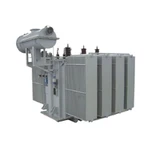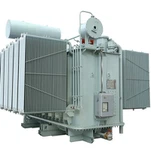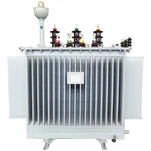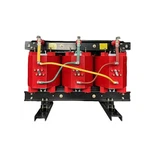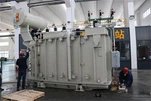


Earlier this year a hydropower contractor in Ecuador asked us to quote two 5 MVA step-up transformers for a plant at 2,900 m above sea level. A high altitude transformer was the last thing on the buyer's mind. On paper the enquiry looked ordinary: 5 MVA, 13.8 kV to 34.5 kV, ONAN cooling, 65 K rise. Two competitors had already quoted the same unit as a standard sea-level design - same kVA, same radiators, same factory test sheet. Only our quoting engineer stopped at the elevation figure buried on page four and asked the design team to redo the cooling calculation.
That is the difference between a catalogue product and a transformer engineered for the mountains. A site at 2,900 m runs on air that carries roughly 70 percent of sea-level density, and air is what most transformers use to get rid of heat. Get the rating right on paper and the unit runs for decades. Miss the altitude and the first hot-season overload shows up in the winding temperature relay, not in the quotation. This guide covers the three places elevation changes a specification - rating, insulation, and the hardware around the tank - plus the questions we put in writing for every highland project.

Why 1,000 m Is the Line Every Transformer Spec Draws
Both the IEC 60076 family and IEEE C57.12.00 - the general-requirements standard for liquid-immersed distribution and power transformers - treat 1,000 m (about 3,300 ft) as the upper edge of normal service conditions. Below that line, no correction is expected. Above it, the transformer has left the assumptions the catalogue was built on.
The physics is simple: air density falls roughly 10 percent for every 1,000 m of climb in the lower atmosphere. At 3,000 m the air around the tank is about 30 percent thinner than at sea level. Thinner air pulls less heat off radiators and cooling fans, and it breaks down at lower voltage across air gaps. Neither effect shows on a nameplate photograph, which is why so many highland units get ordered and shipped as if the site sat at 200 m.
Two of those effects are corrected in every serious design: the thermal rating and the dielectric strength of external insulation. Everything else is detail work that separates factories that have shipped to altitude from factories that only quote it.
Transformer Altitude Derating: Where the kVA Number Gets Honest
Here is the part most buyers miss: transformer altitude derating is not a fixed penalty stamped into every unit. It is a cooling calculation. A transformer with enough radiator area and fan capacity holds its full nameplate rating at 3,000 m; a unit built to minimum sea-level cooling cannot.
The rule used across the industry is straightforward: above 1,000 m, continuous rating falls about 0.3 percent for every additional 100 m of elevation unless the cooling is enlarged. Eaton's engineering guidance states the same figure for derating above 3,300 ft. Run it against the Ecuador project: 1,900 m above the 1,000 m line works out to about 5.7 percent - a sea-level 5 MVA design delivers roughly 4.7 MVA of continuous capacity at 2,900 m.
For liquid-immersed units designed to altitude instead of derated in service, the correction shows up in the factory heat-run. When the installation site sits above 1,000 m but the factory does not, the allowable temperature-rise limits measured in the test hall are reduced by 1 K for every 400 m of site altitude above 1,000 m, per the IEC 60076-2 approach. For a 3,400 m site, that is 6 K of margin the test must prove. A factory that cannot show the altitude-corrected test protocol with the quotation has not priced a true high altitude transformer yet.
Insulation and Clearances: The Altitude Correction That Hides in the Bushing
The winding insulation itself - oil, paper, and the internal structure - barely notices altitude. External insulation notices immediately, because its dielectric strength depends on air. Bushing creepage, phase-to-phase clearances, and lead-to-ground spacing all sit in thinner air with less withstand.
Manufacturer altitude tables based on IEEE C57.12.01 and referenced by NEMA ST 20 put the dielectric correction at roughly 0.80 for a 3,000 m site - external insulation built for sea level must have its withstand raised about 25 percent, or clearances and bushing ratings increased, before the numbers close. Hammond's altitude correction table shows how the factor tightens at each step above 1,000 m.
In practice, the bushing is where highland projects go wrong. A 34.5 kV bushing that passes at sea level may need a longer creepage profile or the next insulation class at 3,000 m, especially where the site also carries pollution from mining dust or volcanic soil. We specify bushing BIL and creepage for the site altitude, not for the catalogue, and we re-check every external clearance against the corrected lightning impulse level before the design review closes.

Inside the Tank and the Control Cabinet: Details That Change Above 3,000 m
Atmospheric pressure at 3,000 m is about 70 kPa against roughly 101 kPa at sea level, and the difference reshapes a list of small components:
• Pressure-relief and vacuum devices protect the tank against pressure differential with the atmosphere. At altitude the external reference pressure drops, so device settings and conservator oil levels have to be re-derived for thinner air.
• Cooling fans move air by volume, not by mass. The same fan delivers less cooling effect at 3,000 m, which is why fan-assisted designs for altitude get uprated motors and blade sets.
• Control and protection components - contactors, relays, temperature controllers - are commonly rated for operation up to 2,000 m per the IEC 60947 family. Above that, derating or altitude-rated parts apply.
• Highland sites are often cold at night, even in the tropics. Oil pour point and cold-start behaviour deserve the same check a cold-climate specification would give them.
None of these items is expensive on its own. Together they separate a high altitude transformer from a sea-level unit with a longer lead time - and each one is a field failure if nobody writes it down.
A Real Highland RFQ: What We Changed Before the Units Shipped
Back to the Ecuador enquiry. When we returned the technical offer, the design sheet listed six changes versus the sea-level version:
1. Radiator bank enlarged and a second fan group added, so the full 5 MVA rating holds at 2,900 m under ONAN/ONAF operation.
2. Factory heat-run acceptance temperature rises set per the altitude correction - tighter than a sea-level test.
3. HV bushing creepage raised one class, with external clearances re-verified against the corrected BIL.
4. Pressure-relief device settings and conservator oil levels recalculated for the 70 kPa ambient.
5. Nameplate and GA drawings stamped "designed for installation at 2,900 m."
6. The customer signed off the corrected test procedure before production started.
The buyer later told us the other two quotations had no altitude line at all - no derating note, no insulation correction, nothing that would let him compare a high altitude transformer with a sea-level unit. Three suppliers, three prices, and only one design that would hold its nameplate in service - that is the quiet gap in highland procurement. As an official joint-venture partner of Eaton since 2023, our design review follows the same discipline Eaton applies to its own transformer programmes: the altitude question gets answered before the contract, not after commissioning.
If your site sits above 1,000 m, send Ryan Electric the elevation and the load profile with your enquiry. We put the altitude correction in the quotation, not in the field.
The RFQ Checklist for High Altitude Transformer Projects
Use this table as the altitude section of your enquiry document:
| Item | What to state | Why it matters |
|---|---|---|
| Site altitude | Elevation in metres above sea level | Every downstream decision starts from this number |
| Rating basis | Full nameplate kVA at site altitude, or accepted derating | Decides radiator and fan sizing |
| Temperature-rise basis | 65 K design, tested per the altitude correction rule | Proves the design in the factory heat-run |
| Insulation | BIL and bushing creepage for corrected withstand | Prevents external flashover in thin air |
| Cooling | ONAN/ONAF duty at altitude, fan motor uprating | Fans lose effectiveness as air thins |
| Auxiliaries | Control gear rated above 2,000 m | Contactors and relays derate with altitude |
| Oil | Pour point versus minimum night temperature | Cold nights at highland sites |
| Test protocol | Agree altitude-corrected factory tests in writing | Avoids disputes at the heat-run witness test |
Two habits make the list work. First, state the elevation in the enquiry header, not in a footnote. Second, ask the supplier for the altitude-corrected design sheet with the quotation: the transformer altitude derating position, the corrected temperature-rise limits, and the bushing BIL at your site elevation. A factory that ships highland units regularly produces it without hesitation; one that treats elevation as an afterthought goes quiet.
Before you order a high altitude transformer for a site above 1,000 m, ask for that design sheet. It is the cheapest insurance available - a few lines on paper that decide whether your unit delivers nameplate power for twenty years or spends its first summer tripping on winding temperature.
About the Author
Jiangsu Ryan Electric Co., Ltd. (Ryan Electric) is a transformer manufacturer founded in 2007, operating a 120,000 m² production base with more than 180 sets of manufacturing and testing equipment and 37 patents. Since 2023 the company has been an official joint-venture partner of Eaton, serving utilities, data center operators, and industrial clients across North America, Southeast Asia, the Middle East, and Africa. Its liquid-immersed and dry-type transformers are designed and tested to IEEE, IEC, UL, and CSA requirements, with UL and CSA listed designs available for North American projects.