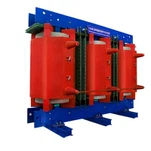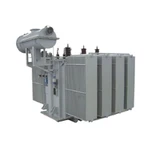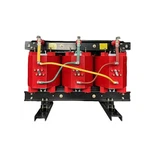


Last Tuesday, a contractor in Michigan who buys pad-mounted units from us called with a question we have now heard five times since August 26: "We've got two transformers on order for a subdivision job. Is the new order going to stop them at customs?" He meant the executive order signed that same day, which declares a national emergency over foreign-produced equipment in the U.S. bulk-power system. His units are fine. The substation transformer project two streets from his yard may not be. That gap between what the order covers and what it leaves alone is exactly what transformer buyers are misreading this week.
Here is the short version up front: the new transformer import restrictions target equipment connected at 69 kV and above. Distribution-class gear - including the pad mounted transformers and dry type units that serve homes, commercial buildings, and data centers - sits outside the order's scope. But if your project touches a transmission substation, the rules changed on August 26, and the compliance picture is still forming.
What the August 26 Order Actually Prohibits
EO 14420, issued under the International Emergency Economic Powers Act, bars any U.S. person from acquiring, importing, transferring, or installing foreign-produced bulk-power system equipment when two conditions both hold: the equipment was designed, developed, manufactured, or supplied by a Covered Foreign Entity, and the Secretary of Energy determines the transaction poses an undue risk to national security or grid reliability. Read the full text of Executive Order 14420 on WhiteHouse.gov - it is shorter and clearer than most orders of its type.
Covered Foreign Entities are defined by reference to the ITAR arms embargo list at 22 C.F.R. 126.1 - which includes China - plus any country or person the Secretary of Energy designates later. The equipment list is broad: substation transformers, instrument transformers, automatic circuit reclosers, high-voltage circuit breakers, reactors, capacitors, large and backup generators, grid-connected inverters, battery energy storage systems, and industrial control systems. The White House fact sheet summarizes the intent in plain language: the order is aimed at non-distribution-level equipment.
One clause deserves special attention because few buyers have noticed it. The order also reaches backwards: where the Secretary determines that equipment installed before August 26 poses an undue risk, he may impose conditions on its continued operation - identify, isolate, monitor, secure, disconnect, replace. The order contemplates phased compliance, and no direction has been issued yet, but utilities with foreign-made substation equipment already in service are watching this provision closely.
The 69 kV Line That Separates Your Order From the Ban
Section 5 of EO 14420 defines the bulk-power system as transmission lines rated at 69,000 volts or more and explicitly excludes facilities used in the local distribution of electric energy. For buyers, that is the single most useful sentence in the document.
If your project is served at 480 V, 13.8 kV, 25 kV, or 34.5 kV - the voltage classes where pad mounted transformers, dry type transformers, and most commercial and industrial distribution units live - the order does not apply to you. Your equipment is not bulk-power system equipment, and no DOE determination can make it so, because the definition starts at 69 kV.
If your project involves a substation on the transmission network - a generator step-up unit, an autotransformer, or a large power transformer with a 69 kV or higher winding - you are inside the scope. That does not mean every purchase from every foreign supplier is prohibited. It means each transaction becomes subject to a DOE risk determination that has not been written yet, under implementing rules due within 120 days of the order - roughly late December 2026.
Most of our North American customers sit on the distribution side of that line. A growing minority - utilities, EPCs, and large renewable developers - straddle it, and those are the buyers now asking us for documents we were rarely asked for before.

Substation Transformer Projects: Three Dates on Your Calendar
For buyers on the transmission side, where the transformer import restrictions bite hardest, three dates matter.
August 26, 2026. The order took effect for transactions initiated after this date. Anything already under contract is not automatically cancelled - the order operates through DOE determinations, not customs seizures - but new purchase orders entered the risk zone immediately.
Late December 2026. The Secretary of Energy must publish implementing rules. Those rules may add countries or persons to the Covered Foreign Entity list, name equipment categories warranting particular scrutiny, and establish a licensing procedure. The order also allows DOE to recognize pre-qualified vendors and equipment - which is why documentation assembled today becomes an advantage tomorrow.
Within 180 days. DOE must deliver recommended revisions to the Federal Acquisition Regulation so that federal procurement of energy infrastructure prioritizes U.S.-manufactured equipment. Federal buyers should expect contract clauses to shift well before that deadline passes.
The 120-day rulemaking window is why nobody can give you a clean yes or no on a specific transaction right now. What the order does do is put a hard question in front of every buyer of large power transformers: who designed, developed, and manufactured this unit, and can you prove it?
That question has a history. In May 2020, EO 13920 restricted large power transformers from China after a similar emergency finding. EO 14420 is wider - more equipment classes, more countries, plus the retroactive clause - and manufacturers are still digesting it. NEMA's reaction, quoted in this Utility Dive report on the order, sums up the industry mood: more clarity is needed, especially on software and digital services where country of origin is genuinely hard to determine.
Five Checks to Run Before You Place or Accept an Order
Most coverage of the transformer import restrictions this month has focused on the ban itself. Fewer articles tell you what to do with a purchase order already in your hand. Here is the checklist our own buyers work through before they commit:
1. Pin your voltage class first. If every winding is below 69 kV, document that and move on - the order does not apply. If any winding is 69 kV or above, treat the purchase as live compliance risk and say so in your RFQ.
2. Ask for a country-of-origin declaration on the transformer and its critical components. The order's scope includes software, firmware, maintenance services, and remote-access capabilities, not just the tank and windings. A supplier that hesitates on this document is a risk signal.
3. Verify who owns and controls the factory. Covered Foreign Entity status follows ownership and control, not the shipping address. Ask where the design engineering happens and where the tap changer, bushings, and control relays are made.
4. Read your contract's force majeure and compliance clauses. If a DOE determination blocks a shipment mid-production, who carries the cost? That is a conversation to have before signing, not after a hold notice arrives.
5. Track the December rulemaking. The implementing rules will define pre-qualification. Buyers who assemble the documentation package now will move first when the framework lands.
Whatever side of 69 kV your project sits on, these five checks cost little - and they prevent the expensive kind of surprise that starts with a hold notice from a supplier who never mentioned compliance risk.
What a Manufacturer With Skin in the Game Does
We are a Chinese transformer factory, which makes us the subject of this policy debate in a literal sense - and that is exactly why we are publishing this guide. Our distribution transformer business sits below the 69 kV line and is unaffected by EO 14420. It is governed instead by the Section 232 tariffs that already apply to distribution transformers - a cost question, not a permission question. The distinction matters: tariffs make imports more expensive; this order determines whether certain imports can happen at all.
As an Eaton joint venture partner with UL, CSA, IEEE, and DEKRA certifications across our product lines, we have spent years building the documentation culture this order now demands. Component traceability files, certification records, and factory test data travel with every unit we ship. When a utility EPC asked us last week for a component-level origin statement covering the tap changer, bushings, and protective relays, our engineers answered from a folder, not from memory.
The honest advice from our sales desk: if you are buying distribution-class equipment, the order changes nothing about your compliance path - keep deciding on price, delivery, and certification. If you are buying substation-class units, do not cancel anything yet, and do not sign anything new without running the five checks above.
Plan for the Framework, Not the Panic
Start with the 69 kV question, because it decides everything else. If your answer is distribution, your compliance path is unchanged and your focus stays on certification and delivery. If your answer is substation, build the documentation file now - country of origin, component suppliers, ownership structure - and revisit it when DOE publishes the implementing rules in December.
The transformer import restrictions created by EO 14420 are not a flat ban on imported transformers. They are a framework that will be defined over the next four months, and the buyers who treat this as a documentation exercise will come out ahead of the ones who treat it as a reason to freeze procurement. Send us your voltage class, winding configuration, and certification target through ryantransformers.com - we will tell you honestly where your order stands: on the distribution side of the line, or inside the 69 kV risk zone.
About the Author: This article was written by the engineering and sales team at Ryan Electric, an Eaton joint venture partner and UL/CSA-certified transformer manufacturer in Jiangsu, China, serving utility, renewable, and data center clients across North America, Southeast Asia, and the Middle East.