

A maintenance manager sent us a photo of a failed oil-immersed unit on a Tuesday morning, together with two quotes he had already collected: a rewind that could start in three weeks, and a replacement with a delivery date fourteen months out. He was not asking which quote was cheaper. He was asking how to choose, because his plant could not run on temporary power for a year and he could not spend that year on the wrong unit.
That question has become one of the most common we get. The framework below is the one our engineers walk through with customers. It comes down to four questions, and only one of them is about money.
Why This Decision Changed in 2026
For most of the last three decades the answer was simple. A unit past thirty years of service was replaced on a schedule, not repaired, because a new one could be delivered inside a normal project window. Supply was never the constraint. Now it is.
In its January 2026 review of the transformer supply chain, POWER magazine reported Wood Mackenzie survey data showing average power transformer lead times of 128 weeks, with generator step-up units at 144 weeks. Power transformer demand is up 119 percent since 2019 and distribution transformer demand is up 34 percent, while unit prices have climbed 77 percent for power transformers and as much as 95 percent for some distribution classes.
One line in that reporting matters more than the rest if you are holding a failed unit: Wood Mackenzie expects the three-phase pad mounted transformer shortage to worsen, driven by data center, manufacturing, and EV charging loads. Roughly 55 percent of in-service U.S. distribution transformers are already more than 33 years old. The failure in front of you is statistically ordinary, and the replacement queue behind it is not getting shorter.
The old calendar rule is now the wrong tool. A 35-year-old unit with clean oil chemistry, healthy insulation resistance, and a flat dissolved gas profile can be the better asset to keep. A 12-year-old unit with a rising gas trend is the one that should leave the yard. Transformer replacement decisions moved from the calendar to the test report.
Start With the Fault, Not the Age
Two very different failures get filed under the same word. A bushing flashover, a UV-degraded gasket, an arrester that absorbed a lightning surge, or a leaking radiator flange is an accessory problem attached to a sound core-and-coil assembly. A turn-to-turn winding fault, a core fault, or an internal fault that tripped protection is not. On those units the insulation system has already been damaged, and any repair means opening the tank and rebuilding the active part.
Here is the pattern our engineers look for. Two units trip on the same differential protection a month apart. One comes back with acetylene in the dissolved gas analysis sample, which is an internal arcing signature, and the answer is replacement before anyone discusses price. The other shows a clean gas profile and a failed bushing, and it goes back into service with a bushing and a gasket set. Same alarm, opposite decisions.
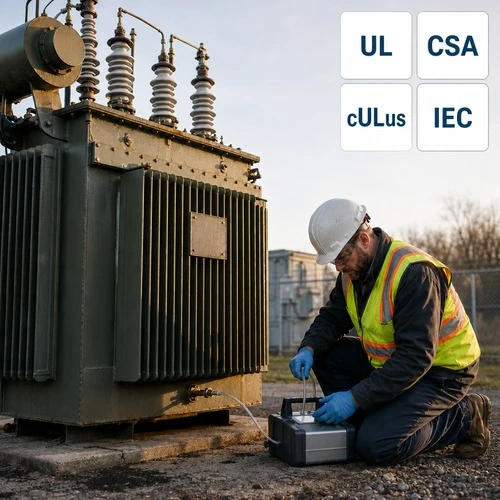
So get evidence before you commit to anything. For a liquid-immersed unit: a dissolved gas analysis (DGA) sample, oil moisture and acidity, insulation resistance with a polarization index, turns ratio, winding resistance per phase, plus a tank, radiator, and bushing inspection. For a dry type transformer, the usable field set is narrower: insulation resistance, turns ratio, winding resistance, and a partial discharge check if the winding has been exposed to moisture or contamination.
As a working rule, phase-to-phase winding resistance that deviates by more than about two percent needs an explanation before anyone signs off on a repair, and a polarization index below about 2.0 is a moisture flag rather than a verdict. IEEE C57.152 is the reference most test engineers work from for diagnostic field testing of fluid-filled units, and it is worth asking your service provider to state results against it.
Four Questions That Decide a Transformer Replacement
With the test data in hand, four questions usually settle the direction. Only the last one is financial.
| Question | Points toward repair | Points toward replacement |
|---|---|---|
| 1. What failed? | Accessory only: bushing, gasket, arrester, gauge, radiator flange | Winding, core, or an internal fault that tripped protection |
| 2. What do the field tests say? | Healthy polarization index, dry oil, flat gas profile | Rising gas trend, moisture in the insulation, phase imbalance beyond tolerance |
| 3. How critical is the load? | Standby or non-critical duty with an interchangeable spare available | Continuous critical process with no spare and no temporary feed |
| 4. What is the delivered cost? | Repair quote plus documented loss change over remaining life | Today's delivered price including freight, duties, and avoided downtime |
The fourth row is where repairs get decided badly. Compare the repair quote against today's delivered cost of a new unit, not against a price from five years ago. Since 2019 the increase is already 77 percent for power transformers and up to 95 percent for some distribution classes, before freight and duties. Then add the number that never appears in the comparison sheet: a rewind rarely reproduces the original loss profile. Restacking puts fresh mechanical stress on the core laminations, and a different winding geometry changes the load-loss picture. On a small unit that is noise. On a 2 MVA oil immersed transformer running near continuous load, it is a line item in your electricity bill for the next fifteen years.
There is a quieter fifth question worth asking: how many times will you do this? A unit repaired twice in eight years has told you something the test report did not.
The Efficiency and Certification Question
If the failed unit sits inside the U.S. Department of Energy scope for distribution transformers, the decision has a compliance dimension. The DOE definition covers transformers with an input voltage of 34.5 kV or less, an output of 600 V or less, operation at 60 Hz, and ratings from 10 kVA to 2500 kVA for liquid-immersed units and 15 kVA to 2500 kVA for dry-type units. Amended standards took effect on July 8, 2024, and compliance applies to units manufactured on or after April 23, 2029. DOE reopened the docket with a Request for Information published on June 15, 2026. Current scope, dates, and docket links are on the DOE distribution transformers page.
The same definition tells you who stands outside it. Autotransformers, drive (isolation) transformers, grounding transformers, machine-tool control transformers, nonventilated units, rectifier transformers, regulating transformers, sealed transformers, special-impedance transformers, testing transformers, units with a tap range of 20 percent or more, UPS transformers, and welding transformers are all excluded. If the unit you are replacing falls into one of those buckets, your next purchase is a different engineering conversation from a standard DOE-covered distribution unit.
Certification belongs in the same breath. Dry-type general purpose and power transformers rated up to 600 V fall under UL 1561, and units bound for Canada need the CSA mark your utility and inspector expect. A rewind done outside the original manufacturing process does not automatically carry that documentation forward. Before you authorize one, ask the rebuilder for the post-repair test report covering turns ratio, winding resistance, insulation resistance, and applied potential, and confirm with your inspector what paperwork the circuit has to show.
When Transformer Replacement Wins, and How to Compress the Clock
Replacement wins when the active part is damaged, when the impedance and voltage combination cannot be reproduced as a rewind, when a second failure would take down a critical process, or when the insulation system is already at end of life. A pad mounted transformer serving a residential subdivision can be swapped on a shorter cycle. A unit tied to a hospital main or a data hall cannot, and that difference, not the price list, is what sets the urgency. Once replacement is the answer, the engineering argument is over and scheduling becomes the project.
Three moves shorten it. First, reserve the production slot before you need it. Buyers who plan a replacement 12 to 18 months ahead get delivery windows that buyers reacting to a failure cannot. Second, freeze the specification early, because the clock that matters starts at drawing approval rather than at purchase order, and a change after approval puts you back in the queue. Third, buy a standard rating with standard impedance wherever the project allows it. A custom three phase transformer earns its cost on a genuine constraint, not on habit, and it takes longer both to engineer and to certify.
The last item is paperwork. Drawings, routine test reports, and certification files should travel with the unit rather than follow it by email. If your project has an interconnection or inspection milestone attached, a documentation delay costs more than the freight does.
How We Work on These Calls
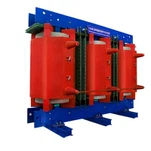
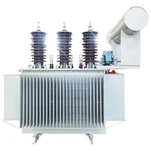
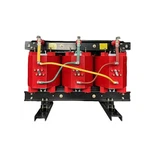
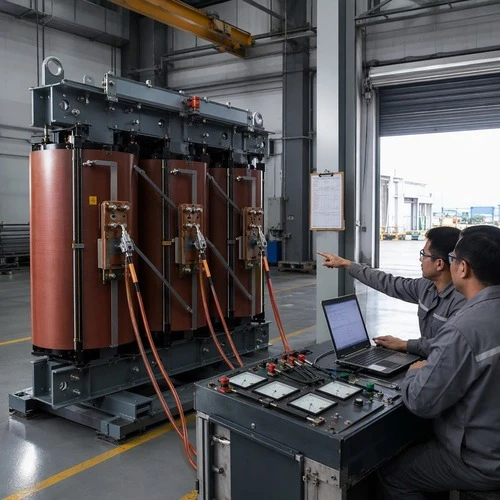
Ryan Electric builds both oil immersed transformers and dry type transformers in a 120,000 sq m plant in Jiangsu, with 180+ sets of production and test equipment and 37 patents, and has been an Eaton joint venture partner since 2023. UL, CSA, IEEE, and DEKRA sit in our certification portfolio. The routine test report package covers turns ratio, winding resistance, insulation resistance, applied and induced potential, and no-load and load loss, and it ships with the drawings rather than after them.
The part that matters for this article is the part where we sometimes lose a sale. When a customer sends a nameplate photo, oil test data, and a description of the fault, our engineers answer with a recommendation first, not a quotation. If a bushing and a gasket set will put the unit back in service, that is what we will tell you, and we will ask you to call us when you are planning the transformer replacement instead.
What to Send Us
If a unit is down right now, send us the nameplate photo, whatever test data you have, the failure description, and the destination market. You get an engineering opinion on repair or replacement, a realistic schedule, and a quote that keeps the two options separate. If you are planning ahead, send the ratings and your outage windows and we will map them against production capacity before a budget is committed. Reach the team through ryan-transformers.com.
About the Author: This article was written by the engineering team at Ryan Electric, an Eaton joint venture partner and UL/CSA-certified transformer manufacturer in Jiangsu, China, supplying dry type and oil immersed distribution and power transformers to utility, industrial, and data center projects across North America, the Middle East, Southeast Asia, and Africa.