

A project engineer at a Gulf Coast chemical plant sent us a drawing last quarter with one question attached: can an oil-immersed unit sit fifteen meters from a propane loading rack? The area classification sheet said Class I, Division 2, Group D, T3. The honest answer rearranged his electrical room, added a vault and oil containment, and pushed commissioning back six weeks. Almost none of that delay came from the transformer itself. It came from specifications that nobody opened until the purchase order was already issued.
This guide covers what a Class I Division 2 transformer actually has to be, how the temperature class arithmetic works, and where buyers typically lose time.

What Makes a Location Class I, Division 2
NEC Article 500, published in the NFPA 70 National Electrical Code (2026), defines a Class I, Division 2 location as one of three things: a place where volatile flammable liquids or gases are handled but normally stay confined inside closed containers or systems; a place where ignitable concentrations are normally prevented by positive mechanical ventilation, which could become hazardous if that ventilation fails; or a place adjacent to a Division 1 area where ignitable concentrations might occasionally enter. That third condition is the one that catches people. A room that looks perfectly ordinary can still be classified because of the pump house next door.
The gas group narrows it further. Group A covers acetylene, Group B hydrogen and formaldehyde, Group C ethyl ether and ethylene, Group D the long list that most refinery and chemical streams fall into - ammonia, benzene, butane, ethanol, gasoline, methane, natural gas, propane. Groups and divisions are not interchangeable with the IEC zone system, even though Zone 2 is the closest analogue to Division 2; the IEC 60079 series is where the IEC side starts. If your project carries both a North American classification drawing and an IEC hazardous area study, resolve them before you release an RFQ.
Where does a transformer actually land inside these boundaries? Unit substation rooms, tank farm pump houses, loading rack buildings, compressor houses, and analyzer shelters. All of them are places where the electrical equipment is the last thing on the schedule and the first thing the inspector looks at.
How a Class I Division 2 Transformer Rating Gets Written on the Nameplate
Hazardous location equipment is marked with a temperature class, and that class defines the highest surface temperature the equipment may reach. The NEC temperature code table runs from T1 down to T6:
| Temperature class | Maximum surface temperature |
| T1 | 450 °C |
| T2 | 300 °C |
| T2A / T2B / T2C / T2D | 280 / 260 / 230 / 215 °C |
| T3 | 200 °C |
| T3A / T3B / T3C | 180 / 165 / 160 °C |
| T4 / T4A | 135 / 120 °C |
| T5 / T6 | 100 / 85 °C |
Two things decide which row you can claim. The first is the marking basis: the temperature class references a 40 °C ambient, not the 20 °C or 25 °C ambient a design engineer might use for a general-purpose unit. The second is the arithmetic. Take a Class I Division 2 transformer built on a 180 °C insulation system with a 115 °C winding temperature rise - the same configuration Eaton documents across its Class I Division 2 dry-type line, from 1.0 kVA single phase to 75 kVA three phase in NEMA 3R enclosures (Eaton Class I Division 2 dry-type transformers). At a 40 °C ambient the winding sits near 155 °C, which lands inside T3's 200 °C ceiling with margin. Force the same unit down to a T3C marking and the rise has to come down to roughly 80 °C, which means more copper, more core steel, a heavier enclosure, and a larger footprint. That single letter in the specification is worth real money.
The gas group sets the floor underneath this. Propane, methane, and most Group D streams have ignition temperatures well above what a T3 marking allows, so T3 is usually defensible. Hydrogen and formaldehyde sit in Group B and behave differently under fault conditions. The practical rule: you cannot choose a temperature class before the group is known, and the group lives on the classification drawing, not on the data sheet.
Why Dry Type Usually Wins Inside the Boundary
Transformers in a Class I, Division 2 area are handled through the vault and installation rules in NEC 450.21 through 450.27, and those rules draw a clean line between dry type and liquid filled.
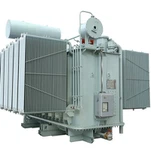
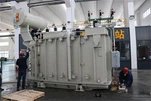
NEC 450.21(A) requires indoor dry-type transformers rated 112.5 kVA or less to keep a 300 mm (12 in) separation from combustible material. Above 112.5 kVA, the separation jumps to 1.8 m (6 ft) unless the unit is separated by a fire-resistant, heat-insulating barrier. That is a manageable constraint in an electrical room. Liquid-filled equipment is a different conversation entirely: it pulls in vault construction, drainage, ventilation, and oil containment, plus the fire protection review that follows. When the transformer is fifteen meters from a loading rack, the vault is not the expensive part. Moving the vault is.
| Decision point | Dry type cast resin | Liquid filled |
| Placement inside the Div 2 boundary | Normal practice | Usually relocated outside |
| Vault and drainage | Not required | Required |
| Oil containment and fire review | Not applicable | Required |
| Indoor separation from combustibles | 300 mm up to 112.5 kVA; 1.8 m above | Vault instead |
| Typical cost driver | Winding rise and enclosure rating | Civil works |
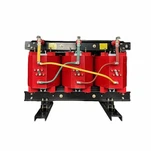
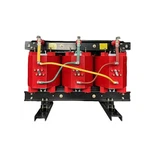
We see this play out the same way in the Middle East and Southeast Asia: a hazardous location transformer specification that starts as oil immersed quietly converts to cast resin dry type transformer construction once the civil scope is priced. Nine times out of ten, the Class I Division 2 transformer that finally gets ordered needs no vault at all, because somebody re-specified it to dry type before the concrete was poured.
Enclosure, Connections, and the Details That Fail Inspection
The hardware matters less than the paperwork, but both get audited. A sealed tank-free design with no breather and no vents, a NEMA 3R or 4X enclosure, and resin-encapsulated core-coil assemblies are the baseline for a cast resin dry type transformer in this service. Offshore platforms and coastal chemical plants usually specify 304 or 316 stainless steel instead of painted steel. Connection practice is where most field problems start: terminations must be made into an adjacent explosion-proof junction box, and unused tap leads have to be properly insulated before energization. A unit shipped with bare spare taps is a unit that gets red-tagged.
If a standard enclosure is used instead of a certified one, the alternative path is purging and pressurizing the enclosure so the interior never holds a flammable atmosphere. That route is defined in NFPA 496, Standard for Purged and Pressurized Enclosures. It works, and plenty of projects use it, but it adds instruments, interlocks, and a maintenance procedure that someone has to own for the life of the plant.

Three items fail inspection more often than anything else. The nameplate is missing the full class, division, group, and temperature class string. Cable entries use ordinary glands instead of the specified entry method. And the enclosure rating on the certification file does not match the rating printed on the tag. If you want to avoid a re-test in the middle of commissioning, review those three against the classification drawing before the equipment leaves the factory. Send us the drawing early and our engineers will mark it up against the nameplate we intend to print.
What to Put in the RFQ
A hazardous location transformer RFQ that gets a fast, accurate quote contains eight items:
• The area classification drawing, with class, division, group, and temperature class marked
• Ambient temperature range, altitude, and indoor or outdoor installation
• kVA rating, primary and secondary voltages, winding configuration, and impedance
• Enclosure type and finish standard, including stainless steel where corrosion applies
• Connection method: explosion-proof junction box, cable entry type, and tap lead handling
• Certification path, and whether a listed hazardous location marking is required
• Test data required - temperature rise, partial discharge for dry type, and loss measurements
• Documentation package, and whether a customer witness test is expected
Here is the part most buyers miss: the certification path is not the same as ordinary UL listing. A general purpose dry-type listing and a hazardous location listing are separate claims, and a supplier who cannot state which one applies is a supplier who will discover the difference at the port.
Where Ryan Electric Fits
We build both cast resin dry type transformer designs and oil-immersed units, so our engineers have no incentive to steer a classified area project toward the wrong technology. As an Eaton joint venture partner since 2023, with UL, CSA, IEEE, and DEKRA certifications in our portfolio, we work from a 120,000 square meter factory with 180-plus sets of equipment and 37 patents, supplying utilities, data centers, and industrial plants across North America, the Middle East, Southeast Asia, and Africa. The first document we ask for on a classified area project is the classification drawing. The second is the ambient condition list. Everything else follows from those two.
Get the Classification Right Before You Order
The classification drawing is a two-page document that decides whether your project needs a vault, a purge system, or neither. Treat it as a design input, not a footnote, and bring the transformer supplier into that conversation before the electrical room is frozen. A hazardous location transformer is specified once and lived with for decades, so it pays to bring the supplier in early. Send your classification sheet, rating, and site conditions to us through ryan-transformers.com and you will get a marked-up specification and a realistic schedule back, not optimism.
About the Author: This article was written by the engineering team at Ryan Electric, an Eaton joint venture partner and UL/CSA-certified transformer manufacturer in Jiangsu, China, serving utility, industrial, and data center clients across North America, the Middle East, Southeast Asia, and Africa.