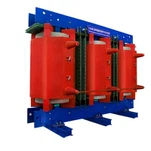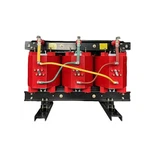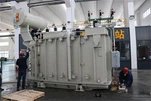


A 2,500 kVA oil-immersed transformer left our Jiangsu works in April and was still standing on the quay in Dammam three weeks later. Nothing was wrong with the unit - the routine tests were clean, the paint was dry, the nameplate was correct. The shipment certificate had never been raised on SABER, and Saudi Customs will not release regulated electrical goods without one. The demurrage bill ended up larger than the sea freight. Transformer certification for Middle East projects is not a paperwork afterthought; it is the item on the critical path that nobody puts in the Gantt chart.

Why Certification Trips Up Experienced Buyers
Most buyers treat certification as a single document that arrives with the transformer. In the Gulf it is three separate things, owned by three different parties, and they do not move at the same speed.
The first layer is product-level conformity - the G-Mark where a Gulf technical regulation covers the equipment, or a national scheme where it does not. The second is registration on the national electronic platform: in Saudi Arabia that is SABER, and it produces two different certificates rather than one. The third is shipment-level - a per-consignment certificate raised against the product registration, which is what the customs broker actually hands over. Underneath all three sits a fourth approval that has nothing to do with customs: the utility's own vendor and type approval, which decides whether your transformer is allowed onto the project at all.
Here is the part that surprises people. In our works, the conformity file is assembled at order entry, weeks before the first lamination is cut. Nameplate artwork, test report templates and type-test evidence get reviewed against the destination market while the design is still on paper. Changing a nameplate or re-running a type test after the tank is welded costs far more than getting it right the first time.
The G-Mark and the Gulf Low Voltage Technical Regulation
The G-Mark is issued under the GCC Standardization Organization, whose member states are the UAE, Bahrain, Saudi Arabia, Oman, Qatar, Kuwait and Yemen. The technical regulation behind it is the Gulf Technical Regulation on Low Voltage Electrical Equipment and Appliances, BD-142004-01, and the GSO is explicit about what the mark means: it confirms conformity with the essential health, safety and environment requirements of the regulation. It is not a quality mark, and it is not a performance rating. Registered products and the notified bodies that issue G-Mark certificates can be checked through the GSO product registry.
That definition has a practical consequence most transformer buyers miss. BD-142004-01 governs low-voltage equipment. A pad-mounted unit at 13.8 kV or an 11 kV distribution transformer sits outside its scope, so a G-Mark certificate is not what a utility will ask you for. What the utility asks for is the test evidence.
| Market | Product-level instrument | Platform / shipment control | What gates the project |
| Saudi Arabia | SASO standards; BD-142004-01 for LV equipment | SABER - product certificate plus shipment certificate | Utility vendor registration and type approval |
| United Arab Emirates | BD-142004-01 for LV equipment; ECAS under MoIAT | MoIAT conformity registration; customs release | Emirate utility type approval |
| Other GCC states | BD-142004-01 for LV equipment | Customs release against conformity evidence | National utility or ministry approval |
For an MV unit the row that matters is the right-hand column, and that column is fed by the IEC 60076 test report set. This scope question is where a lot of transformer certification for Middle East projects goes wrong: buyers pay for a G-Mark certificate they do not need, and skip the test evidence the utility will actually read.
SABER in Practice: Two Certificates, Not One
SABER is SASO's electronic platform for product registration and conformity certificates. It works in two stages, and the order is fixed. First the product is registered and a Product Certificate of Conformity is issued through a SASO-approved conformity assessment body. Only then can a Shipment Certificate of Conformity be raised for a specific consignment. You cannot raise the shipment certificate without a live product certificate, and a lapsed product certificate stops the whole line.
The published costs are modest against the risk. SABER lists SAR 500 for product certificate registration and SAR 350 for shipment certificate issuance, both excluding VAT, and the shipment certificate validity has been extended from 60 days to 90 days. Both figures sit on the SABER platform, which is also where SASO posts changes to the rules.
One change matters directly to manufacturers. From 1 October 2026, for ten technical regulations, the supplier name - the importer or the local factory - and its commercial registration number must appear in the product's marking information. On a transformer that lands on the nameplate, not on the carton. If your nameplate artwork was frozen in 2025, it no longer complies.
The awkward structural point is ownership. The SABER account belongs to the importer of record - the Saudi entity. A Chinese factory cannot raise a certificate on a buyer's behalf, and should not promise to. That makes it a contract matter: who holds the account, who pays the fees, who renews the product certificate, and what happens if registration lapses between the purchase order and the shipment date. Put it in writing. The SASO official site carries the current standards list and the technical regulation texts if you need to check scope yourself.
IEC 60076 Test Reports: What a Gulf Utility Actually Reads
With the G-Mark out of scope for MV equipment, the document that decides technical acceptance is the IEC 60076 test report set - Part 1 for liquid-immersed units, Part 11 for dry type.
Routine tests are run on every unit that leaves the works: winding resistance on each tap, voltage ratio and phase relation (which is how the vector group is proved), short-circuit impedance and load loss, no-load loss and no-load current, and the dielectric routine tests, being the separate-source applied-voltage test and the induced-voltage test. On oil-immersed units the oil dielectric strength test belongs in the same report, not in a separate file.
Type tests are run once per design family, and this is where the money sits: the lightning impulse test that proves the BIL rating, the temperature-rise test at rated current, and the short-circuit withstand test. Special tests - sound level, partial discharge to IEC 60076-3, and harmonic measurements - are quoted on request and are worth specifying where the site is noise-sensitive or the load is non-linear. The scope of each part, with its current edition date, is listed on the IEC Webstore.
Then there is tolerance discipline, which is where a IEC 60076 test report gets read properly or not at all. IEC 60076-1 sets a one-sided tolerance on losses: a measured loss below the guaranteed figure is free headroom for the buyer, while a measured loss above the guaranteed figure beyond the permitted percentage is a non-conformity the manufacturer has to answer for. Voltage ratio tolerance is tight - of the order of a fraction of a percent - because it feeds directly into parallel operation. So the question to ask is never "did it pass". It is "which side of the guaranteed value did it land, and by how much".

UAE, ECAS and the Utility Approval Gate
In the UAE the standards and conformity functions now sit with the Ministry of Industry and Advanced Technology, which absorbed the older ESMA role. Market access runs through MoIAT registration and the Emirates Conformity Assessment Scheme, with the ministry operating a conformity hub for applications and certificates. The MoIAT portal is the reference point for what a given product class needs.
National conformity gets your transformer through customs. It does not get it onto the substation. The utility - and each emirate and each GCC state runs its own - applies a separate type approval and vendor registration process, reviewing drawings, the type-test evidence and the test report set before the order is released. For transformer certification for Middle East projects, this is the approval that actually decides the schedule. Two approval tracks, two timelines, running in parallel rather than one after the other. The most common delay we see on UAE and Saudi projects is a buyer treating utility approval as a formality that follows the purchase order. It does not follow anything. It runs alongside, and it starts the day the RFQ is issued.
What to Put in the RFQ So the Paperwork Arrives With the Unit
Six lines in the RFQ remove most of the risk:
1. Name the test report set explicitly. IEC 60076-1 routine tests per unit, plus type-test reports for the design family, with measured values and the testing laboratory identified - not a summary sheet of guaranteed figures.
2. Ask for a G-Mark scope statement in writing. For an 11 kV or 33 kV unit it will usually confirm the regulation does not apply. Get it in writing anyway, so that nobody downstream assumes it does.
3. Ask for the SABER support pack. Nameplate artwork carrying the supplier name and commercial registration number required from 1 October 2026, plus the technical file the importer's conformity body will request.
4. Specify nameplate language and content. Bilingual Arabic and English where the utility requires it, with vector group, impedance, temperature rise and tap range printed as tested rather than as designed.
5. Set the certificate validity timeline. Compare product certificate issue date against shipment date against energisation date. A certificate bought too early can expire while the unit is still in the yard.
6. Ask to witness the routine tests. Or at minimum, require unedited readings and the calibration status of the test equipment in the report.
How Ryan Electric Approaches Transformer Certification for Middle East Projects
Our works in Jiangsu covers 120,000 square metres with 37 patents and more than 180 sets of production and test equipment, and the certification portfolio runs across UL, CSA, IEEE, DEKRA, CNAS and CE. We have been an Eaton joint venture partner since 2023. None of that is the point here; the point is that transformer certification for Middle East projects is built at order entry, not at the shipping desk, and that habit is what keeps units off the quay.
Practically, that means the nameplate artwork, the report templates, the type-test evidence and the declaration of conformity are reviewed with the buyer's conformity body before production starts, so the only document raised at shipment is the one that takes an afternoon.
If you are buying for a Gulf project, send us four things: the kVA and voltage class, the destination country, whether your importer already holds a SABER account or a UAE registration, and the energisation date you are working back from. We will come back with the documentation package and a schedule that accounts for the certificate timeline, not one that pretends it does not exist. Reach the team through ryan-transformers.com.
About the Author: This article was written by the engineering team at Ryan Electric, an Eaton joint venture partner and UL/CSA-certified transformer manufacturer in Jiangsu, China, serving utility, industrial and data centre clients across North America, the Middle East, Africa and Southeast Asia.