

Three-Phase vs Single-Phase Pad Mounted Transformers: Which One Fits Your Project?
A contractor in Oklahoma called us last spring with a question we hear almost weekly: should his 1,200 kVA commercial site use three 400 kVA single-phase pad mounted transformers, or one 1,500 kVA three-phase unit? He had quotes from two different suppliers, and both claimed their option was "standard practice." We walked him through the load list, the utility's secondary voltage, and the installed-cost math. The answer changed his entire project budget. Here is the same breakdown we gave him.
The Electrical Difference in Plain Terms
Single-phase service in North America delivers power on one line conductor and a neutral, typically at 7,200 V line-to-ground on a 12,470 V distribution system. Three-phase uses three conductors spaced 120 electrical degrees apart, which lets a motor produce a rotating magnetic field without any starting circuitry. That single distinction drives almost every downstream decision - from transformer kVA rating to cable sizing to protective relaying.
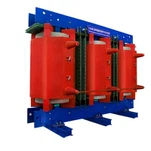
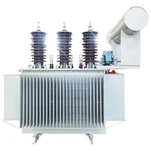
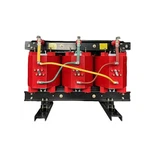
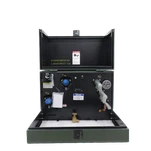
A pad mounted transformer is a pad-installed, dead-front distribution unit designed for outdoor service, either single-phase or three-phase. The phase count determines more than the winding arrangement. It sets the voltage combinations you can get, the kVA range the unit can realistically serve, and the failure modes your maintenance crew has to plan around.
|
Parameter |
Single-Phase |
Three-Phase |
|
Typical primary voltage |
7,200/12,470V, 13,800V |
12,470V, 24,940V, 34,500V |
|
Common secondary |
120/240V, 240V |
480Y/277V, 208Y/120V, 480V |
|
Typical kVA range |
10 – 167 kVA |
150 – 2,500 kVA+ |
|
Typical load profile |
Lighting, small motors, residences |
Three-phase motors, HVAC, data centers |
|
Failure impact |
One circuit affected |
Whole site affected |
|
Pad / foundation |
Smaller, lighter |
Larger, needs crane access |
Where Single-Phase Pad Mounted Transformers Still Make Sense
For rural residential subdivisions, agricultural pumping, and small commercial strip loads, a single-phase pad mounted transformer remains the most economical answer. Utilities routinely spec 25, 50, and 100 kVA single-phase units for these services, and the loading rarely crosses 60% of nameplate. When we build these units, the shop floor check is straightforward: verify the 120/240V secondary taps, confirm the HV bushing orientation, and run the full-load loss test.
There is one trap we see buyers fall into. A single-phase unit cannot feed a three-phase motor without a phase converter, and a phase converter costs more than the transformer it serves. If your site has one 10 hp air compressor or one elevator motor, the "cheaper" single-phase option stops being cheap the day it is energized. We tell every customer the same thing: count the motors first, then argue about phase count.
When Three-Phase Is the Only Honest Answer
Industrial shops, data centers, hospitals, and large commercial buildings all share one trait - three-phase motor loads and switchgear that simply will not run on single-phase supply. Once your peak demand crosses roughly 150 kVA, a three-phase unit is not a preference, it is a requirement. The 480Y/277V secondary common in North American facilities also lets you run 480V motors directly and step down to 120V lighting circuits through a separate dry-type unit.
Here is the part most buyers miss: transformer loading math. A 500 kVA three-phase unit at 480V secondary draws about 601 A at full load. If you undersize it, voltage drop under starting current becomes visible as flicker on the whole feeder. We size three-phase jobs at 80% loading factor as a baseline - that leaves room for one future feeder without an immediate changeout. When a customer asks us to quote a three phase transformer custom build, this loading calculation is always the first page of our proposal.
Cost, Maintenance, and Outage Impact: The Full Comparison
Initial price is only one line in the comparison. A bank of three single-phase units needs three pads, three sets of primary and secondary cable runs, three sets of protective equipment, and roughly three times the inspection points. Our install crews have seen projects where the "savings" on the transformer purchase disappeared into extra trenching and terminations before the units were even energized.
Outage impact matters more in the field than on the quote sheet. With one three-phase unit, a fault means the whole site is down until the spare arrives or the repair is done. With a single-phase bank, you lose only the phase that failed - but you also carry three times the spare-part inventory and three nameplates to match. For pad mounted transformer installation planning, we always ask one question: what is the acceptable downtime for this facility? The answer picks the topology.
For most commercial and industrial projects, our recommendation is a single three-phase unit with a properly sized pad, plus one spare unit stored for critical facilities. That combination gives the lowest installed cost and a realistic recovery path. Have a project in North America and not sure which configuration fits? Get a free technical quote → with your load list, and we will return a phase-count recommendation with the kVA math behind it.
Custom Configurations, UL/CSA Compliance, and What We Do Differently
The phase question is usually settled by the load, but the voltage configuration is where three phase transformer custom engineering earns its keep. We regularly build pad-mounted units with a 12,470V delta primary and a 480Y/277V secondary, and just as often with 24,940V primaries for utility customers in the upper Midwest. Tap ranges, bushing arrangements, and even the enclosure paint system can be specified to match a customer's fleet standard.
Every three-phase unit we ship to North America carries UL listing and CSA certification, and the enclosures are built and tested to IEEE C57.12.28 for severe weather conditions. Our partnership with Eaton - an official joint venture since 2023 - puts our production under the same quality system review that Eaton applies to its own facilities, which is exactly what procurement teams ask about when they audit us. We do not ask buyers to take our word for it; the test reports and certification documents go into the quote package.
A 5-Step Decision Framework for Your Project
Run through these five points before you ask for a quote, and the phase question answers itself:
List every motor or three-phase load at 3 hp or larger - if any exist, go three-phase.
Check the utility's secondary voltage at the meter: 480Y/277V service means three-phase, period.
Calculate peak demand in kVA from the load list, then add 20–25% for future growth.
Ask the facility owner about expansion plans - adding a feeder later costs more than upsizing now.
Compare total installed cost, not unit price: pads, trenching, terminations, and spares included.
When the numbers are close, we default to three-phase, because a single-phase system that outgrows itself is the most expensive mistake on this list. Transformers last 25 years or more; the phase count you choose now is the phase count you live with for the life of the asset.