

Dry Type vs Oil Immersed Transformers: A Side-by-Side Comparison for Buyers
Last month, a contractor in Texas called our engineering team with a problem that sounds simple but isn't: his project spec called for both a 2,500 kVA substation unit and three indoor distribution transformers for a mixed-use commercial complex. "Do I go all dry-type for consistency," he asked, "or mix oil-immersed for the outdoor unit?"
This is the question behind the dry type vs oil immersed transformer decision that trips up even experienced buyers. The answer isn't about which technology is "better." It's about which one fits the application. Here's a breakdown that'll save you from an expensive mismatch.
How They Work: The Core Difference
Dry type and oil immersed transformers serve the same fundamental purpose: stepping voltage up or down through electromagnetic induction. The difference lies in what surrounds the windings.
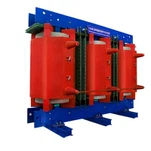
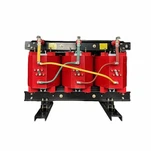
A dry type transformer uses air as the cooling medium, with the windings encapsulated in epoxy resin (cast resin type) or impregnated with varnish under vacuum (VPI type). No liquid, no leaks. Heat dissipates naturally or through forced-air fans. These units typically range from 30 kVA to around 25 MVA.
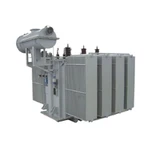
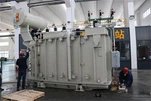
An oil immersed transformer submerges the core and windings in mineral oil - or, increasingly, biodegradable ester fluids. The oil does double duty: it cools and it insulates. Oil naturally circulates through radiators, carrying heat away from the windings far more efficiently than air alone. Capacity spans from 10 kVA all the way past 200 MVA.
Here's the part most buyers miss: the cooling mechanism dictates everything else - where you can install the unit, how much maintenance it needs, what certifications apply, and what happens when something goes wrong.
Dry Type Transformers: Strengths and Best-Fit Applications
If you're putting a transformer inside a building, dry type is almost always your answer. Fire codes in most jurisdictions - particularly the NEC in the United States - classify dry-type units as inherently lower fire risk. No combustible oil means no expensive fire suppression systems or containment pits.
The real advantages stack up quickly:
Fire safety. Zero risk of oil leaks or spills. This is why hospitals, data centers, and commercial high-rises default to dry-type transformers. UL 1561 certification for dry-type units explicitly validates this safety profile.
Indoor installation flexibility. No vault, no containment berm, no separation distance from building walls. You can place a dry type transformer directly in an electrical room - just maintain the manufacturer-specified clearance for ventilation.
Low maintenance burden. No oil sampling, no dissolved gas analysis (DGA), no periodic oil filtration. A visual inspection and occasional cleaning is typically all that's required over a 25-year service life.
Environmental compliance made simple. No risk of soil or groundwater contamination. In our factory, inquiries for dry-type units from European and Middle Eastern buyers have risen sharply as environmental permitting tightens - especially for projects near water sources or residential zones.
The trade-off? Dry type transformers cost more per kVA upfront, especially at capacities above 5 MVA. The epoxy resin encapsulation limits heat transfer compared to oil, which means a dry-type unit runs physically larger for the same capacity and has marginally higher no-load losses. Operating temperature rise is typically 80°C (Class F insulation, 155°C hot spot) or 100°C (Class H, 180°C hot spot), with a maximum ambient of 40°C.
Where dry type dominates:
Data centers and server farms (fire code mandates)
Hospitals and healthcare facilities (life safety requirements)
Indoor commercial distribution (480V to 208V step-down)
Underground and subway installations (confined space, fire risk)
Wind turbine nacelles (VPI type preferred - vibration resistance)
Oil Immersed Transformers: Strengths and Best-Fit Applications
When you need serious capacity - or you're installing outdoors in harsh conditions - oil immersed is the workhorse that gets the job done.
The physics is straightforward: oil provides roughly 8 to 10 times the heat transfer capability of air. That single fact translates into a transformer that handles overloads gracefully, operates at higher ambient temperatures, and delivers more kVA per kilogram of material. A 10 MVA oil-filled unit may weigh 30% less than an equivalent dry type transformer - a meaningful difference when you're pouring a foundation or calculating shipping costs.
Key strengths:
Capacity ceiling that dry-type can't touch. Oil immersed transformers routinely go to 50 MVA, 100 MVA, even 200 MVA and beyond. For utility substations, solar farm collector substations, or large industrial plants, there is no practical dry-type alternative at these ratings.
Real-world overload tolerance. The thermal time constant of mineral oil is long - you get minutes, not seconds, to respond to an overload before winding temperatures reach critical levels. In mining operations or steel mills where load swings are constant and unpredictable, this buffer is not a luxury - it prevents unplanned shutdowns.
Lower purchase cost at scale. At 1,000 kVA and above, an oil-filled transformer typically costs 20% to 40% less than a comparable dry-type unit. For a 20 MVA substation transformer, that difference alone can fund the entire project's switchgear.
Outdoor durability without enclosures. Properly sealed tanks handle rain, dust, salt spray, and temperature extremes. Our pad-mounted oil-filled transformers destined for Canadian winters are cold-start tested to -40°C - with heated oil circulation provisions engineered into the design from day one.
The maintenance reality is this: an oil immersed transformer requires periodic oil testing. Every 1 to 3 years, you sample the oil for DGA and moisture content. This is not complicated - but it is non-negotiable. Skipping it means you miss the early warning signs of internal arcing, cellulose insulation aging, or developing hot spots.
Where oil immersed dominates:
Utility substations and grid interconnection points
Solar PV and BESS (Battery Energy Storage System) collector substations
Mining operations - extreme environments with dust, vibration, and load swings
Oil & gas facilities (Zone 2 hazardous areas, outdoor)
Outdoor heavy industrial plants
Large pad-mounted distribution - the standard for North American utility-style installations
Head-to-Head Comparison Table
|
Factor |
Dry Type Transformer |
Oil Immersed Transformer |
|
Typical capacity range |
30 kVA – 25 MVA |
10 kVA – 200+ MVA |
|
Cooling medium |
Air / epoxy resin |
Mineral oil / ester fluid |
|
Fire risk classification |
Very low (self-extinguishing) |
Low (sealed tank); containment required |
|
Indoor installation |
Yes - directly in electrical rooms |
Requires fire-rated vault or containment |
|
Outdoor installation |
Weather enclosure needed |
Standard - weatherproof sealed tank |
|
Maintenance routine |
Visual inspection, cleaning |
Oil sampling (DGA) every 1–3 years |
|
Overload capacity |
10–20% for limited duration |
20–40% with longer thermal time constant |
|
Initial cost at 1,000 kVA |
Higher |
20–40% lower |
|
Total cost of ownership |
Lower maintenance cost |
Higher maintenance; lower purchase cost |
|
Typical service life |
25–30 years |
30–40+ years (with oil maintenance) |
|
Noise level |
Higher (cooling fan noise) |
Lower (passive oil circulation) |
|
Environmental risk |
Minimal |
Oil spill containment required on site |
|
Typical efficiency at full load |
98.0–98.8% |
98.5–99.2% |
|
Key North American standard |
UL 1561, CSA C22.2 No. 155 |
IEEE C57.12.00, CSA C22.2 No. 47 |
Here's what the table doesn't tell you: in the real world, decisions come down to site constraints and local codes, not spec sheets. A dry type transformer that meets UL 1561 can sit directly inside a Chicago high-rise electrical room. An oil immersed pad-mounted unit rated to IEEE C57.12.34 can serve a Texas subdivision for 35 years with basic oil maintenance. Two different tools. Two different jobs.
How Ryan Electric Helps You Make the Right Call
At Ryan Electric, we manufacture both types - and we don't have a favorite. This matters more than you might think.
Many transformer factories specialize in one technology and will naturally steer you toward what they build. We run parallel production lines for cast resin dry type, VPI dry-type, and oil immersed transformers up to 200 MVA. The recommendation you get from our engineering team is based on your actual site conditions, load profile, and local code requirements - not factory capacity utilization.
Our UL-listed and CSA-certified product lines cover both technologies. That means a single supplier for mixed-specification projects. If your Canadian project requires CSA C22.2 No. 155 for the indoor dry-type units and CSA C22.2 No. 47 for the outdoor oil-filled pad-mounted units, we quote both from the same factory - same quality management system, same CNAS-accredited testing lab, same dedicated project manager.
Since our 2023 joint venture with Eaton, our testing protocols for both product categories have been aligned with North American utility-grade standards. Every transformer - dry or oil - undergoes routine tests (ratio, polarity, winding resistance, no-load loss, impedance voltage) plus a partial discharge test for dry-type and a DGA baseline for oil-filled units before leaving the factory floor.
A Real-World Decision Example
A recent project in the Middle East illustrates how the dry type vs oil immersed transformer decision often isn't "one or the other" - it's "where does each type belong?"
The project was a 50 MW data center campus with onsite solar generation. The electrical design called for:
2 × 60 MVA oil immersed main step-up transformers at the solar substation - outdoor, utility-scale voltage, where capacity and weather resistance were non-negotiable
8 × 2,500 kVA cast resin dry type transformers for indoor power distribution within the data halls - where fire risk inside the white space needed to be zero
4 × 1,500 kVA VPI dry type units for the cooling plant - vibration-resistant, indoor, no oil containment needed
The oil-filled units handle bulk power at grid interconnection. The indoor dry-type units keep fire risk at zero inside rooms where server racks are worth more than the transformers themselves. Two technologies, one project, one supplier.
Planning a mixed-specification project in North America or the Middle East? Our applications engineers can review your electrical single-line diagram and recommend the right transformer type - without bias. Contact us for a free technical consultation →
The Bottom Line
When a buyer asks us "dry type vs oil immersed transformer - which should I pick?" we ask four questions in return:
1. Where is it going? Indoor → dry type. Outdoor → either, but oil often wins on cost.
2. What's the capacity? Above 25 MVA → oil immersed is your only practical option.
3. What's the fire code? Building interior with public access → dry type, no exceptions.
4. Who's maintaining it? Limited onsite staff → dry type means one less preventive maintenance schedule.
Answer those four, and the decision usually makes itself. If it's still unclear, talk to an engineer who knows both technologies - not a sales rep pushing one category.