

A mill engineer in Southeast Asia sent us a two-line message last month: the main incoming transformer was running 12 °C hotter than its design hot-spot, and not one feeder was overloaded. The answer took an hour to find, and it was not in the switchgear. Four drive-fed refiner motors had been added to the line over three years, and the harmonic spectrum they produced was heating the winding while the ammeter sat comfortably below nameplate. Nothing tripped. The winding was simply cooking.
That is the pattern behind most early transformer failures in this industry, and it is why pulp and paper mill transformer selection has almost nothing to do with picking a kVA out of a catalogue. A mill is not a data center and it is not a utility substation. Its load is a mix of very large motor starts, continuous drive harmonics and round-the-clock duty in air that is always wet. Get one of those three wrong and the unit will still pass its factory tests - it will just fail three years early.

What Makes a Paper Mill Load Different
Three characteristics separate a mill from the average industrial plant. The first is motor size: refiners, chippers and paper machine sections are rated in megawatts, and in plenty of mills built before 2005 they still start direct-on-line. The second is drive content: a modern line can run 60 to 80 variable-frequency drives from the same bus, which turns a clean 50 or 60 Hz sine wave into something the transformer was never temperature-rise tested on. The third is the atmosphere - steam, whitewater, pulp dust and chemical vapour, sharing the room with the equipment.
The electrical weight of those loads is why national labs keep studying this sector. The U.S. Department of Energy bandwidth study on pulp and paper manufacturing puts sector-wide on-site energy consumption at 2,110 TBtu per year, with a current savings opportunity of 465 TBtu per year. Paper drying (111 TBtu) and the paper machine wet end (67 TBtu) are the two largest process-level items in that opportunity - and both are, at their core, motor and drive loads fed through your distribution transformers.
None of that changes the physics of a transformer. It changes the assumptions you are allowed to make when you specify one.
Refiner Starts: Where the Transformer Gets Sized, Not Chosen
Here is the part most mill engineers know but rarely write into the specification: a NEMA Design B induction motor draws roughly six times its full-load current at locked rotor. Scale that to a 4 MW refiner motor at 4.16 kV, and the upstream transformer has to carry the starting inrush for several seconds without pulling the bus voltage down far enough to stall the motor it is feeding - or to disturb every other drive wired to the same bus.
Percent impedance decides that outcome. A low-impedance custom three phase transformer produces a smaller voltage dip during the start, but it also lets through a higher short-circuit current, which the switchgear and the protection settings then have to survive. A high-impedance unit protects the switchgear and makes the start worse. You cannot improve one side without paying on the other, and the mill's existing switchgear rating usually fixes the ceiling.
Our working rule on mill inquiries is simple. Calculate the dip at the motor terminals using the actual starting method, and keep it inside 10–15 %. When the number comes back worse than that, the fix is usually a soft starter, a reduced-voltage start on the refiner, or a different tap - not a larger transformer. Buying a bigger unit is the most expensive way to solve a starting problem.
VFD Harmonics: Where Capacity Quietly Disappears
A transformer that passed a temperature-rise test on a linear load is not automatically rated for a drive-fed bus. Harmonic currents drive up the eddy-current loss in the windings roughly with the square of the harmonic order, so the heat concentrates inside the winding instead of spreading through the core and the cooling surfaces. Nameplate kVA does not describe what is left after that.
The standard that quantifies it is IEEE C57.110-2018, which applies a harmonic loss factor to the eddy-loss component and derives a maximum permissible current below the linear-load rating. The output of that calculation is rarely 100 % of nameplate.
Two practical consequences follow. Either specify a K-rated unit for the drive bus, or oversize the transformer and accept the no-load loss that comes with the extra iron. Then look upstream: an 18-pulse drive, an active front end or a passive filter bank changes the harmonic spectrum the transformer sees. Adding a filter to fix a motor problem and skipping the transformer question is a common and expensive mistake.
Every pulp and paper mill transformer we quote for a drive-heavy line starts from the drive list rather than the load list. We ask for the drive count, the pulse number and the expected current distortion before anyone discusses kVA.
Corrosive Air, Water and Dust: Winding and Enclosure Choices
In a wet-end electrical room, humidity sits above 80 % for most of the year, steam lines drip, and washdown happens on a schedule. That is the environment where a pulp and paper mill transformer usually dies early - not from overload, but from moisture tracking across insulation and corrosion on the core clamping structure.
Matching construction to location is worth more than any single line item in the specification:
| Location in the mill | Construction we specify | Why it matters |
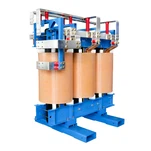
| Wet end and machine hall (humid, washdown) | Cast resin or VPI dry type, IP54 enclosure, anti-condensation heaters | Moisture and pulp dust resistance with no liquid to contain |
| Pulp mill and recovery area (corrosive vapour) | Cast resin dry type, class H insulation, sealed windings | No oil to sample or leak; winding shielded from vapour |
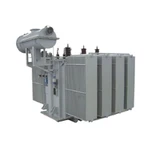
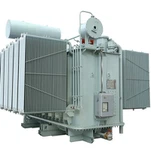
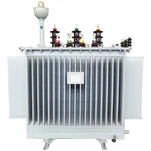
| Outdoor yard and substation | Oil immersed, corrosion-protected tank, hermetically sealed or conservator | Higher ratings and better heat rejection outdoors |
| Utility tie and main step-down (above 10 MVA) | Oil immersed with OLTC, monitored hot-spot | Voltage regulation across a mill load that swings all day |

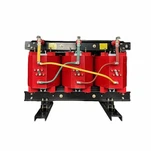
A cast resin transformer is the default for indoor mill locations up to roughly 5 MVA, because the winding has no hygroscopic paper insulation to dry out. Above that, oil-immersed units remain the practical choice for the main step-down - but the tank coating and the oil preservation system are what decide whether the unit survives ten years or twenty-five.
Loading, Hot Spots and the Spare You Will Need
A paper machine does not stop for convenience. A mill runs around the clock with a planned shutdown every 12 to 24 months, so the transformer has to hold its loading in an ambient that may sit at 40–45 °C inside the machine hall. That is where the loading guide earns its keep: IEEE C57.91-2011 defines how much a mineral-oil unit can carry above nameplate, for how long, based on hot-spot temperature rather than a fixed number on a plate.
Two figures decide the life of the unit. One is the hot-spot rise the supplier guarantees; the other is the ambient you actually measure. The long-standing rule of thumb - insulation life halves for every 6–8 K of extra hot-spot temperature - still holds, which is why a transformer running 12 °C above design is not "fine because it has not failed yet". It has failed early, on an instalment plan.
Then plan the spare before you need it. In the current supply market that means holding a spare unit, or at minimum a reserved production slot, instead of assuming a replacement can be sourced inside a shutdown window. For a mill with a single main step-down transformer, this is the cheapest insurance on site.
How We Build Mill Transformers
We build both dry type and oil immersed units for industrial loads from a 120,000 m² facility in Jiangsu with 180+ sets of production and test equipment and 37 registered patents. Ryan Electric has been an Eaton joint venture partner since 2023, and the certification portfolio covers UL, CSA, IEEE, DEKRA, CNAS and CE.
For mill projects the conversation starts with the drive list and the starting method, not the kVA. Cast resin units destined for humid rooms are routine-tested including partial discharge measurement, and every order leaves with temperature-rise data, drawings and the test report in one package - the documentation a project team has to hand to its insurer and its utility.
A cast resin transformer ordered for a wet-end room and a custom three phase transformer built for a 4.16 kV refiner bus leave the same factory, and they share exactly one specification item: the ambient temperature. Everything else about them is different. That is the whole point of specifying for mill duty instead of buying by kVA.
Send Us Your Drive List First
If you are specifying a pulp and paper mill transformer for a new line, a rebuild or a replacement, four documents settle the answer faster than any catalogue: the drive list with pulse numbers, the starting method and locked-rotor current for each large motor, the measured ambient and humidity in the room, and your redundancy target against the shutdown schedule. Send those through ryan-transformers.com and our engineers will come back with a sized, tested, documented offer rather than a price list.
About the Author: This article was written by the engineering team at Ryan Electric, an Eaton joint venture partner and UL/CSA-certified transformer manufacturer in Jiangsu, China, serving pulp and paper, mining, utility and data center clients across North America, Latin America, Southeast Asia and the Middle East.