

Two transformers can leave the same factory with identical nameplates and identical heat-run reports, and only one will still be serviceable five years later. The difference is rarely build quality. It is whether the specification described a mine - or a warehouse with a gravel driveway.
Mine duty is the hardest duty a distribution transformer sees outside a steel melt shop. Loads swing with the shift, drives push harmonic current into the windings, dust settles on every cooling surface, and the unit sits in a drift nobody can reach with a forklift. Those decisions are made before the purchase order, not after commissioning.
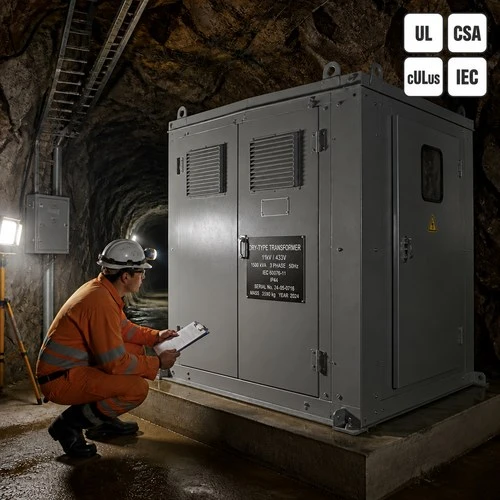
What Mine Duty Actually Demands
A mining transformer is not a distribution transformer with a heavier enclosure bolted on. Five duty conditions separate the two, and each one changes a number on the data sheet.
- Cyclic load, not steady load. A hoist, shovel or crusher does not draw rated current for hours. It pulls 150% to 200% of rated for seconds, then idles. Design has to follow the duty cycle, not the monthly average.
- Harmonic-rich current. Hoists, conveyors, slurry pumps and ventilation fans now run on variable frequency drives. Harmonic current heats windings, neutrals and enclosures differently from the 60 Hz basis the nameplate was calculated on.
- Restricted space, restricted access. An underground substation is a cut-out in rock behind a fire-rated door. If the unit does not fit through the drift on the way in, the project stops.
- Dust, moisture and heat. Mine air carries abrasive dust and often sits close to saturation. Both attack insulation surfaces and every cooling path you left open.
- Regulation. In the United States, underground metal and nonmetal mines fall under MSHA rules in 30 CFR Part 57. Part 57 puts fire-protection requirements on underground transformer stations (§57.4262) and treats trailing cables as a category of their own (§57.4057).
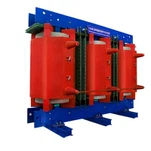
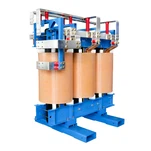
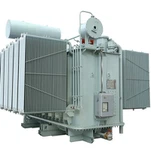
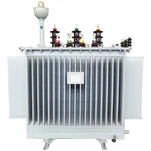
That last point drives more specification decisions than most buyers expect. Mineral oil is a combustible liquid, and Part 57's limits on liquids underground are a large part of why cast resin dry-type transformers dominate drift substations in US metal and nonmetal mines. Above ground the economics flip and oil-immersed units win on cost per kVA. A surface substation and a drift substation are different problems, and one specification should never be copied onto the other.
Sizing a Mining Transformer for the Duty Cycle, Not the Average
The most common sizing error on mine projects is a load list totalled by connected kVA. Connected kVA says what could run. It does not say what runs at the same time, or for how long - and nothing at all about the thermal mass that decides whether a winding survives a shift change.
Hoist duty makes this concrete. Take a two-minute cycle on a large mine hoist: about 25 seconds accelerating at 180% of motor rated current, 45 seconds near rated, and the remainder idling. The RMS current over the cycle - not the peak - is what the winding sees, and it lands well below motor rated current. Size on the peak and you buy more frame than the duty requires. Size on the average and you cook the winding.
Voltage drop is the second driver, and on long feeders it usually sets the final kVA. Holding motor-terminal voltage drop to about 3% on a 2,400 m feeder takes more copper and more kVA than the load calculation alone suggests. We work that trade explicitly on every mining transformer enquiry, because a unit that is electrically adequate and thermally marginal is the worst outcome for a mine.
On mine load centres from about 1,000 to 2,500 kVA we see impedances specified between roughly 5% and 6%. Drop it lower to fix a voltage problem and the arcing fault current at the end of a 2,400 m trailing cable rises with it - precisely the fault the underground rules are written around. The fix belongs in conductor size or in moving the load centre closer to the face, not in shaving impedance off the specification.
Harmonics and K-Factor for Mine VFD Loads
A six-pulse drive without a line reactor injects 5th, 7th, 11th and 13th harmonic current, and a mine rarely stops at one drive. Harmonic current does not heat a winding the way fundamental current does: it concentrates in the outer layers of the winding, eddy losses rise faster than the square of the harmonic order, and a unit comfortable at 60 Hz can be thermally overloaded on a distorted waveform at the same RMS current.
Two specification tools handle it. The first is a harmonic rating factor: UL 1561 defines K-factor ratings K-4, K-9, K-13 and K-20, each describing a transformer built to tolerate a defined harmonic spectrum without exceeding its temperature limits. On a mixed mine load - hoist drives, conveyors, pumps and linear motor load - the specification usually lands between K-9 and K-13.
The second tool is derating per IEEE C57.110, which converts a measured harmonic spectrum into a reduced usable kVA. Where the mine can supply a power quality study, we derate from the real spectrum. Where it cannot, we derate on a conservative assumption and say so in the quotation.
Neutrals deserve their own line item. Triplen harmonics add rather than cancel, so a neutral sized at 100% of phase current can carry well above that on a board feeding single-phase drives, lighting and control supplies. Every K-factor transformer we build for mine duty gets a separate thermal check on the neutral busbar.
Voltage Drop, Impedance and Trailing Cable Coordination
Impedance does two jobs at once on a mine, and they pull in opposite directions. Low impedance gives better voltage regulation at the far end of a long feeder. Higher impedance limits fault current, which is what makes coordination with trailing cable protection practical.
Trailing cable protection is where the regulatory and the engineering sides meet. Part 57 devotes a dedicated subsection to trailing cables and to the grounding and ground-check provisions that go with mobile equipment, and it is not a box a supplier can tick for you. For the underlying failure modes, the NIOSH Mining Program has published decades of research on shock, fire and explosion prevention in metal and nonmetal mines.
The heat run that proves the thermal side is not a formality. IEEE Std C57.12.90 defines how the test is performed, and it is worth asking for the measured top-oil and winding rises of the unit offered rather than a design limit.
Dust, Altitude and Enclosure: The Three Items Mines Get Wrong
Three environmental fields on a mine specification get filled in wrong more often than any others, and all three are cheap to fix at the enquiry stage.
- Enclosure. IP44 is the practical minimum for an indoor drift substation; IP54 is right where slurry spray or washdown is present. On a site with abrasive dust, a ventilated enclosure with unfiltered louvers works as a dust pump, and the winding insulation collects the result.
- Altitude. Altitude changes the allowable temperature rise, not the kVA on the nameplate. Above 1,000 m the IEEE C57.12.01 basis no longer applies passively and the design has to be corrected - the working figure in our design office is a 1 K reduction in allowable rise for each additional 500 m. High-altitude mine sites in Chile, Peru and Central Asia hit this constantly.
- Ambient and insulation class. Design ambient gets written as 40 °C out of habit, and a mine in the Pilbara does not care about habit. Cast resin windings are typically Class F (155 °C) or Class H (180 °C), with allowable rises of 80 K, 100 K or 115 K depending on class and on how much size the buyer will trade for thermal margin.
Cooling is the item we argue about most with mine consultants. Sealed and non-ventilated units are attractive underground because dust cannot get in - and they are also the units that run hottest at the same kVA. That trade is legitimate, but it has to be calculated on both sides.
| Specification item | Standard distribution practice | Mine duty practice |
| Load basis | Connected kVA with a diversity factor | Duty-cycle RMS current per driven equipment |
| Harmonic basis | Assumed linear load | K-factor rating K-9 to K-13 plus IEEE C57.110 derating |
| Enclosure | NEMA 1 indoor, ventilated | IP44 to IP54, filtered ventilation if any |
| Neutral | Sized at phase current | Separate thermal check for triplen harmonics |
| Voltage drop | Checked at the switchboard | Checked at motor terminals, about 3% over 2,400 m |
| Insulation and rise | 80 K or 100 K cast resin | Class H 180 °C with 115 K rise where size matters |
| Compliance | Local electrical code | 30 CFR Part 57 underground plus local code |
What to Put in the RFQ, and What We Build
Add five items to a mine transformer enquiry and the quotations you get back will finally be comparable with each other:
- Duty cycle table per driven load. Not a connected kVA total. Peak, duration and idle time in seconds is enough for a thermal study.
- Harmonic spectrum, measured or estimated. With the K-factor or the IEEE C57.110 derating basis you want applied, stated explicitly.
- Voltage drop limit at the motor terminals. Plus feeder or trailing cable length and conductor size, because that combination usually decides the frame.
- Site altitude, design ambient and enclosure rating. Give the seasonal maximum, not the annual average.
- Regulatory regime. Part 57 if the substation is underground in the United States, plus any state or mine-specific code that applies.
Ryan Electric builds these units in Haian, Jiangsu, on a 120,000 m² site with 180+ sets of production and test equipment and 37 patents behind the winding and cooling designs. Mine orders run the same test sequence as utility work - ratio and polarity, impedance, no-load and load loss, temperature rise, applied and induced voltage and partial discharge - with reports issued against IEEE and IEC procedures. Since 2023 we have been an Eaton joint venture partner, which sits behind the UL and CSA certification our dry-type and pad-mounted lines carry.
One order that stayed with the team: thirteen cast resin dry-type transformers, 1,500 kVA, 6.6 kV to 0.6 kV, in IP44 enclosures, for a mine site in Canada. What made it straightforward was not the rating. The customer sent drift dimensions and a seasonal ambient profile with the enquiry, so enclosure depth and cooling were settled before the winding was designed.
If your project already has a duty cycle table and a feeder schedule, send both to our engineering team through ryan-transformers.com with the site altitude and design ambient. We will come back with a kVA, an impedance and - where the application calls for it - a K-factor, and tell you which of the three is driving the price on your mining transformer.
About the Author: This article was written by the engineering team at Ryan Electric, a transformer manufacturer in Jiangsu, China and an Eaton joint venture partner, producing oil-immersed, dry-type and pad-mounted transformers for utility, industrial, mining and data center projects across North America, Southeast Asia, the Middle East and Africa. Factory testing follows IEEE and IEC procedures, with UL, CSA and DEKRA certification available.