

How to Choose the Right Pad Mounted Transformer for Your Project?

Introduction: The Silent Hub of Power Distribution
In the world of commercial and industrial infrastructure, power distribution is often a case of 'out of sight, out of mind'-until a critical decision is required. Whether you are developing a new data center, a sprawling industrial park, or a renewable energy site, selecting a pad mounted transformer manufacturer is a pivotal step that defines your long-term operational reliability. A pad mounted transformer isn't just a piece of equipment; it's a high-voltage hub that must balance public safety, environmental resilience, and footprint efficiency.
We've worked with hundreds of project managers across North America and the Middle East, and the question is rarely about whether they need power-it's about how to deliver it safely in a compact, accessible format. From our 120,000㎡ facility in Jiangsu, our engineers often see clients struggling to navigate the technical maze of Dead Front vs. Live Front or Liquid-Filled vs. Dry-Type. This guide aims to clear that fog, grounding your decision in international standards and real-world manufacturing expertise.
What is a Pad Mounted Transformer? Basics & Manufacturing Excellence
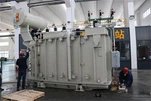
A pad mounted transformer is a ground-mounted electric power distribution transformer in a locked steel cabinet mounted on a concrete pad. Because all energized connection points are enclosed within a grounded metal housing, it can be installed in places that do not have room for a fenced enclosure. At Ryan Electric, our partnership with Eaton (formalized in 2023) has further refined our manufacturing processes, ensuring that every unit reflects a heritage of quality and engineering precision.
Key Technical Considerations for Your Project

Dead Front vs. Live Front: Safety First
One of the most critical choices in North American projects is deciding between a dead front vs live front pad mounted transformer. In a dead front design, the high-voltage connections are insulated and shielded, meaning no exposed energized parts are visible when the cabinet is opened. This is the industry standard for public-access areas like retail centers or residential developments. A live front design, conversely, has exposed bushings and terminals, typically requiring stricter access controls and expert maintenance personnel. For most modern urban projects, we recommend the dead front approach for its superior safety profile.
Liquid-Filled vs. Dry-Type Options
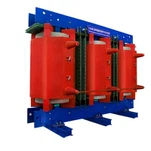
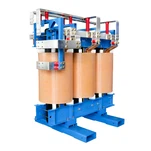
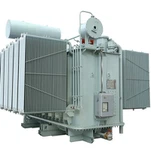
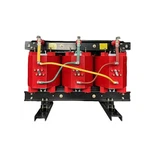
While liquid-filled transformers (using mineral oil or eco-friendly FR3 vegetable oil) offer excellent cooling and a longer lifespan, certain environments-like indoor data centers or environmentally sensitive wetlands-may require dry-type alternatives. However, for 90% of outdoor ground-mounted applications, oil-immersed units remain the gold standard due to their thermal efficiency and cost-effectiveness.
Compliance and Standards: Why UL and CSA Matter

You cannot discuss power equipment in 2026 without focusing on compliance. If you are sourcing for the US or Canada, a UL listed pad mounted transformer price may be higher than a non-certified alternative, but the cost of non-compliance-including insurance hurdles and safety risks-is far greater. As a manufacturer certified under UL, CSA, and IEEE standards, Ryan Electric ensures that every transformer is tested for short-circuit resilience, insulation integrity, and cabinet security (anti-tamper). Our products are designed to meet the rigorous DOE 2024 standards, ensuring your project isn't just powered, but future-proofed. We are also active members of the IEEE Power & Energy Society, keeping us at the forefront of grid modernization.
Real-World Application: From Data Centers to Solar Farms
Theory is one thing; field performance is another. We recently supplied several custom units for a large-scale data center project in Malaysia and a solar farm development in Canada. In the data center scenario, the focus was on continuous load capacity and heat dissipation. For the solar farm, the challenge was environmental-dealing with temperature fluctuations and providing a high-degree of cabinet protection. In both cases, the key was early-stage consultation between the project engineers and the pad mounted transformer manufacturer.
FAQ: What You Need to Know
What is the life expectancy of a pad mounted transformer?
With proper maintenance, a high-quality, oil-filled pad mounted transformer from a reputable factory can last between 25 and 35 years. Factors such as load levels, ambient temperature, and the frequency of oil testing significantly impact this lifespan. In coastal areas, we suggest specialized anti-corrosive coatings to prevent cabinet degradation.
Conclusion: Making the Right Call
Choosing the right transformer isn't just about kVA and voltage-it's about understanding the environment it will live in and the standards it must uphold. Whether you need a standard utility unit or a highly customized solution, starting with the right technical partner is essential.
Ready for a professional quote? Contact Ryan Electric's engineering team today for a free technical consultation.