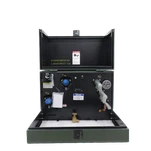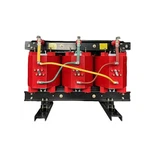


Last January, a contractor in Ohio called us two days after a failed inspection. The 1,000 kVA pad-mounted transformer on his site was brand new, UL-listed, and fully tested at our factory - but the local Authority Having Jurisdiction rejected the installation, citing working space and disconnect arrangements under the newly adopted NEC 2026 rules in his county. The equipment was fine. The project documents were not.
That call is why this article exists. NEC 2026 transformer requirements govern how a transformer is installed and protected, not how it is built, yet they reach deep into procurement: what your enclosure looks like, what protection sits upstream, what the nameplate must state, and which code year your jurisdiction enforces. Get them wrong and the delay lands on your schedule, not the factory's.
The 2026 NEC Is Now the Current Code - and States Are Adopting It Now
NFPA 70, the National Electrical Code, is enforced in all 50 U.S. states, and the 2026 edition is now the current one - the NFPA lists it as such on the official NFPA 70 page. Adoption still runs on state-by-state schedules, and several states formed formal review committees in 2026 before amending and enacting the new edition. For a buyer, that means the code year on your project can differ from your neighbor's county by a full edition.
We see the consequences in quotation sheets. When a U.S. customer sends us a project inquiry, the first question our engineers ask is not voltage class - it is which NEC year the local authority enforces. The answer matters because NEC 2026 transformer requirements clarify how working space is measured, including a defined 24-inch egress path at a 90-degree door opening - a detail that can add half a meter to an electrical room nobody has designed yet. The same unit can be perfectly legal in one district and need a layout revision in the next.
One distinction saves buyers the most confusion: the NEC is an installation code, not an equipment standard. A factory cannot "build to NEC" the way it builds to IEEE C57.12.00 or IEC 60076 - but the equipment has to be specified and delivered in a way that lets an installer comply. That is where the checklist below starts.
A UL Listed Transformer Does Not Equal a Code-Compliant Installation
A UL listed transformer has been evaluated by UL against the applicable product standards - UL 1561 or UL 1562 for dry-type units, and the corresponding UL requirements for liquid-filled designs - with the factory under follow-up inspection. That mark tells an inspector the equipment is safe. It says nothing about how the equipment is placed, protected, and grounded on site; that is the NEC's job.
The question we hear most from U.S. buyers is: "It's UL listed - why would my inspector reject it?" The answer is usually in the installation details. Listing certifies the machine; the code governs the room, the clearances, the disconnects, and the overcurrent devices around it. When you write an RFQ, treat the listing mark as the entry ticket, not the whole compliance story - and put the installation environment into the specification, because that is what decides enclosure, insulation class, and terminal arrangements at the factory.
NEC 2026 Transformer Requirements: Five Article 450 Clauses That Belong in Your RFQ
Article 450 of the NEC is the transformer chapter, and five of its clauses shape equipment specifications more than any other part of the code. We fold them into every quotation we prepare for U.S. projects; the table below shows the ones that come up in RFQ reviews most often.
| NEC clause | What it requires | Why it belongs in your RFQ |
| 450.3 | Primary overcurrent protection: 125% of rated current for fuses, 250% for breakers on 600 V-class dry-type units; wider multipliers for liquid-filled in supervised locations | Coordination needs your impedance and loss data before the design is frozen |
| 450.10 | Transformer grounding and bonding, including an identified X0 terminal on wye secondaries | The terminal hardware must exist on the unit you receive |
| 450.11 | Nameplate data: kVA, voltage ratio, impedance, temperature rise | Verifiable at factory acceptance and by the inspector on site |
| 450.14 | A lockable disconnecting means within sight of the transformer | Room and cable layout must allow it; affects enclosure access |
| 450.22 / 450.23 | Dry-type indoor clearances from combustibles: 6 in at ≤112.5 kVA, 12 in above; outdoor liquid-filled spacing by fluid type | Decides enclosure, insulation class, and fluid choice at ordering stage |
Take transformer overcurrent protection first. Under 450.3, the primary overcurrent device for a 600 V-class dry-type transformer is typically capped at 125% of the nameplate primary current when fuses are used, and 250% with a circuit breaker. Liquid-filled units in supervised locations get wider multipliers. That overcurrent protection coordination study needs your unit's impedance and loss data before the design is frozen - one more reason a vague "or equivalent" line in an RFQ creates problems later.
Clearance rules drive physical design. For indoor dry-type units, 450.22 requires 6 inches of clearance from combustible materials at 112.5 kVA and below, and 12 inches above that rating - though a transformer with Class 220 degrees C insulation can qualify for reduced spacing with an engineering evaluation. Outdoor liquid-filled units follow the 450.23 rules: a mineral-oil unit generally sits at least 25 feet from a building or behind a fire barrier, while an FM-approved less-flammable fluid can bring that down to roughly 5 feet. Choose the fluid and the indoor/outdoor position before you order, not after the site plan is stamped.
The NEC 2026 Medium-Voltage Reorganization Touches Data Center and Industrial Projects
NFPA is reorganizing the NEC around systems over 1,000 V ac and 1,500 V dc - a process that started in the 2023 edition and continues in the 2026 one, with new or substantially revised articles for customer-owned medium-voltage systems, including Articles 245, 265 through 270, 305, 315, and 495. The 2029 edition is expected to complete the restructuring. In plain terms, NEC 2026 transformer requirements now sit inside a code structure that separates medium-voltage practice from low-voltage practice more clearly than any earlier edition.
Why should a transformer buyer care? Because a growing share of transformer orders lives inside those customer-owned medium-voltage systems: the 13.8 kV incoming feed of a data center, the 34.5 kV collector of an industrial campus, the switchgear-to-transformer interface. Equipment still follows IEEE C57.12.00 and the UL requirements - the standards family published under the IEEE Standards Association - but the installation documentation, protection coordination, and acceptance evidence around it now follow a code structure that is still settling.
Last year we supported a data center project where the electrical engineer's room layout had to be redrawn twice: once for the 2026 working-space clarifications and once for the medium-voltage switchgear aisle width. The transformers themselves never changed. That is typical - the code churn lands on layouts and documents, which is exactly where procurement teams are least prepared.

What We Check in the Factory Before a U.S.-Bound Shipment Leaves
Because NEC compliance is decided partly by documentation, our pre-shipment check for U.S. orders includes items many factories skip. The nameplate must carry everything 450.11 expects - kVA, voltage ratio, impedance, temperature rise - in a format an inspector can read from a standing position. Wye-connected units ship with the X0 neutral terminal clearly identified and sized for fault current, because grounding per 450.10 and Article 250 is an installation step that starts at the terminal block.
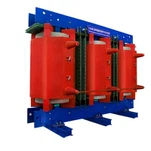
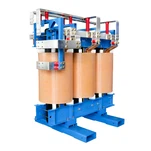
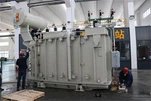
Enclosures for pad-mounted and dry-type units are checked for door swing to 90 degrees and access layouts that satisfy the working-space rules. We hand over protection coordination data, the routine test report, and an installation manual that references the applicable NEC articles, so the site electrician is not guessing. As an Eaton joint-venture partner with a 120,000 m2 manufacturing base, we keep the same documentation discipline for a 150 kVA pad-mounted unit as for a 20 MVA power transformer - because the inspector on site does not care which one is bigger.
A Five-Minute Compliance Check Before You Order
Before you send the next RFQ for a U.S. or Canadian project, run this quick check:
- Confirm which NEC year your jurisdiction enforces - the code year drives working space, egress, and medium-voltage expectations.
- State the installation environment in the spec: indoor or outdoor, clearance available, and the fluid type for liquid-filled units.
- List the documentation deliverables: nameplate data per 450.11, overcurrent protection sizing, grounding terminals, and installation instructions that reference the code.
Most of these items cost nothing at quotation stage and a great deal after shipment. If your specification is built around a UL mark but the installation has to satisfy NEC 2026 transformer requirements, our engineers will walk the RFQ with you before you commit - send your project details through the contact page at ryantransformers.com or your regional sales engineer. That conversation is what prevents the inspection failure from the opening story.
About the Author - Written by the engineering team at Ryan Electric, an Eaton joint-venture partner and UL/CSA-certified transformer manufacturer in Jiangsu, China, building pad-mounted, dry-type, and power transformers for utility, data center, and industrial projects across North America and beyond.