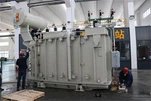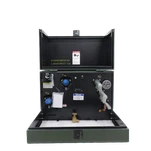


Two years ago a customer's maintenance engineer sent us an oil test report that looked boring at first glance: hydrogen slightly up, carbon monoxide normal. His instinct said test again in six months. Our engineer read the rate of change instead, flagged the unit for a follow-up sample within 30 days, and the second report caught a developing winding hotspot before it became a forced outage. That is what dissolved gas analysis does - it turns transformer oil into an early warning system that costs a few hundred dollars and can save a six-figure rebuild.
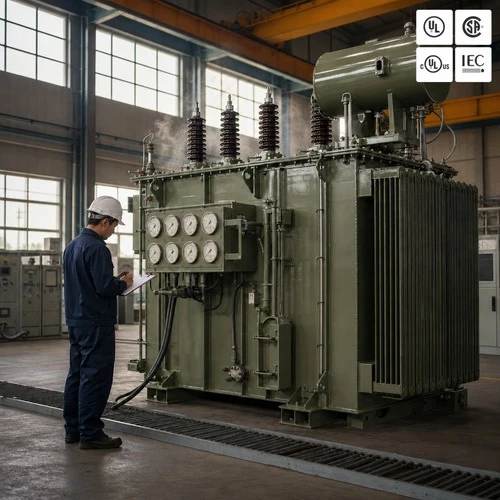
What Dissolved Gas Analysis Actually Detects
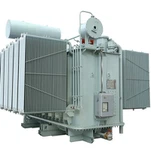
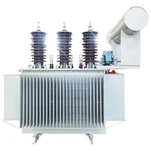
Inside every oil-immersed transformer, the paper insulation and the mineral oil age under electrical and thermal stress. As they degrade, they release gases that dissolve into the oil: hydrogen, methane, ethane, ethylene, acetylene, carbon monoxide, and carbon dioxide. Different fault mechanisms produce different gas signatures, which is the whole basis of dissolved gas analysis - you measure which gases are present and how fast they are growing, then trace them back to the fault that produced them.
The physics is consistent enough that the industry has codified it. The IEEE C57.104 guide for the interpretation of gases in oil-immersed transformers, and the IEC counterpart IEC 60599, both describe how to convert a lab report into a condition assessment. The standards do not replace an engineer's judgment - they give it a structure, which is exactly what a buyer needs when evaluating an aging fleet or a factory test report.
The Seven Fault Gases and What Each One Tells You
Here is the short version we walk every new customer through:
| Gas | Symbol | What it signals |
| Hydrogen | H2 | Partial discharge, low-energy arcing, corona |
| Methane | CH4 | Low-temperature thermal faults |
| Ethane | C2H6 | Low-temperature thermal faults |
| Ethylene | C2H4 | Thermal faults above ~300°C |
| Acetylene | C2H2 | Arcing - formed only at very high temperature |
| Carbon monoxide | CO | Cellulose (paper) insulation decomposition |
| Carbon dioxide | CO2 | Paper aging, often combined with CO |
Two gases deserve special attention. Acetylene is the alarm gas: it forms only at arc temperatures, so any sustained rise in C2H2 means an electrical discharge is happening inside the tank - the unit needs inspection, not another year of routine samples. Carbon monoxide is the paper-killer: rising CO with a falling CO2/CO ratio points to cellulose decomposition, which is how insulation life ends.
For a quick fault-type verdict, the Duval Triangle method plots three key gases and classifies the fault into one of six zones - partial discharge, three thermal severity levels, and two discharge levels. It is a first-pass diagnostic that every maintenance engineer should be able to sketch from memory; the standards turn it into a formal procedure.
Sampling Done Wrong: The Most Common Mistake We See
Here is the part most buyers miss: the lab result is only as good as the sample. In our factory, oil sampling is a discipline, not a chore. The technician drains the dead oil from the sampling valve first, uses a syringe that has been flushed with dry nitrogen or oil, and fills the sample bottle with zero headspace - because a bubble of air in the bottle is a bubble of false hydrogen data.
We see the consequences in the field constantly. A customer once sent us a report showing hydrogen at 400 ppm on a unit we had built and tested a year earlier. The number looked alarming. A re-sample taken with proper technique came back at 18 ppm. The first result was contamination from a poorly handled sample - but it cost the customer a night of panic and a paid consultant call. When you commission transformer oil testing, the sampling procedure is part of the test. Ask your lab or supplier to document it.
Reading a DGA Report: Rates Beat Single Readings
A single DGA snapshot tells you a little. The trend tells you everything. IEEE C57.104 classifies operating status into four conditions and, more usefully, emphasizes gas generation rate - the change between samples - over the absolute number. A unit sitting at 80 ppm of hydrogen for five years is a different animal from a unit that went from 20 to 80 ppm in eight months.
The arithmetic works like this: total combustible gas (TCG) and individual gases are checked against the condition levels, and the interval to the next sample is set by how close you are to the boundary. Normal units test yearly; units with rising trends move to quarterly or monthly sampling until the rate settles. Utilities that run this discipline catch most developing faults one to two years before failure - which is why insurers and reliability engineers treat DGA as the highest-value test per dollar in the maintenance budget.
DGA in the Factory: Why the First Report Matters
Every oil-immersed transformer we ship carries a factory dissolved gas analysis baseline (DGA), taken after the heat run test when the oil has been thoroughly circulated and degassed. That baseline is the single most valuable document for the unit's whole life: every future oil test gets compared against it, and a "normal" result for your unit is defined by your unit, not by a generic table.

As an Eaton joint venture partner with UL, CSA, IEEE, and DEKRA certifications in our portfolio, we treat the first oil test as a deliverable, not a footnote. Our test bay runs the dissolved gas measurement, the moisture content check, and the breakdown voltage test on the same batch of oil that goes into the tank, and the report ships with the unit. Buyers who have been burned by "the transformer was fine at the factory" claims appreciate the difference - the data is on paper before the truck leaves.
Building DGA into Your Procurement Plan
If you are buying transformers now, add these three lines to your RFQ and your maintenance plan:
- Require a factory DGA baseline report with every oil-immersed unit, taken post heat run, with the test method named (IEC 60567 or equivalent).
- Schedule the first field oil test within 12 months of energization - the early life is when manufacturing defects surface.
- Ask for the sampling procedure from your lab or supplier before you authorize testing, and demand trend-based interpretation, not just a pass/fail number.
Dissolved gas analysis is cheap insurance on an asset that typically runs 30 years. The units that fail catastrophically almost always show warning signs in the oil first - the buyers who read those signs avoid the failure, the rebuild, and the outage. Send us your transformer specification or your oil test report through ryan-transformers.com, and our engineers will help you read what the oil is telling you.
About the Author: This article was written by the engineering team at Ryan Electric, an Eaton joint venture partner and UL/CSA-certified transformer manufacturer in Jiangsu, China, supplying oil-immersed and dry-type transformers to utility, data center, solar, and industrial clients across North America, the Middle East, Southeast Asia, and Africa.