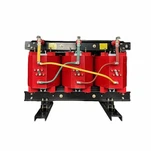


Two quotes for the same 1000 kVA pad-mounted transformer came back 17 percent apart last month. The lower one was aluminum-wound. The higher one was copper-wound. The buyer's first question to our sales engineer was not about losses, temperature rise, or short-circuit strength. It was: "Which is actually better?"
Here is the short version: neither metal is "better" in a vacuum. A properly engineered aluminum wound transformer can meet the same loss guarantees as a copper design, and a badly built copper unit can fail faster than a good aluminum one. The copper vs aluminum transformer windings decision only makes sense when you tie it to conductivity, cross-section, mechanical strength, certification, and your real load profile. This guide walks through each of those, the way we would explain it to a customer standing on our factory floor.
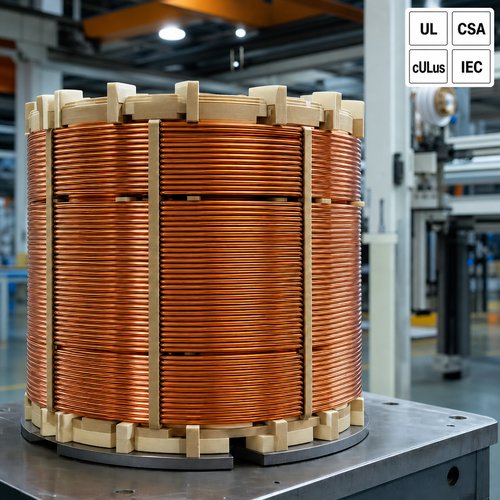
Why the copper vs aluminum transformer windings decision deserves more than a gut feeling
The debate is as old as the transformer industry itself, and both materials are fully accepted in North American practice. Utilities in the United States and Canada have run aluminum-wound distribution transformers for decades, mostly because of weight and first cost. Industrial users, data centers, and mining sites lean toward copper, usually because of space constraints and perceived reliability.
What most buyers miss is that the material is only half of the story. The other half is whether the manufacturer adjusted the design - window size, core cross-section, bracing, and connection method - for the material actually used. In our factory, the first question we ask is not "copper or aluminum?" It is: "What losses, impedance, and short-circuit rating does your specification demand?" From there, the right winding material and geometry follow.
A useful mental model comes from conductivity. Electrical-grade copper conducts at about 100 percent IACS, while EC-grade aluminum (1350 alloy) sits near 61 percent IACS. To reach the same DC resistance, an aluminum conductor needs roughly 1.6 times the cross-sectional area of copper. That single number drives everything downstream: coil window, core size, tank dimensions, oil volume, and total weight.
The engineering basics: conductivity, cross-section, and weight
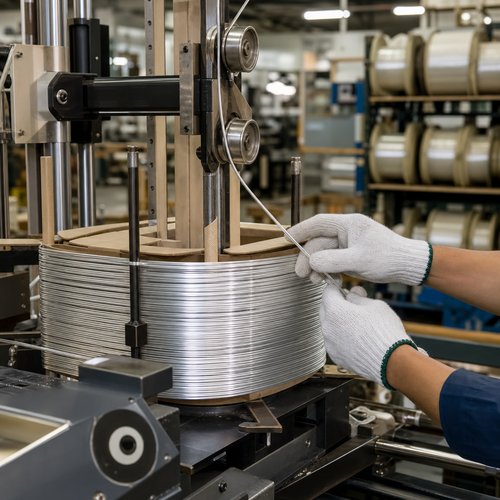
| Property | Copper winding | Aluminum winding (EC 1350) |
| Conductivity | ~100% IACS | ~61% IACS |
| Cross-section for equal DC resistance | Reference | ~1.6x larger |
| Density | 8.96 g/cm3 | 2.70 g/cm3 |
| Winding weight for equal resistance | Reference | ~50% of copper |
| Tensile strength (annealed) | Higher | Lower; needs extra bracing |
| Surface oxide | Minor | Al2O3 layer; special jointing required |
The engineering consequences are straightforward. A larger conductor needs a larger coil window, which usually means a larger core, tank, and oil volume for a liquid-immersed unit - or a bulkier enclosure for dry-type. The weight picture works in aluminum's favor: even with the extra cross-section, an aluminum coil weighs roughly half of an equivalent copper coil, which is why pad-mounted units on concrete pads and pole-mounted transformers are so often aluminum-wound.
Mechanical strength is where aluminum demands respect. Annealed aluminum has lower tensile strength than copper, so the winding must be braced more carefully to survive short-circuit forces, which can reach many times rated current. ANSI-style short-circuit testing - 2 seconds at the rated withstand current - is where a sloppy aluminum design gets exposed. When we evaluate transformer winding material for a client, mechanical withstand is one of the first review points, not the last.
Losses and temperature rise: where designs actually differ
Both windings produce load loss (I2R) plus stray and eddy losses. A well-designed aluminum coil compensates for lower conductivity with more conductor area, so at the same kVA and same guaranteed losses, the two materials can perform nearly identically on the test report. The trade-off is physical: you give up space and active material to get there.
Temperature rise is governed by the same standard regardless of winding material. Under IEEE Std C57.12.00-2015, a liquid-immersed transformer must hold average winding temperature rise to 65 °C above ambient when tested by the resistance method - copper or aluminum makes no difference to the limit (IEEE C57.12.00-2015). Dry-type units follow their own class limits - typically 115 °C average for an F-class design, 150 °C for H-class.
Here is a piece of our factory experience that rarely appears in brochures: in temperature-rise tests, aluminum-wound coils sometimes show a hotter spot at the connections than copper-wound ones - not because of the conductor, but because of the joint. That is why our QC team treats every aluminum connection as a controlled operation: brazing or specialized crimping with anti-oxidation treatment, torque-checked and re-measured before the coil goes into the tank. Get the joints wrong and the unit will overheat at the terminals years before the winding itself ages out.
Certification reality in North America: UL, CSA, and the DOE 2029 deadline
Certification bodies do not favor one metal. Dry-type distribution transformers in the U.S. are typically evaluated under UL 1561 or UL 1562; Canadian units follow CSA C22.2 standards such as No. 47 for pad-mounted liquid-immersed designs. What certification does is verify the complete design - windings, bracing, connections, clearances - through temperature-rise, dielectric, and short-circuit tests. An aluminum-wound unit that passes those tests is every bit as certified as a copper-wound one.
The bigger force shaping this decision right now is efficiency regulation. The U.S. Department of Energy finalized stricter distribution transformer efficiency standards in April 2024, with compliance required in 2029 (DOE distribution transformer standards). The new levels push designs toward lower losses, which means larger conductors and more active material. For an aluminum-wound design, meeting the 2029 levels eats into the traditional cost and weight advantages - the extra cross-section aluminum already needs gets even larger.
As an Eaton joint-venture partner since 2023, Ryan Electric builds to the same test discipline whether we quote a copper or an aluminum design. We run full type tests - temperature rise, lightning impulse, short-circuit withstand - on representative units, and every shipment's test report documents the actual measured values. When a Canadian utility asks us for CSA-certified pad-mounted transformers, the winding material never changes the certificate; the design review does.
The cost question buyers keep getting wrong
Copper prices swing with LME markets and have historically traded several times higher per ton than aluminum. That makes the first-cost argument for aluminum real - typically the difference shows up as a lower quoted price on the same kVA rating.
But the smarter way to compare is to ask what you are buying: the same guaranteed losses and impedance, or just the same kVA rating? In our quoting practice, we can engineer an aluminum-wound unit to meet the same no-load and load-loss guarantees as a copper design - at a lower first cost, in exchange for more physical space and weight. If your project is space-constrained, or the transformer sits indoors in a data center where floor area is expensive, a copper wound transformer often wins because the smaller footprint pays for itself.
If your load is light for long periods, load loss matters less and the material choice barely moves the 20-year energy bill. If you run continuous heavy load, high harmonics, or repeated short-circuit duty, the robustness argument tilts toward copper and toward designs with generous thermal margin. Our application engineers model this before we quote - not after - and we tell customers plainly when aluminum is the economic answer and when it is not.
What we check before we recommend copper or aluminum
When a customer asks us to recommend a transformer winding material, we walk through a short review checklist:
1. Load profile: average loading, peak duration, and harmonics (K-factor needs)
2. Short-circuit duty: %Z, withstand current, and how many events per year
3. Space and weight limits at the site - vaults, pads, indoor rooms
4. Environmental factors: salt air, humidity, and connection maintenance access
5. First cost versus 20-year total cost of ownership
6. Certification path: UL, CSA, or local code requirements
The connection issue deserves emphasis because it is the most common field failure we see in aluminum units made by low-cost shops. Aluminum forms a tenacious oxide layer that ordinary solder cannot wet, so joints must be made with bi-metal connectors, proper crimping tools, or qualified welding - never field-spliced with copper lugs and hope. We also derate and re-torque connections designed for aluminum's higher thermal expansion coefficient, because a loose joint over 20 years of load cycling is a hotspot waiting to happen.
In the past twelve months, we have shipped CSA-certified aluminum-wound pad-mounted transformers to Canadian distribution projects and copper-wound dry-type units to data center clients - both passed witnessed factory tests, and both are still running without a single warranty claim. That is the honest summary of this debate: the material is a design input, not a quality verdict.
Specify the performance, and let the design follow
Whether you end up specifying copper vs aluminum transformer windings, the specification should describe performance: kVA, voltage ratio, %Z, guaranteed losses, temperature rise, sound level, and certification. If a supplier quotes losses that look too good for the price, ask how they met them. If a supplier refuses to put guaranteed losses in writing, walk away - the winding material was never the real risk.
Send your specification or RFQ to Ryan Electric, and our engineers will return a material recommendation with loss data and certified test results within 48 hours - contact our engineering team.
About the Author: This article was written by the engineering team at Ryan Electric, a transformer manufacturer in China operating a 120,000 m2 facility with UL, CSA, IEEE, DEKRA, CNAS, and CE certified production, and an Eaton joint-venture partner since 2023. We design and build dry-type, liquid-immersed, pad-mounted, and specialty transformers for buyers in North America, Southeast Asia, the Middle East, and Africa.