

Custom Transformer vs Off-the-Shelf: When Does Customization Actually Pay Off?
Most transformer orders start with a catalog page. But in our experience, roughly one project in three that lands in our inbox began as a standard model that almost worked - the voltage was close, the footprint was tight, the ambient temperature pushed the design past its limit. The buyers who saved money on paper ended up paying for field workarounds. This guide is about when a custom transformer manufacturer is genuinely worth the wait.
When Standard Units Are the Right Call
Let's be direct: standard catalog units win most of the time. They ship faster (4–8 weeks against 12–20 for a custom build), cost less per unit, and come with ready-made drawings and certification files. Spare parts are common, and any contractor can install from standard documentation. If your project uses a standard voltage, a standard kVA, and a normal indoor environment, order the standard unit.
Standard makes sense when: the primary and secondary voltages match a common rating (480/208, 600/208, 11 kV, 33 kV), the footprint fits the room, ambient conditions stay within catalog limits, and the schedule does not allow a design cycle. Buyers who respect this list rarely regret it.
Three Signals That Your Project Needs a Custom Design
Signal 1 - Voltage or Frequency Mismatch
Non-standard grid voltages and frequencies are the number one reason projects come to us. A 575V or 690V primary, a 50 Hz design for a 60 Hz region (or the reverse), dual-voltage windings for a plant that may relocate, or an odd autotransformer ratio - none of these sit on a standard shelf. When the mismatch is electrical, a custom design is not an upgrade; it is the only option.
Signal 2 - Space and Form Factor
Retrofits are the second signal. An existing electrical room may allow only a compact footprint, a wall mount, or a specific bushing arrangement. We have built units with custom enclosures, vertical and horizontal configurations, and special lifting provisions for tight plant layouts. If the catalog footprint does not fit the room, the room is not going to move.
Signal 3 - Extreme Environments
Altitude above 1,000 m derates insulation and cooling; coastal sites demand salt-spray protection; mines bring dust and vibration; tropical sites bring 40°C ambients and high humidity. Each one changes the design: creepage distances, enclosure rating (NEMA 3R or 4X), cooling class, and sometimes the insulation system itself. A standard unit may survive these conditions for a while - a purpose-built one is engineered for them.
What Customization Actually Costs: Engineering vs Materials
Custom does not mean exotic pricing. Engineering - design, drawings, and type testing - typically lands at 5–10% of the order value, and it is a fixed cost that spreads across the batch. Material differences (copper versus aluminum windings, grain-oriented silicon steel, enclosure grade) drive the rest. Order one unit and the engineering share feels heavy; order twenty and it nearly disappears.
|
Factor |
Standard Unit |
Custom Design |
|
Lead time |
4–8 weeks |
12–20 weeks |
|
Unit cost |
Lower |
Higher by 5–15% |
|
Engineering fee |
None |
5–10% of order |
|
Certification files |
Ready-made |
Built into the project |
|
Spare parts |
Common |
Project-specific |
|
Field risk |
May need workarounds |
Matched to site |
The comparison that matters is total cost. A standard unit that needs field modifications, derating, or replacement costs more than the price tag suggests; a custom transformer that arrives matched to the site goes in once. For projects where downtime is expensive, that difference decides the payback.
How a Custom Transformer Order Actually Moves Through a Factory
Here is what happens after you send us a spec. First, a technical review: our engineers confirm load profile, ambient conditions, altitude, the governing standards (IEEE, IEC, or local), and the certification target. Then the design phase - electrical calculations and CAD drawings - followed by a drawing approval gate where you sign off on dimensions, terminations, and accessories before any material is cut.
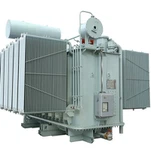
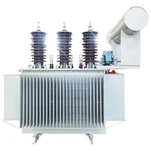
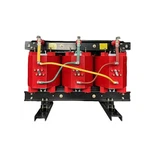
For a custom dry type transformer, the build usually follows a cast resin or VPI (vacuum pressure impregnation) process; for oil-immersed designs, the tank, bushings, and conservator are sized to your site. Every unit then goes through the factory test sequence - turns ratio, no-load and load loss, temperature rise, and partial discharge where specified - and ships with the test report, consistent with IEC 60076-1 general requirements.
The most common mistake we see in custom requests is an incomplete specification: no ambient temperature, no altitude, no harmonic profile. The more site data you send, the fewer assumptions the design carries. A one-page spec sheet with those numbers beats a phone call.
The Ryan Electric Approach to Custom Orders
Two things make our custom work different. First, certification runs inside the project: a UL or CSA listing is developed for your exact design, not bolted on after the fact, so a custom transformer manufacturer like Ryan Electric delivers a listed unit rather than a field-approval headache. Second, the engineering team is in the loop from day one - you talk to the people who design the windings, not a sales desk.
A recent example: a Southeast Asian EPC needed a three phase transformer custom-built with a 690V primary for a mining site at 1,500 m altitude. We derated the insulation for altitude, ran the full test sequence, and shipped with the test report attached. No surprises at commissioning - which is exactly what customization is supposed to buy you.
Have a project with non-standard requirements? Send your site data and we will come back with an engineering review, a design outline, and a custom quote. Start a custom transformer inquiry with our engineering team.