

Step-Down Transformer 480V to 208V: A Practical Sizing Guide for North American Projects
Every weekday morning, thousands of commercial buildings across North America take power the same way: a 480V service feeds the electrical room, and a step down transformer 480v to 208v delivers 208V/120V to lighting panels, receptacles, and HVAC controls. We build these units every month at our factory, and the buyers who order them well get one thing right before anything else: the kVA rating.
What a 480V to 208V Step-Down Transformer Does
Most three-phase units in this range use a delta primary and a wye secondary, producing 208Y/120V - the standard North American service for mixed 208V three-phase and 120V single-phase loads. The voltage ratio is roughly 2.31:1 (480 divided by 208), which tells you how the windings are arranged but nothing about physical size. Size is decided by kVA, and standard ratings follow the ANSI C57.12.00 series: 30, 45, 75, 112.5, 150, 225, 300, and 500 kVA.
Where do these units show up? Office towers, medical clinics, pump stations, and increasingly data centers, where a 480V feed steps down to 208V at the rack row. Single-phase 480V to 120/240V units cover smaller loads like signage and site lighting. Whatever the application, the sizing logic is the same - and that is what this guide walks through.
How to Size a Step Down Transformer 480V to 208V: From Load Schedule to kVA
Start with the load schedule, not the transformer. Add up the continuous loads in kW, divide by the expected power factor (0.85 to 0.90 is a safe band for mixed commercial loads), and you have the base kVA. Then add 20–25% headroom for future loads and motor starting. A worked example: 120 kW of continuous load at 0.90 power factor gives 133 kVA; with 25% headroom that is about 166 kVA, which lands on a 225 kVA unit if the panel is likely to grow, or a 150 kVA if it is not.
Two checks most first-time buyers skip. First, harmonics: if the load includes VFDs, UPS systems, or server racks, spec a K-rated unit (K-13 or K-20) or a delta-wye design that keeps triplen harmonics out of the source. Second, protection: NEC Article 450.3 sets the primary overcurrent device size, and the transformer inrush - typically 8 to 12 times full load for a few cycles - must coordinate with the breaker. Getting both right is what separates a clean startup from a nuisance trip on day one.
Efficiency matters too. DOE 2016 rules already raised the bar for dry-type and liquid-immersed distribution transformers, and the next tier (DOE 2026, with 2029 compliance dates for some categories) pushes losses lower again. If your project timeline runs past 2029, buy a unit that already meets the next tier - you cannot retrofit efficiency later.
Dry Type vs Oil Immersed: Which Fits Indoor Step-Down Duty
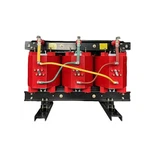
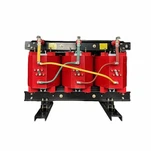
For indoor 480V-to-208V duty, a dry type transformer is the default choice: no oil containment, wall-mountable, and low maintenance. Within dry type, ventilated designs are the workhorse for normal indoor conditions, while cast resin (vacuum-cast coil) units handle higher humidity, dust, and indoor locations where fire codes are strict. The table below sums up the trade-off for this application.
|
Factor |
Dry Type (Indoor) |
Oil Immersed (Outdoor) |
|
Installation |
Indoor, wall or floor |
Outdoor pad or pole |
|
Fire risk |
Low (no oil) |
Requires containment |
|
Maintenance |
Minimal |
Oil testing, gaskets |
|
Noise |
Low to moderate |
Low |
|
Typical range |
Up to ~3 MVA |
25 kVA to 200+ MVA |
|
Best fit |
Buildings, data centers |
Utilities, substations |
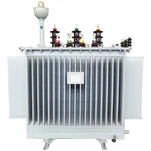
Oil-immersed units are the right answer for outdoor service - pad-mounted or pole-mounted - where a pad mounted transformer manufacturer can supply a complete NEMA 3R enclosure. For indoor high-kVA needs, cast resin dry type covers most cases without the fire-code complications of oil.
Certification and Code Compliance: UL, NEC, and DOE
In the United States, a listed unit is the path of least resistance at inspection. UL 1561 covers dry-type distribution transformers and UL 1562 covers liquid-immersed types; a UL mark on the nameplate means the design has been evaluated for short-circuit withstand, temperature rise, and dielectric strength. When we ship to the U.S., the listing documentation travels with the unit, because the authority having jurisdiction will ask for it. The scope of these standards is defined on the UL 1561 Dry-Type General Purpose and Power Transformers standard page.
Installation rules come from the NEC: Article 450 governs transformer rooms, ventilation, and clearances, and 450.3 sets protection. Canadian projects follow CSA C22.2 No. 47, and buyers there usually ask for a CSA-certified unit up front. The common thread: certification is a procurement decision, not an afterthought.
Efficiency compliance is the third leg. DOE regulations under 10 CFR 431 set minimum efficiency for distribution transformers sold in the U.S., and the 2026 rule tightens limits for low-voltage dry-type units - see the DOE Distribution Transformers program page for the current timeline. An experienced UL listed transformer supplier can tell you which tier a given design meets before you commit.
Why Buyers Order Step-Down Units from Ryan Electric
Most of our 480V-to-208V orders are not pure catalog sales. Buyers come to us because they need a specific kVA, a K-rating, extra voltage taps, or a NEMA 3R enclosure - all on a UL-listed platform. Every unit leaves our factory with a full test report: turns ratio, no-load and load loss, dielectric, and temperature rise, measured before crating. That report is what your engineer and your inspector both want to see.
Ryan Electric has built dry-type and liquid-immersed transformers since 2007, and our partnership with Eaton since 2023 keeps our production methods aligned with the standards North American utilities and contractors already trust. For a data center or commercial building project, that combination shortens the approval cycle and removes the last-minute certification surprises.
Have a project in North America? Send us your load schedule and we will size the unit, confirm the UL listing path, and return a technical quote within two working days. Get a free technical quote through our contact page.