


Best Transformer Types for Solar Farm Applications in 2026
In August 2023, a 180 MW solar farm in West Texas tripped offline three times in one week. The inverters were fine. The panels were clean. The problem? A set of off-the-shelf distribution transformers that couldn't handle the harmonic profile of the plant's string inverters. The developer spent $2.8 million on replacements and lost six weeks of peak-summer generation.
Most solar project RFPs treat the solar farm transformer as a commodity line item - pick a kVA rating, check a box, move on. That approach made sense when plants were 20 MW and inverters were dumb. At 200 MW and climbing, with 1500V DC architectures and hybrid storage coupling, the transformer is the single most consequential balance-of-plant decision you'll make. Get it wrong and you're not losing efficiency points - you're losing entire revenue days.
The Three Transformer Types Every Solar Developer Should Know
Not every project needs a custom-engineered unit. But every project needs the right type. Here's what's actually being deployed in 2026:
|
Transformer Type |
Typical Voltage Range |
Installation |
Best For |
|
Step-Up Transformer |
480V–690V → 34.5 kV |
Pad-mounted or substation |
Utility-scale PV, central inverter topology |
|
Pad-Mounted Transformer |
480V–600V → 13.8 kV or 34.5 kV |
Ground-level pad, outdoor |
Community solar, North American distribution interconnect |
|
Inverter-Duty / Collector Transformer |
600V–900V → 34.5 kV |
Skid-mounted, next to inverter |
String inverter clusters, 1500V DC systems |
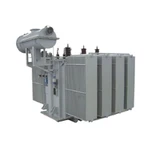
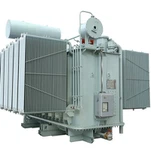
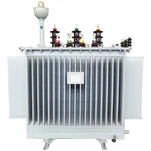
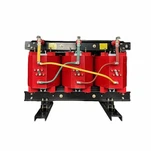
The step-up transformer is the workhorse. It sits between the inverter output and the medium-voltage collection system, typically in the 2–6 MVA range per unit for a central-inverter block. Pad-mounted units, by contrast, dominate the North American community solar and C&I segment - 500 kVA to 2500 kVA, direct-burial or pad installation, with UL listing non-negotiable for any AHJ (Authority Having Jurisdiction) in the U.S. or Canada.
Inverter-duty transformers deserve their own category because the loading profile is fundamentally different. Unlike a steady-state industrial load, a PV inverter drives the transformer through a daily thermal cycle: cold soak at night, rapid ramp at sunrise, sustained full load from 10 AM to 4 PM, then abrupt drop-off. Standard distribution transformers aren't wound for that kind of daily thermal stress.
What Makes a Transformer "Solar-Ready"? 4 Non-Negotiable Specs
Here's the part most buyers miss: a transformer that works perfectly in a factory or a commercial building will fail prematurely on a solar site. The difference comes down to four specifications that should be in every RFP:
1. Harmonic withstand - K-factor of 4 or higher. Modern PV inverters, especially string inverters without heavy output filtering, inject harmonic currents into the LV winding. The dominant orders are 5th, 7th, and 11th - all of which generate additional eddy-current losses in the core and windings. A K-factor 4 rating means the transformer is designed to operate at full nameplate kVA even with that harmonic spectrum present. Skip this and you'll measure winding hot-spot temperatures 15–20°C above what the nameplate suggests.
2. Outdoor enclosure - NEMA 3R minimum, C5-M for coastal. Solar plants live outdoors, often in deserts, coastal flats, or agricultural land with blowing dust and salt spray. NEMA 3R (rain-tight, ventilated) is the floor. If the site is within 10 km of a coast, you need ISO 12944 C5-M corrosion protection on the enclosure and all exposed hardware - otherwise the padlock on the LV compartment won't open by year three. We've seen it.
3. Thermal time constant designed for cycling, not steady-state. A standard oil-immersed transformer is designed around a continuous load assumption. A solar transformer sees a 0%–100%–0% cycle every single day. We specify reinforced paper insulation and direct the cooling design toward faster heat dissipation from the top oil - details that add maybe 3% to the unit cost but double the expected insulation life.
4. Grid interconnection compliance - UL 1741 / IEEE 1547. In the U.S., any transformer on the inverter side of the point of common coupling must meet UL 1741 (inverters, converters, controllers) and IEEE 1547 (interconnection requirements). Practically, this means the transformer manufacturer needs to provide test reports showing the unit's impedance and step-voltage regulation characteristics so the EPC can model it in the interconnection study.
Matching Your Transformer to Your Inverter Configuration
The inverter architecture you choose - central vs. string - directly determines your transformer topology. And 2026 is the year 1500V DC becomes the default for utility-scale.
Central inverter → one large step-up transformer per inverter. A 4 MW central inverter feeding a single 4.5 MVA step-up transformer is still the most common configuration in plants over 100 MW. The transformer sees a relatively clean current waveform because central inverters typically include output filters and multi-level topologies. LV winding voltage is usually 480V or 690V three-phase; MV side is 34.5 kV.
String inverter cluster → collector transformer with multiple LV inputs. When you're grouping 20–30 string inverters (each 100–250 kW) into a single collector transformer, the LV winding sees the combined harmonic output of all those inverters simultaneously. This is where harmonic cancellation between inverters can help, but only if the inverters are synchronized - and in practice, they rarely are. We recommend specifying a K-factor of 7 or higher for string-inverter collector transformers.
1500V DC: the new normal. At 1500V DC on the PV side, the inverter output voltage jumps to roughly 800–900V AC. That means the transformer LV winding needs insulation rated for at least 1.2 kV class. Standard 600V-class windings won't cut it. This is a spec item that gets missed in RFPs all the time - an EPC specifies a "standard" transformer and then discovers during commissioning that the LV bushings aren't rated for the voltage they're actually seeing.
PV + BESS: bidirectional power flow. If your plant includes battery storage, the transformer needs to handle power flowing in both directions - from the inverter to the grid during the day, and from the grid to the battery (through the inverter) during charging. Not all transformers are designed for this. Key difference: the tap changer should be on the MV side with a de-energized tap changer (DETC), not an on-load type, because the voltage regulation is handled by the inverter's reactive power control, not by the transformer.
How We Build Solar Transformers That Survive the Worst Conditions
At Ryan Electric, we're a joint venture with a major global electrical group - which means our solar transformer designs inherit supply-chain and testing standards typically reserved for utility-tier projects in North America and Europe. In plain terms: the same QA checklist and the same test bay are used whether the unit is heading to a 200 MW plant in Texas or a 50 MW installation in Vietnam.
Three things we do differently for solar:
Dual certification. Every pad-mounted unit for North America ships with both UL and CSA marks. For a developer, that means one transformer that clears interconnection requirements in all 50 U.S. states and all Canadian provinces without re-certification.
Coastal spec as standard option. We offer C5-M corrosion protection with 1,000-hour salt spray testing - not as a special request, but as a configurable line item. If your site is within sight of the ocean, check that box.
Amorphous metal cores. For developers optimizing LCOE, our amorphous metal core option cuts no-load losses by roughly 70% compared to conventional silicon steel. On a 5 MVA unit operating 4,000 equivalent full-load hours per year, that's about 38,000 kWh saved annually - real money over a 25-year PPA.
One Specification Most RFPs Miss (But Your O&M Team Will Thank You For)
Walk through any solar plant that's been operating for more than five years, and you'll find the O&M team doing the same thing: manually walking from transformer to transformer with a clipboard and an infrared camera. It's slow. It's reactive. And it misses the slow-developing failures - the ones that show up in dissolved gas analysis six months before they show up on a thermal image.
Online DGA (dissolved gas analysis). A multi-gas monitor on the transformer's oil conservator continuously tracks hydrogen, acetylene, ethylene, and methane concentrations. Acetylene means arcing - you need to know that within hours, not during the next quarterly inspection. Modern DGA units communicate via Modbus TCP or IEC 61850, integrating directly into the plant SCADA.
Fiber optic winding temperature monitoring. Traditional winding temperature indicators (WTIs) use a heater coil to simulate the hot-spot temperature. They're approximate. Fiber optic sensors embedded directly in the winding give you the real temperature at the point of maximum stress - typically 5–8°C higher than the WTI reading. For a transformer loaded near its thermal limit, that 8°C difference translates to roughly half the expected insulation life. The fiber optic system adds less than 1% to the unit cost and pays for itself in avoided unplanned outages.
Both of these should be specified in the transformer RFP, not retrofitted later. A transformer without monitoring ports is like a car without a dashboard - you can drive it, but you won't know something's wrong until the engine seizes.
The Bottom Line
The solar farm transformer market in 2026 is splitting into two tiers: commodity units built to minimum spec, and application-engineered units built for a specific site, inverter topology, and environmental profile. The price difference between the two is typically 10–15%. The cost of getting it wrong - measured in lost generation, emergency replacements, and PPA penalty clauses - is an order of magnitude larger.
If you're writing an RFP right now, add these three lines to the transformer section: K-factor ≥ 4, C5-M if coastal, and Modbus-ready monitoring ports. Everything else is negotiable. Those three are not.
Planning a solar project in the U.S., Canada, or Southeast Asia? We'll spec the right step-up transformer for solar - not the one sitting in inventory.
Get a free technical quote →