


What Is a Cast Resin Transformer and When Should You Use One?
A few months ago, a contractor from Houston emailed us with a straightforward problem: his project site was in a coastal chemical processing facility - high humidity, corrosive air, and zero tolerance for fire risk. He had been specifying standard VPI dry-type transformers for years, but this project was different. "Will a regular dry-type hold up here, or do I need something else?"
That's the moment a cast resin transformer enters the conversation. And if you're reading this, you're probably asking the same question.
What Exactly Is a Cast Resin Transformer?
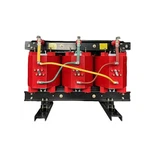
A cast resin transformer - sometimes called a cast coil transformer - is a type of dry-type transformer where the high-voltage and low-voltage windings are completely encapsulated in epoxy resin under vacuum. This is not a coating. It's not a dip. It's a solid, monolithic block of resin that embeds every turn of copper or aluminum conductor.
The manufacturing process is what makes the difference. The winding is placed inside a precision mold, and liquid epoxy resin mixed with a curing agent is poured in under vacuum conditions. The vacuum pulls out every air bubble and moisture pocket. Once cured - typically in a temperature-controlled oven over several hours - you get a winding that is mechanically solid, electrically insulated, and chemically sealed.
Compare this to a standard VPI (Vacuum Pressure Impregnation) dry-type transformer. VPI also uses vacuum, but the windings are dipped in varnish and baked - the result is a protective layer, yes, but a layer that sits on the surface. A cast resin winding, on the other hand, becomes the insulation structure. There is no gap between conductor and insulation because the resin fills every void. That distinction alone explains most of the performance differences you'll see in the field.
The international standard governing cast resin transformer design and testing is IEC 60076-11. If a manufacturer claims their unit meets this standard, ask for the full type-test report - specifically the partial discharge test results. A well-made cast coil transformer should show partial discharge levels below 10 pC (picocoulombs) at 1.1 times rated voltage. Anything above 50 pC is worth asking questions about.
Why Cast Resin Over Other Dry Type Transformers?
When a customer asks us this question in the factory, we usually walk them through four real-world advantages that actually matter on site - not just what's in the brochure.
1. Moisture Resistance (No Down-Time After Shutdown)
This is arguably the biggest practical difference. A standard dry-type transformer that has been idle in a humid environment for a few days will absorb moisture into its windings. Before you can re-energize it, you need a drying-out procedure - heating elements, fans, sometimes days of waiting.
A cast resin transformer doesn't have this problem. The epoxy encapsulation is non-hygroscopic. In our own testing, we've left cast coil units in a chamber at 95% relative humidity for 48 hours, then energized them directly at full rated voltage with zero issues. For projects in Southeast Asia or coastal regions where humidity is a daily reality, this alone is often the deciding factor.
2. Fire Behavior - Self-Extinguishing
Cast resin epoxy formulations used in transformer manufacturing are formulated with flame-retardant additives. Under fire conditions, the material chars on the surface and self-extinguishes - it does not sustain combustion. There's no oil to leak, no pool fire risk, and no requirement for oil containment pits or fire suppression systems.
This is why you'll find cast resin transformers in underground substations, inside occupied buildings, and in tunnels - environments where a fire would be catastrophic and evacuation routes are limited.
3. Mechanical Strength and Short-Circuit Withstand
The epoxy encapsulation locks the winding conductors in place. Under a short-circuit event - when electromagnetic forces can reach 10 to 15 times normal operating levels - the windings cannot move. The mechanical bracing is built into the insulation itself.
Standard dry-type windings rely on external bracing and clamping structures. They work, but they're fighting the forces from the outside. Cast resin contains them from the inside. The difference shows up in the short-circuit test reports: a properly designed cast coil transformer should pass IEC 60076-5 short-circuit tests with winding deformation well under the 2% threshold.
4. Low Partial Discharge and Long Insulation Life
The vacuum casting process eliminates voids - and voids are where partial discharge starts. Low PD means slower insulation aging. For owners, that translates to longer service life and lower total cost of ownership. We've seen cast resin units still operating reliably after 25+ years in industrial service with nothing more than periodic visual inspection and infrared scanning.
When Should You Choose a Cast Resin Transformer?
Here's a practical checklist. If your project matches any of the following, a cast resin transformer is almost certainly the right call:
|
Application |
Why Cast Resin Fits |
|
Underground or basement substations |
Fire safety + moisture resistance, no oil containment needed |
|
Coastal or offshore installations |
Salt spray won't penetrate epoxy encapsulation |
|
Chemical plants, refineries, wastewater treatment |
Epoxy resists corrosive atmospheres; standard dry-type windings degrade faster |
|
Subway tunnels, metro systems |
Self-extinguishing, low smoke, zero toxic fume emission |
|
Data centers in tropical climates |
High humidity tolerance, no reconditioning after maintenance shutdowns |
|
Hospitals and high-occupancy buildings |
Fire safety compliance, low noise with proper core design |
|
Wind turbine nacelles |
Vibration resistance + compact footprint + no oil leakage risk |
One more scenario that doesn't always make the spec sheet: projects with intermittent operation. If your transformer will be powered down for weeks or months at a time - backup generators, seasonal industrial processes, emergency systems - the ability to re-energize instantly without drying out can save real money in avoided downtime.
When Cast Resin Might NOT Be the Best Fit
I'll be direct about this - not every project needs cast resin, and specifying it blindly can inflate your budget for no reason.
Cost: A cast resin transformer typically costs 20–40% more than an equivalent VPI dry-type unit. If your installation is in a clean, climate-controlled indoor electrical room with no special fire or humidity requirements, VPI is often the more economical choice.
Capacity ceiling: While cast resin units are available up to roughly 25 MVA at 36 kV, they get expensive and physically large at the high end. For utility-scale applications above 30–50 MVA, oil-immersed transformers remain the standard - better cooling, lower cost per kVA, proven at scale.
Outdoor exposure without enclosures: The epoxy encapsulation handles moisture well, but it does not protect against direct UV degradation or physical impact. Outdoor cast resin transformers still need a proper enclosure (IP23 or better). If you're comparing to a pad-mounted oil-filled unit that lives outside year-round, don't assume cast resin eliminates housing requirements.
Ryan's Cast Resin Transformers: What Sets Us Apart
In our factory, the cast resin production line runs on its own dedicated floor - separate from the VPI and oil-immersed lines. Temperature, humidity, and dust levels are actively controlled throughout the casting area. That's not a marketing point; it's a process requirement. Epoxy curing is sensitive to ambient conditions, and a 2°C variation during gel time can affect the final insulation properties.
Here are three things we do differently:
Epoxy formulation: We work with a proprietary two-component epoxy system - cycloaliphatic resin base with an anhydride curing agent, plus a silica filler for thermal expansion matching. The filler loading is tuned so that the cured resin's coefficient of thermal expansion stays close to that of copper. When the winding heats up under load, the resin and the conductor expand together - no micro-cracking at the interface over thermal cycles.
Testing: Every cast coil transformer that leaves our facility goes through the full IEC 60076-11 type-test protocol: induced overvoltage with partial discharge measurement, separate-source voltage withstand, lightning impulse, temperature rise, and short-circuit capability. We publish the PD results on the routine test certificate - not just "pass/fail," but actual measured values in picocoulombs.
Eaton partnership: Since 2023, Ryan Electric has been an Eaton joint venture partner. This means our casting process and quality management system have been audited and approved by one of the most demanding names in power management. It's not just a badge on the website - it's a process and a standard we work to every day.
Is a Cast Resin Transformer Right for Your Project?
If your installation environment involves moisture, fire risk, corrosive air, or difficult access for maintenance - the answer is probably yes. If your project is a straightforward indoor electrical room in a temperate climate, VPI might serve you just as well at a lower upfront cost.
The real question is not "which transformer type is best" - it's "which transformer type is right for this specific installation."
Shoot us your project details - location, load profile, environmental conditions - and our engineering team will give you an honest technical recommendation, not a sales pitch. Sometimes that recommendation is cast resin. Sometimes it isn't. Either way, you'll know why.
Have a project that needs a cast resin transformer? Get a technical quote with full IEC 60076-11 test data →