

In June 2026, the U.S. Department of Energy opened an information-gathering request covering distribution transformers and electrical core steel, after a presidential determination found that grid infrastructure supply chains are essential to national defense. Behind that announcement sits a simpler reality for buyers: grain-oriented electrical steel (GOES) is tight, prices keep climbing, and the next efficiency standard takes effect on April 23, 2029. That combination is why more utilities and developers are asking us about a technology we have built for years - the amorphous metal transformer.

What Exactly Is an Amorphous Metal Transformer?
An amorphous metal transformer uses a core wound from ultra-thin amorphous alloy ribbon instead of stacked grain-oriented silicon steel laminations. The ribbon is made by cooling molten metal so fast that the atoms never have time to lock into a crystalline lattice - hence the name. In our factory the material arrives as roughly 0.025 mm ribbon, about one-tenth the thickness of the 0.23–0.30 mm GOES laminations we also process for conventional units.
That disordered atomic structure gives the alloy much lower coercivity, which shows up directly as lower hysteresis loss on every magnetization cycle. In practical terms, a distribution transformer with an amorphous core typically records 60–75% lower no-load loss than a comparable silicon steel unit at the same kVA rating. For an asset that sits energized 8,760 hours a year, that is the single largest lever a designer has on lifetime energy consumption.
Here is the part most buyers miss: no-load loss is not a factory-test curiosity. It is a continuous demand on the grid, and it is the first number DOE looks at when it evaluates a transformer against the next efficiency tier.
Why No-Load Loss Is the Number That Never Sleeps
No-load loss (excitation loss) starts the moment a transformer is energized, whether it is carrying 2% load or 100%. The core is magnetized around the clock, and every watt it draws is billed somewhere. DOE assumes a 32-year service lifetime for distribution transformers in its own analysis, which means a small per-watt difference compounds into a very large bill.
Take an illustrative 1,000 kVA, 12.47 kV pad-mounted unit. A conventional GOES core might show roughly 1,200 W of no-load loss; a comparable amorphous core typically lands near 400 W. That is about 800 W of continuous demand removed - roughly 7,000 kWh per year, or on the order of USD 700 per year at typical North American commercial rates. Over a 32-year life, the gap is close to USD 20,000 per transformer, before load loss, maintenance, or cooling penalties are even considered.
That arithmetic is why utilities running low-load-factor feeders - rural networks, solar farms at night, substation transformers idling between peaks - are the fastest adopters. The purchase price premium of an amorphous unit (typically 20–40% over GOES) pays for itself in the first few years, and everything after that is savings.
Amorphous Core vs Grain-Oriented Silicon Steel: An Honest Comparison
Amorphous is not universally better. It wins on the numbers that matter most for lightly loaded assets and loses on a few that matter elsewhere. Here is the comparison we walk buyers through:
| Dimension | Amorphous Core | Grain-Oriented Silicon Steel |
| No-load loss | 60–75% lower | Baseline |
| Load loss | Comparable, slightly higher in some designs | Baseline |
| Purchase price | About 20–40% premium | Baseline |
| Noise level | Magnetostriction, can be 2–5 dB higher | Baseline |
| Size and weight | Lower stacking factor, slightly larger | Baseline |
| Supply chain | Fewer suppliers, China-led capacity | Global tightness, rising prices |
| Best fit | Lightly loaded distribution, solar farms, utility replacement | High-utilization industrial loads |
The honest summary: if your transformer runs hot and heavily loaded most of its life, GOES still makes sense. If it runs lightly loaded or spends long hours energized near zero output, the amorphous metal transformer wins on total cost of ownership almost regardless of purchase price.
DOE 2029: What the New Standard Actually Demands
The April 2024 final rule, which you can read in full on the Federal Register, set amended efficiency levels for all three classes of distribution transformers, with compliance required for units manufactured in or imported into the United States starting April 23, 2029. For liquid-immersed units, DOE adopted a 5% loss reduction for single-phase transformers up to 100 kVA and three-phase units of 500 kVA and above, and a 20% reduction for the rest of the single-phase and small three-phase population. Low-voltage dry-type units face 30% (single-phase) and 20% (three-phase) loss cuts, and medium-voltage dry-type units face 20%.
DOE estimates the liquid-immersed standards alone will save 2.73 quadrillion Btu over 2029–2058. Notably, the rulemaking analysis explicitly evaluates amorphous alloy as one of the core material technology options - a signal that regulators expect the material to carry part of the compliance burden.
What changed in 2026 is the supply-side picture. The June 2026 DOE information request asks how the 2029 compliance date interacts with national security considerations, domestic manufacturing capacity, and the availability of electrical steel. For buyers, the practical translation is simple: steel supply is a strategic risk, and an amorphous core reduces your dependence on the tightest input in the supply chain.
Where Amorphous Transformers Earn Their Keep
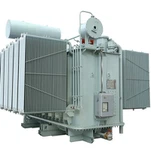
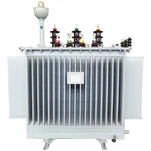
Utility fleet replacement. Utilities running decades-old fleets on low-load-factor circuits replace with amorphous units to cut losses without touching feeder capacity. We have shipped oil immersed transformers with amorphous cores for exactly this pattern in North America - the client orders on tested no-load loss values, not nameplate optimism.
Solar farms. A solar transformer carries near-zero load for most of the year, then full load for a few midday hours. No-load loss dominates its lifetime energy cost, which is why EPC contractors increasingly spec amorphous cores for PV substation units.
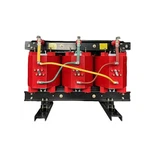
Data centers and critical facilities. Dry-type amorphous units hold their own in indoor installations where fire safety rules push out liquid-filled designs. The efficiency advantage is smaller against a high-utilization load, but the environmental benefits and lower cooling burden still matter.
One scene from our test bay: before we shipped a batch of amorphous-core units to a utility customer, our engineers ran a full no-load loss measurement on every unit. The measured values came in 6–9% below the guaranteed figures on the datasheet. That is normal for this material when the wound core is handled properly - and it is exactly why we publish measured test data with every shipment rather than asking customers to trust a nameplate.

What We Tell Buyers at Ryan Electric
Ryan Electric has built distribution transformers since 2007, and our 120,000 m² facility in Jiangsu handles both GOES and amorphous core lines. As an Eaton joint venture partner with UL, CSA, IEEE, and DEKRA certifications in our portfolio, we treat the compliance question as an engineering problem, not a marketing one.
If you are evaluating amorphous for a 2029-bound project, add these to your RFQ:
- Tested no-load loss, not just guaranteed. Ask for measured values from the routine test report, with the test standard named (IEEE C57.12.90 for liquid-immersed units).
- Core material declared. The datasheet should state amorphous ribbon supplier and ribbon thickness - 0.025 mm class is the industry norm.
- Noise data at rated voltage. Amorphous cores can run a few dB louder due to magnetostriction; ask for the sound level per IEEE C57.12.90 before you commit to a site.
- Certification path. For North American projects, confirm the UL or CSA listing covers the exact amorphous design, not just the product family.
We quote both distribution transformer technologies honestly, because the wrong choice - a GOES unit on a light feeder, or an amorphous unit on a heavily loaded industrial circuit - costs the buyer money either way. Send us your kVA, voltage class, load profile, and target certification, and we will run the loss comparison with real numbers from our test bay.
Ready to Lock In a 2029-Compliant Specification?
The DOE 2029 deadline is roughly two and a half years away, and steel supply is not getting looser. Buyers who decide the core material now - and lock a production slot - will not be the ones paying premiums in 2028. Share your rating and load profile through ryan-transformers.com, and our engineers will come back with a no-load loss comparison, measured test data, and a realistic delivery schedule.
About the Author: This article was written by the engineering team at Ryan Electric, an Eaton joint venture partner and UL/CSA-certified transformer manufacturer in Jiangsu, China, serving utility, solar, and data center clients across North America, Southeast Asia, and the Middle East.