

In February, a solar developer we work with in Texas told us his project had cleared every engineering milestone except one: the grid connection queue. Two years in, his interconnection agreement was still months away, and his transformer supplier had moved the delivery date for the third time. He is not an exception. He is the rule - and the queue is now shaping how utilities and developers buy transformers.

Why the Grid Connection Queue Keeps Growing
The International Energy Agency's special report Electricity Grids and Secure Energy Transitions put a number on the problem: at least 3,000 GW of renewable projects are waiting in connection queues worldwide, roughly five times the solar PV and wind capacity added in 2022. The data is drawn from countries covering only half of global wind and solar capacity, so the real figure is almost certainly higher. You can read the full analysis on the IEA report page.
The mismatch is structural. A new grid asset takes five to fifteen years to plan, permit, and build, while a solar farm takes one to five years. Grid investment has stayed flat at around USD 300 billion per year for over a decade, while the IEA estimates it needs to nearly double to USD 600 billion annually by 2030. That gap is why the grid connection queue keeps lengthening: capacity is being built faster than the network can absorb it.
For transformer buyers the queue has an upside nobody advertises: it is forcing utilities to look at their existing distribution assets with fresh eyes, because new infrastructure is too slow and too expensive to wait for.
What the Queue Means for Transformer Buyers
Here is the part most buyers miss. When a developer finally gets an interconnection agreement, the clock starts - and the penalty for missing the commercial operation date is usually written into the agreement. That makes transformer lead time a contractual risk, not just a scheduling annoyance.
Three things change when the queue is long:
- Delivery dates get locked earlier. We now see developers requesting production slot reservations 12 to 18 months ahead of the connection date, not the old 6-month pattern.
- Ratings get pushed to the edge. A developer who previously ordered a 30 MVA unit to have margin will now spec the 30 MVA and ask what overload headroom the design can document, because nameplate capacity is the only capacity the utility will count.
- Retrofit demand rises. Utilities with substations already in service want to squeeze more throughput from the same footprint rather than build a new station with a multi-year permit cycle.
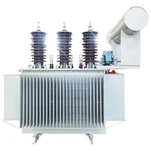
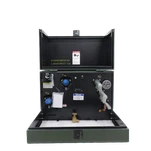
None of this is theoretical. We have quoted pad mounted transformers with custom ratings for North American projects where the buyer's interconnection window, not the equipment cost, was the deciding factor.
Dynamic Transformer Rating: Making the Nameplate Work Harder
Dynamic transformer rating (DTR) is the technical answer to that "nameplate is the only capacity" problem - and it changes what a nameplate actually means.
A conventional transformer rating is a fixed number derived from worst-case assumptions: peak ambient temperature, continuous load, no cooling margin. The IEEE C57.91 loading guide for oil-immersed transformers has always recognized that real duty is different - a transformer can carry significantly more than nameplate for defined periods as long as the winding hot-spot temperature stays within limits. DTR turns that paper analysis into an operational tool.
The system is straightforward in concept. Sensors measure oil temperature, winding temperature, and ambient conditions in real time. A thermal model, built on the same loading-curve physics as IEEE C57.91, calculates the remaining capacity minute by minute. The operator sees a live figure: today, at 4 p.m., with an ambient of 35°C and this load shape, this unit can carry 8% more than its nameplate without exceeding hot-spot limits.
Published pilot results vary widely - single-digit to low-double-digit percentage gains depending on climate and load shape [field results indicative, pending verification against your specific duty]. The point is not the exact number. The point is that the headroom exists, it is documentable, and utilities are beginning to accept it in connection studies.

Where DTR Pays Off First
Not every transformer needs DTR. But three cases justify it quickly.
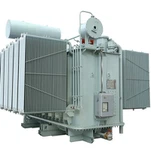
Renewable and storage integration. A solar farm or BESS with a 2-hour peak output can load a transformer far above nameplate for short windows without thermal damage. DTR lets the operator prove to the system operator that the asset can take the peak, which can shorten the queue position or avoid a costly upgrade. For oil immersed transformers feeding storage projects, the physics work in the owner's favor.
Peak-load urban networks. In cities where a substation is landlocked, DTR is a deferral tool: it buys two to five years of capacity before a new transformer bay is funded. That is real money when station construction takes half a decade.
Aged asset life extension. A 25-year-old unit with a healthy oil test and low moisture content can be re-rated under monitored conditions instead of being scrapped. One of our clients avoided a full substation rebuild by documenting overload capability on two existing units - the replacement order shrank from four transformers to two.
What to Ask Before You Spec Your Next Transformer
If you are buying into a queue-constrained environment, add these questions to your RFQ:
- Overload capability, documented. Ask for the load-capability curves per IEEE C57.91 (oil-immersed) or IEEE C57.96 (dry type), not just a nameplate. A supplier who cannot produce curves is telling you something.
- Monitoring readiness. Does the unit ship with provision for winding temperature sensors and a communication port (Modbus RTU/TCP is the common baseline)? Retrofitting sensors later is expensive and sometimes physically impossible on a sealed unit.
- Test report depth. Does the routine test report include temperature-rise test data with the actual measured hot-spot gradient, or just the guaranteed values? The difference matters when you are submitting overload studies to a utility.
- Documentation in one package. Certification (UL, CSA, IEC), drawings, and the thermal model inputs should arrive with the unit, not after three emails.
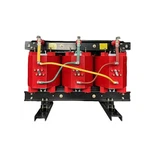
We build both oil immersed transformers and dry type transformers with these conversations in mind, because the purchase decision in a queue-driven market is no longer "what is the cheapest kVA" - it is "what can this asset prove it can do."
Ryan Electric's Approach
Our factory in Jiangsu has shipped custom-rated units to North America, Latin America, Southeast Asia, and the Middle East, and the queue pressure shows up in every region differently. As an Eaton joint venture partner with UL, CSA, IEEE, and DEKRA certifications in our portfolio, we take the documentation burden seriously: temperature-rise test data, loading curves, and certification files are part of the standard package, not an upsell.
The practical advice from our engineers is simple. If you are entering the queue now, talk to your transformer supplier before you finalize the interconnection study - tell them the rating, the duty cycle, and the certification target, and let them lock a production slot around it. That single conversation has saved more than one of our customers from a missed commercial operation date.
Ready to Spec for the Queue?
The grid connection queue is not going to disappear this year. The buyers who navigate it best are the ones who treat transformer capacity as a documented, dynamic asset instead of a static nameplate. If you are planning a solar, storage, or grid project and want overload capability, test data, and certification handled in one package, send us your rating and site conditions through ryan-transformers.com - we will come back with curves and a realistic schedule, not optimism.
About the Author
This article was written by the engineering team at Ryan Electric, an Eaton joint venture partner and UL/CSA-certified transformer manufacturer in Jiangsu, China, serving power generation, storage, and utility clients across North America, Latin America, Southeast Asia, and the Middle East.