
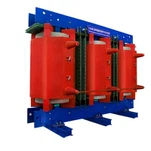
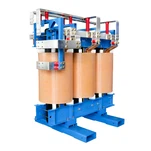
Dry transformation is generally Dyn11 connection, which can withstand a high unbalanced current (the unbalanced current of the neutral line can reach 75% of the rated current), while the oil transformation is generally Yyn0 connection, which bears an unbalanced current of 25% of the rated current. Dry turning can be maintenance-free, mainly for dust removal. The oil change every other year to test whether the transformer oil is qualified, if unqualified, replace the new transformer oil, the moisture absorber turns yellow and also driers is epoxy resin for insulation, fire prevention. The oil-changed insulating oil will spontaneously ignite when it reaches the ignition point. The dry overload capacity is better than that of oil, because it is open, cooled by a fan, and the cooling performance is better than that of oil. The main limiting factors to consider for dry-type transformers include heat generation, maintenance, and safety. Dry-type transformers are valued by these three important factors, especially for their excellent performance.
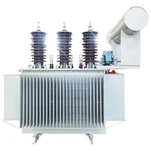
An inherent byproduct of the retrofit process is heat, specifically, "I2R" (I = current, R = resistance) heating, which occurs when the current through the wire runs. Thermal decomposition of the transformer composition and insulating material, resulting in reduced efficiency and shorter service life. The heat of the transformer is best controlled by the oil used in the oil-filled transformer, which conducts the heat from the heat generation part while protecting the other internal transformer operating principles. This is why these transformers are used in the highest voltage applications, such as high voltage transmission.

Where are dry-type transformers used
May 08, 2023


Send Inquiry
Categories
Contact Us
- Tel: +86-513-88781828
- Fax: +86-513-88837088
- Email: Ryancustomerinquiry@redq.cc
- Add: No.229, Huanghai West Road, Haian City, Jiangsu Province, China.