

The Ultimate Guide to Three-Phase Pad Mounted Transformers: Specifications, Applications, and Selection Tips
In the landscape of modern power distribution, the three phase pad mounted transformer has emerged as the silent powerhouse behind commercial complexes, industrial parks, and renewable energy sites. As urban environments move away from cluttered overhead lines toward sleek, underground distribution systems, understanding the technical nuances of these units is no longer just for engineers-it is a critical requirement for project managers and electrical contractors.
At Ryan Electric, we have spent nearly two decades refining the design and manufacturing of these units. Since our inception in 2007, and specifically through our official joint venture partnership with Eaton established in 2023, we have bridged the gap between high-volume manufacturing efficiency and the stringent safety standards required by the North American market.
What is a Three-Phase Pad Mounted Transformer?
A three phase pad mounted transformer is a ground-mounted electric power distribution transformer enclosed in a steel cabinet, placed on a concrete pad. Because all energized connections are located within a locked, tampered-resistant metal enclosure, these units are ideal for public areas where safety and aesthetics are paramount.
Unlike pole-mounted units, pad-mounted transformers are designed to handle higher capacities, typically ranging from 45 kVA up to 5,000 kVA (and even 10,000 kVA for specialized industrial applications). They function as the critical step-down component, taking high-voltage utility power (typically 15kV, 25kV, or 35kV) and converting it to usable low-voltage levels like 480Y/277V or 208Y/120V.
Technical Specifications and the IEEE C57.12.34 Standard
When sourcing a three phase pad mounted transformer, the technical specifications must align with the IEEE C57.12.34 standard. This standard governs the electrical and mechanical requirements for compartmental-type, self-cooled, three-phase distribution transformers.
1. Dead Front vs. Live Front Construction
One of the most frequent questions we receive at Ryan is the choice between Dead Front and Live Front designs.
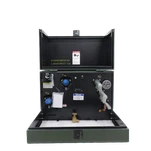
Dead Front: Utilizes insulated high-voltage connectors (elbows). This allows for a "dead" configuration where no energized parts are exposed when the cabinet is open, significantly increasing operator safety. This is the gold standard for North American utilities.
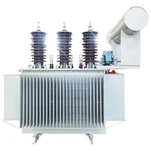
Live Front: Features exposed porcelain bushings and terminations. While cost-effective, it requires stricter safety protocols and is becoming less common in new commercial developments.
2. Radial Feed vs. Loop Feed
The configuration of the high-voltage bushings determines how the transformer connects to the grid:
Radial Feed: The transformer is at the end of a single line. If the line fails, the transformer loses power.
Loop Feed: Designed for use in a ring or loop system. It features six high-voltage bushings, allowing power to come from either direction. This loop feed transformer configuration is essential for hospitals and data centers where uptime is non-negotiable.
3. Insulating Fluids
While mineral oil is the industry standard, many of our clients now request FR3 (vegetable oil) or other high-flash-point bio-fluids. These fluids offer superior fire safety and are biodegradable, making them perfect for environmentally sensitive projects.
Core Applications: Where Reliability Matters
Commercial Centers & Malls: Providing a compact, safe, and visually unobtrusive power source for high-traffic retail areas.
Data Centers: Supporting the massive, continuous load requirements of modern server farms. Our units for data centers often include enhanced cooling systems and ultra-low loss cores.
Renewable Energy (Solar/Wind): Stepping up the voltage from inverter banks to grid-tie levels. Ryan's units are specifically engineered to handle the harmonic distortions often found in solar applications.
Industrial Facilities: Powering heavy machinery with high short-circuit resistance, a hallmark of Ryan's engineering.
The Ryan Advantage: Engineering Excellence Since 2007
As a premier pad mounted transformer manufacturer, Jiangsu Ryan Electric Co., Ltd. (Ryan) brings more than just a product to the table; we bring a legacy of reliability.
With a registered capital of RMB 116 million and a state-of-the-art facility equipped with over 200 sets of advanced manufacturing and testing equipment, we ensure every unit meets the highest global standards. Our status as a UL listed transformer supplier is not just a badge; it is a testament to our commitment to safety.
Global Certifications: Fully certified to ISO 9001, ISO 14001, and ISO 45001. Furthermore, our transformers have passed rigorous testing by UL, CSA, CE, ASTA, and DEKRA.
Eaton Partnership: Our joint venture with Eaton allows us to leverage world-class design philosophies and quality control systems, ensuring our customers receive Tier-1 quality at factory-direct pricing.
Low Loss Technology: Our products are featured with outstanding characteristics in lower losses and lower temperature rise, directly translating to lower operational costs for the end-user.
5 Critical Factors When Selecting a Transformer
kVA Capacity: Do not just size for current load; account for at least 20% future growth.
Voltage Taps: Ensure the unit has standard +/- 2.5% or 5% taps to compensate for utility voltage fluctuations.
Environmental Conditions: Will the unit be near the coast? If so, specify a stainless steel enclosure or high-grade anti-corrosive coating.
Protection Accessories: Does your project require a bay-o-net fuse, current-limiting fuses, or a specific pressure relief valve?
Certification Requirements: For projects in the USA and Canada, UL and CSA certification is often a legal requirement for insurance and building code compliance.
Maintenance and Longevity: Protecting Your Investment
A well-maintained three phase pad mounted transformer can last over 30 years. Here is the part most buyers miss: regular fluid analysis. By testing the dielectric strength and moisture content of the oil every 2-3 years, you can detect internal faults before they lead to catastrophic failure.
Conclusion: Partnering for a Powered Future
Choosing the right three phase pad mounted transformer is a decision that impacts the safety, reliability, and efficiency of your entire electrical infrastructure. At Ryan Electric, we combine the agility of a global exporter with the technical rigor of a leading manufacturer.
______________________________________________________________