

Cast Resin Transformers 101: How Epoxy-Cast Windings Change the Dry Type Equation
A data center operator in Southeast Asia called us two years ago with a problem that had nothing to do with capacity. Their new dry type transformer for data center service sat in a basement substation 30 meters from the cooling plant, where relative humidity stays above 85% for months. Within eight months, the VPI unit's megger readings dropped below 100 MΩ, and the site engineer had to schedule a shutdown to re-dry the windings. The fix was not a bigger unit. It was a cast resin transformer, and it has run without a single insulation fault since. If you are specifying dry type power for humid, salty, or fire-sensitive environments, this article explains what cast resin actually is, how it compares with VPI, and when it is worth the premium.
What Is a Cast Resin Transformer?
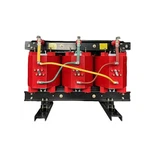
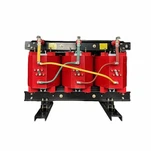
A cast resin transformer is a dry-type transformer whose low-voltage and high-voltage windings are encapsulated inside a solid block of epoxy resin mixed with silica filler. The manufacturing sequence matters: the wound coils are pre-heated, placed in molds, and injected with resin under vacuum, so air pockets that later become partial discharge sites never form. After casting, the blocks cure in controlled ovens, then go through full-dielectric routine testing.
The electrical ratings are the same ones you would specify for any distribution transformer, with a few dry-type twists. F-class insulation (155 °C hot-spot) is standard; H-class (180 °C) is available for overload-heavy duty. We test partial discharge below 10 pC at 1.1 × rated voltage in line with IEEE C57.12.01, and short-circuit withstand follows IEC 60076-5. No oil, no conservator, no leak risk - which is why fire codes in dense buildings often prefer it.
Cast Resin vs VPI: Two Dry Type Designs, Different Trade-offs
The other main dry type route is VPI - vacuum pressure impregnation - where varnish is drawn into the winding structure and cured. A VPI transformer is cheaper, lighter, and dissipates heat better because the coil surface stays open. But the insulation surface remains exposed to whatever the room throws at it.
|
Parameter |
Cast Resin |
VPI |
|
Winding encapsulation |
Solid epoxy block |
Varnish-impregnated, exposed surface |
|
Moisture / dust resistance |
Sealed, IP54+ achievable |
Open coils, humidity-sensitive |
|
Partial discharge |
≤ 10 pC typical |
Higher, humidity-dependent |
|
Heat dissipation |
Moderate (resin acts as insulator) |
Better, open surface |
|
Field repairability |
Difficult, factory re-cast |
Re-impregnation possible |
|
Best-fit environments |
Data centers, coastal, high-rise, metro |
General industrial, dry indoor |
The practical rule we give buyers: if the transformer sits in a conditioned electrical room and the load is steady, VPI gives you more kVA per dollar. If moisture, salt, dust, or fire codes dominate the environment, a cast coil transformer is the insurance that pays for itself in the first humid season.
Where Cast Resin Transformers Earn Their Keep
Three environments come up again and again in our RFQs:
Data centers - AI cluster halls push cooling loads up, and liquid-cooled racks mean pipe runs and condensation risk near electrical rooms. A dry type transformer for data center application with sealed windings survives the humidity swings and simplifies fire suppression compliance.
Coastal and offshore sites - salt-laden air corrodes open windings fast. We have shipped cast coil transformer units to island grid projects where the nearest spare part is a 10-hour flight away.
High-rise, metro, and hospitals - fire codes and space constraints favor a non-flammable, self-extinguishing unit that can sit mid-building without a vault.
For each of these, the specification pattern is the same: sealed winding, IP54 enclosure, and a partial discharge report attached to the factory test certificate.
Key Specifications to Get Right
When you draft the datasheet, four numbers decide whether the unit survives:
Insulation class and temperature rise. F/155 °C is the default; if your load profile includes heavy short-time overloads, ask for H-class and a 100 K rise instead of 125 K.
Partial discharge level. Insist on ≤ 10 pC at rated voltage, tested per IEEE C57.12.01. This number is the best early-warning indicator of resin quality.
Enclosure rating. IP54 minimum for indoor humid rooms; IP56 if washdown or coastal spray is possible.
Harmonic and overload duty. K-factor-rated designs for non-linear loads; check the manufacturer's overload curves, not just the nameplate kVA.
Write these into the RFQ, and the quotes you receive will be comparable. Leave them out, and you will be comparing apples with oranges.
What We Do at Ryan
At Ryan Electric, cast resin transformer production is one of our core lines. Windings are vacuum-cast in-house, and every unit goes through 100% routine testing: no-load and load loss, temperature rise, and partial discharge measurement with the curves printed into the test report. When we ship to North America, the UL/CSA certification number goes on the nameplate, and the factory report travels with the packing list - consultants check both before they approve installation. Our partnership with Eaton, now in its third year, keeps our design review process aligned with international practice.