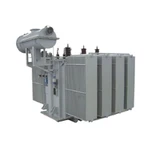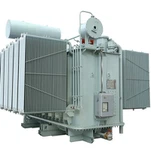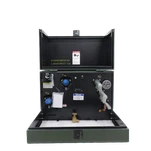


The specification arrived with the phrase "seismic certified transformer required - high performance level" typed into the remarks column, right below the kVA. For a 1,000 kVA, 12.47 kV pad-mounted transformer, that single line shaped the design more than the rating itself: it set the bushing class, the base-plate drilling pattern, the anchorage drawing, and the qualification documentation we would have to ship alongside the unit.
Seismic clauses used to appear only on large substation equipment. That has changed as utilities, data centers, and EPCs in earthquake-prone regions - California first, then Utah, Washington, and increasingly Southeast Asia and the Middle East - began writing them into distribution-class specifications. Before you sign an RFQ that carries one, it pays to know what the words mean, which standard governs them, and what evidence you should demand as proof.
Why Buyers Ask for Seismic Certified Transformers
The reason is simple: transformers fail mechanically before they fail electrically in an earthquake. Damage surveys after events such as Northridge in 1994 and Christchurch in 2011 keep repeating the same list - porcelain bushings sheared at the base, radiators and conservators torn from the tank, units that slid or toppled because they were never anchored. A transformer can survive the shaking and still be out of service for months if its bushing is gone; replacement lead times for a distribution-class bushing alone can stretch well past a year.
That is why seismic performance is now treated as a functional requirement rather than a geological afterthought. It shows up in two forms: a clause naming IEEE 693, the recommended practice for seismic design of substations, or a request for a seismic qualification report inside the submittal package. Either way, the buyer is asking for engineered evidence that the unit stays upright, contained, and connected when the ground moves beneath it.
IEEE 693 Seismic Qualification: Levels, Spectra, and Routes
IEEE 693 seismic qualification starts with IEEE 693-2018, the Recommended Practice for Seismic Design of Substations, which is the reference most North American specifications point to. The standard defines three qualification levels by the zero period acceleration (ZPA) of the design ground motion: high at 0.5 g, moderate at 0.25 g, and low at 0.1 g, with vertical motion typically taken as 80 percent of the horizontal value. The table below shows the levels as they appear in utility specifications.
| Qualification Level | ZPA (Ground Acceleration) | Where It Appears | Evidence Typically Provided |
|---|---|---|---|
| High performance level (HPL) | 0.5 g | Major utility substations, critical infrastructure | Shake-table test or full dynamic-analysis report |
| Moderate performance level (MPL) | 0.25 g | Most distribution substations and pad-mounted fleets | Response-spectrum analysis or shake-table test |
| Low | 0.1 g | Low-seismicity regions | Simple static analysis or experience data |
Two terms confuse first-time specifiers. The design level is the spectrum used for calculations; the performance level, set at twice the design spectrum, is what equipment must survive when it is shake-table tested. The required response spectrum is defined at five percent damping, and for equipment mounted inside buildings the spec may call for a building-specific spectrum rather than the free-field one - the difference between a pad-mounted transformer sitting in open air and a dry type unit on a data center floor.
IEEE 693 seismic qualification can follow four routes under the standard: shake-table testing, static analysis, response-spectrum or time-history dynamic analysis, and seismic experience data supported by documented justification. The family was updated in 2024 by amendment 693a-2024, which tightened the treatment of transformers and their appendages, surge arresters, response spectra, and qualification methodologies. If your specification quotes IEEE 693, ask whether it means the 2018 edition alone or includes the amendment - the scope is described on the official IEEE 693 standards page.
Shake Table vs Analysis: How Qualification Evidence Is Produced
Qualification evidence splits by component. High-voltage bushings and surge arresters are normally qualified by shake-table testing, because porcelain fails in ways that analysis alone predicts poorly - the governing risk is cantilever stress at the bushing base when the assembly resonates. The tank, radiators, conservator, and control cabinet are more often qualified by response-spectrum analysis, which verifies that natural frequencies stay clear of the input spectrum peaks and that stresses remain inside allowable limits.
A shake-table run is not a quick favor. The table reproduces a time history scaled to the required response spectrum - for performance-level tests, typically twice the design spectrum - and the unit must still be functional afterward: no oil leak, no bushing damage, no permanent deformation that affects operation. For a pad-mounted transformer that means cranes, trucks, a qualified test laboratory, and a documented witness procedure. This is why qualified designs are reused across projects instead of re-tested each time, and why a "seismic qualified" claim without a report behind it deserves a follow-up question.
Transformer Anchorage: Where Seismic Projects Succeed or Fail
The most common field failure is not the tank - it is the anchorage. A pad-mounted transformer sits on a concrete pad, and the anchor bolts through its base are what stop it from walking or tipping when acceleration hits. In our shop, the QC sheet for every pad-mounted tank includes the anchor-hole pattern, verified against the certified base drawing before the tank goes to paint, because a hole drilled five millimeters off position becomes a field modification nobody planned for.
Which rules apply depends on where the unit lives. Utility-owned substation equipment is anchored to the manufacturer's certified detail and specified against IEEE 693, while equipment inside buildings - data center dry type transformers included - falls under the anchorage and bracing provisions of the building code, in the U.S. typically IBC with ASCE 7 seismic requirements and its Seismic Design Category. Ask for the anchorage detail as a deliverable, and check in the field that bolts are installed, torqued, and grouted. Skipped anchor bolts are the failure mode that never shows up in a factory test report.

Pad-Mounted vs Indoor Dry-Type: Two Different Seismic Conversations
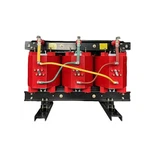
The two families that dominate North American distribution - outdoor pad-mounted, oil-filled units and indoor dry type transformers - sit under different rules, and mixing them up wastes time. The pad-mounted unit is a self-contained outdoor asset: its seismic story is the tank, the bushings, and the anchorage on the pad, and IEEE 693 applies directly to the substation application. The indoor dry type unit is part of the building: anchorage, bracing, and clearances are driven by the building code, and the site's Seismic Design Category sets the floor rather than the transformer standard.
For a data center hall in a high-seismic zone, the practical questions are floor anchorage, whether the unit sits on vibration isolators - which changes the analysis completely - and how flexible the incoming and outgoing connections are. Flexible connections matter on both families: a rigidly terminated bus can transfer building motion into the transformer terminals and break a bushing the tank itself would have survived.
What to Put in the RFQ
If you are buying seismic certified transformers, five lines in the RFQ decide whether the seismic story ends well:
- Qualification level. HPL, MPL, or "per IEEE 693" - plus the site seismic data or Seismic Design Category if you know it.
- Evidence package. A qualification report - test certificate or signed analysis - not a one-line claim.
- Anchorage deliverables. Certified base drawing, bolt pattern, anchor sizes, and torque specification for the transformer anchorage.
- Component scope. Bushing type and cantilever rating; bracing for radiators, conservators, or other appendages.
- Standard edition. IEEE 693-2018, and whether amendment 693a-2024 applies to your order.
Raise these questions before the order, not after. A seismic clause changes design and documentation, which changes the production schedule; at a time when transformer factories are booking capacity months ahead, discovering an anchorage requirement at the pre-shipment meeting is an expensive way to learn. One e-mail with the site location and the seismic clause gets you a straight answer on level, evidence, and delivery.
How Ryan Electric Supports Seismic Specifications
Ryan Electric has built distribution and power transformers up to 200 MVA in a 120,000-square-meter facility in Jiangsu since 2007, and we are an Eaton joint venture partner with UL-, CSA-, and IEC-certified product lines. When a spec arrives with a seismic clause, our engineering team reviews the level, the site data, and the required deliverables before we quote - the anchorage detail and the documentation package change both design and price, so they are settled at the quotation stage rather than discovered later.
If your site sits in a seismic zone - or you are evaluating seismic certified transformers for a project in an earthquake-prone region - send the transformer rating, the site location, and the seismic clause through ryan-transformers.com and ask for a seismic review. You will get back the qualification level that fits your project, the documentation you will receive, and a realistic production schedule - before you commit to a design that may not survive the ground it stands on.
About the Author: This guide was written by the engineering and export team at Ryan Electric, an Eaton joint venture partner and transformer manufacturer in Jiangsu, China, serving utility, data center, renewable, and industrial clients across North America, Southeast Asia, the Middle East, and Africa with application engineering, certification support, and factory test documentation.